Material Selection for Seawater-Cooled Heat Exchangers: What Engineers Must Consider
Mr. Toey
DLSS-Tubes For Heat Exchanger-Material Selection for Seawater-Cooled Heat Exchangers: What Engineers Must Consider
Seawater is one of the most aggressive environments for heat exchanger systems. High levels of chlorides, biofouling, and oxygenated saline water create ideal conditions for pitting, crevice corrosion, and stress corrosion cracking (SCC).
Choosing the wrong material for tubes in seawater-cooled heat exchangers can lead to early failure, frequent maintenance, and high replacement costs.
In this article, we compare common stainless steel and alloy options for seawater service—and explain how DLSS Pipeline helps engineers select the right tube for long-term durability and cost efficiency.
Deposit-induced crevice corrosion from fouling or scaling
In tube systems, localized attack often initiates on the inner surface and accelerates quickly, especially in stagnant or low-velocity zones.
2. Material Options for Seawater Heat Exchangers
A. TP316L Stainless Steel
Affordable and widely available
Moderate resistance to chlorides
Not suitable for continuous seawater flow
Recommended only in indirect or brackish water systems
B. 904L Stainless Steel
High-alloy austenitic stainless steel
Better pitting and crevice resistance than 316L
Weldability and price are acceptable
Suitable for low-to-medium chlorides
C. Duplex 2205 (UNS S32205)
Higher strength and corrosion resistance than 316L
Good resistance to stress corrosion and pitting
Requires controlled welding and post-treatment
Used in offshore platforms, water-cooled gas systems
D. Super Duplex 2507 (UNS S32750)
Excellent chloride SCC and pitting resistance
High strength and good erosion resistance
Often used in marine condensers, FPSOs, and power plant intakes
E. Titanium Grade 2
Outstanding corrosion resistance in seawater
Excellent biofouling resistance
High cost, but extremely long service life
Ideal for desalination, naval systems, and offshore cooling
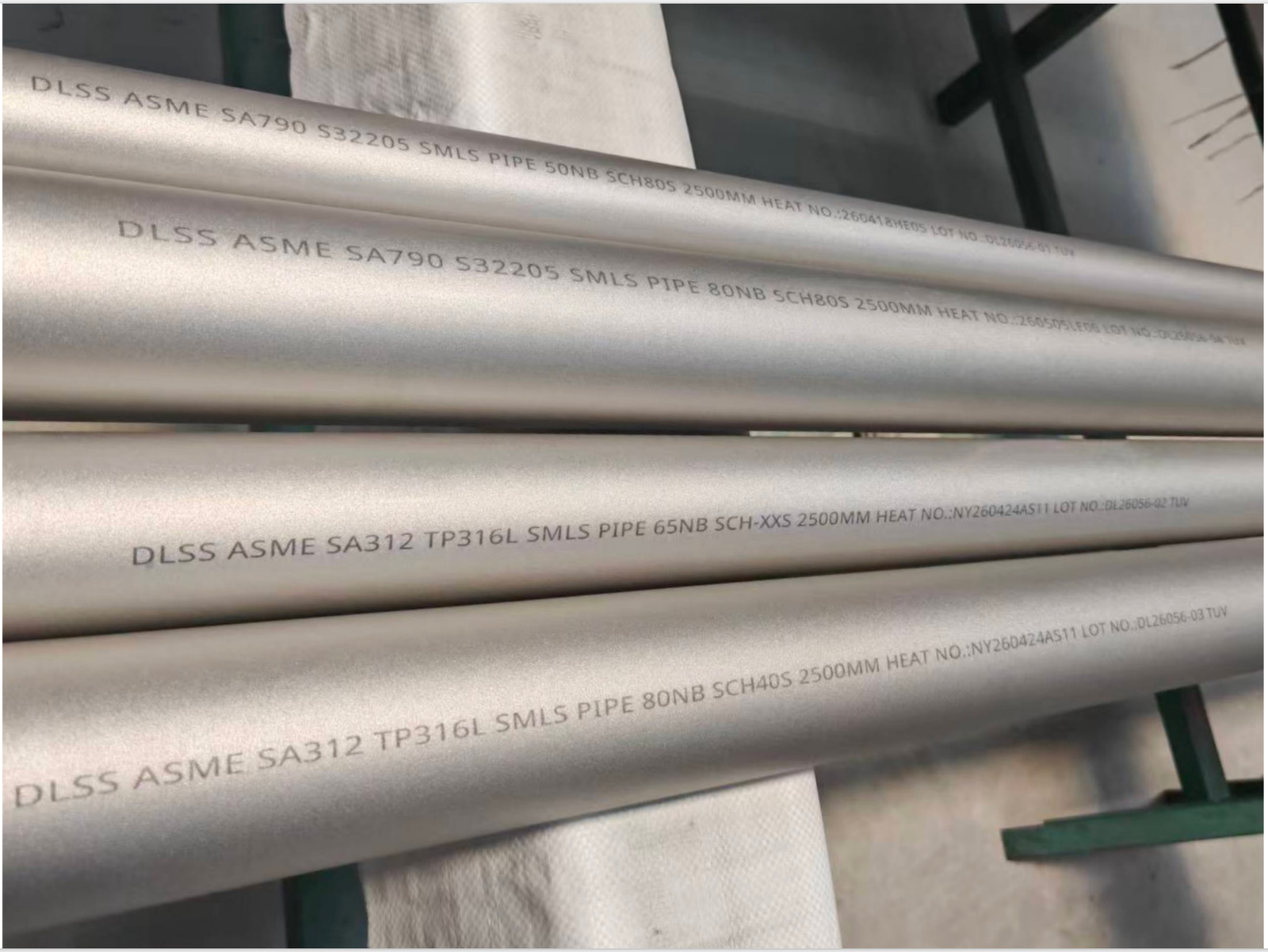
DLSS supplies 316L, 317L, 904L, 2205, and S32750 stainless steel tubes. Learn more at www.dlsspipeline.com
3. Performance Comparison
Material
Pitting Resistance (PREN)
Seawater Suitability
Typical Use Cases
TP316L
~25
Low (not continuous use)
HVAC, low-chloride water
904L
~35
Moderate
Heat exchangers in coastal plants
2205 Duplex
~35
High
Offshore cooling, ballast systems
2507 Super Duplex
~42–45
Very High
Subsea exchangers, marine condensers
Titanium Gr.2
>50
Excellent
Desalination, navy systems
4. Other Factors to Consider
Operating temperature: High temps (>60°C) increase SCC risk, especially in austenitic grades
Welding requirements: Duplex and titanium need specific welding expertise
Cost vs. lifecycle: Higher alloy cost often justified by reduced maintenance and replacement
Availability & lead time: DLSS maintains stable supply of seawater-grade stainless tubes
Frequently Asked Questions (FAQ)
Q1: Can I use 316L in seawater heat exchangers? Only in indirect contact or low-chloride applications. For direct seawater cooling, consider 2205 or higher-grade alloys.
Q2: How do I know if duplex is enough, or I need super duplex/titanium? Check chloride content, temperature, flow rate, and life expectancy. DLSS can help assess the correct material based on your process.
Q3: Can DLSS supply tubes with both corrosion and mechanical test certificates? Yes, all DLSS seawater-grade tubes are supplied with full EN 10204 3.1/3.2 certificates, including PMI, hydro test, and surface roughness inspection if needed.
Conclusion
In seawater-cooled systems, material selection is not optional—it’s a critical engineering decision. With aggressive chloride levels and long expected lifespans, choosing the right stainless or alloy tube prevents failure, reduces life-cycle cost, and protects equipment integrity.
DLSS Pipeline supports global projects with corrosion-resistant stainless steel and duplex tubes engineered for marine and offshore environments.
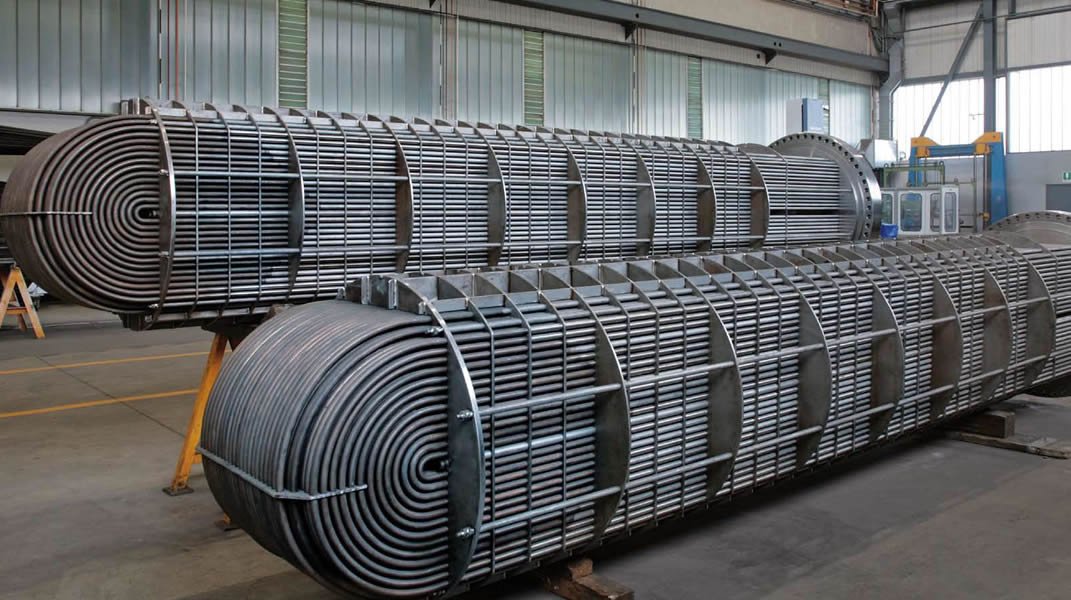
Introduction In the world of thermal systems, heat exchanger tubes are essential to transferring energy efficiently and reliably. From chemical processing to HVAC systems, selecting the correct tube type can directly affect performance, cost, and lifespan. At DLSS, we supply a wide range of custom-formed stainless steel tubes for heat...
Introduction Even the best-grade stainless steel tubes can fail—if not properly selected, processed, or installed. From pitting corrosion in chloride-rich environments to stress corrosion cracking (SCC) in heat exchangers, these failures often lead to costly downtime, replacements, or even plant shutdowns. This article highlights 5 major failure types observed in...
Introduction The oil and gas industry operates under extreme conditions—high pressure, corrosive environments, and fluctuating temperatures. To ensure safety and durability, stainless steel tubes are essential components across upstream, midstream, and downstream operations. This article highlights the 10 most common applications of stainless steel tubes in the oil & gas...
Emergency Heat Exchanger Tube Replacement with TÜV Third-Party Inspection In heat exchanger projects, a tube quality issue can create more than a material problem. It can quickly become a trust problem between the equipment manufacturer and the end user. Recently, one heat exchanger manufacturer contacted DLSS after tubes purchased from...
Stainless steel seamless pipes are widely used in heat exchangers, boilers, condensers, pressure piping, petrochemical plants, power generation, shipbuilding, and other demanding industrial systems. For heat exchanger and condenser projects, buyers often prefer stainless steel seamless heat exchanger tubes because they offer better pressure resistance, dimensional stability, and corrosion performance....
When designing a high-performance heat exchanger, tube material is a critical factor. Stainless steel, particularly in seamless form, is gaining popularity across industries thanks to its mechanical strength, corrosion resistance, and thermal reliability. In this article, we’ll break down why seamless stainless steel tubes are the ideal choice for demanding heat exchanger...
Nickel 200 and Nickel 201 are commercially pure nickel grades used in seamless tubes, pipes, heat transfer equipment, chemical processing systems, caustic handling, food processing, synthetic fiber production, and electrical components. At first glance, Nickel 200 and Nickel 201 look very similar. Both offer high nickel content, good mechanical properties,...
Introduction Stainless steel seamless pipes are widely known for their long service life, but just how long can they last? Under ideal conditions, seamless stainless steel pipes can last 50 years or more. However, actual lifespan depends on factors such as: In this article, we explore realistic service life expectations,...