How to Specify U-Bend Stainless Steel Tubes for Heat Exchangers

DLSS - Pipe&Tube - How to Specify U-Bend Stainless Steel Tubes for Heat Exchangers

Meta Description:
A comprehensive guide to U-bend stainless steel tubes for heat exchangers. Learn how to specify bending radius, wall thinning limits, tolerance, surface finish, and inspection standards.


Introduction

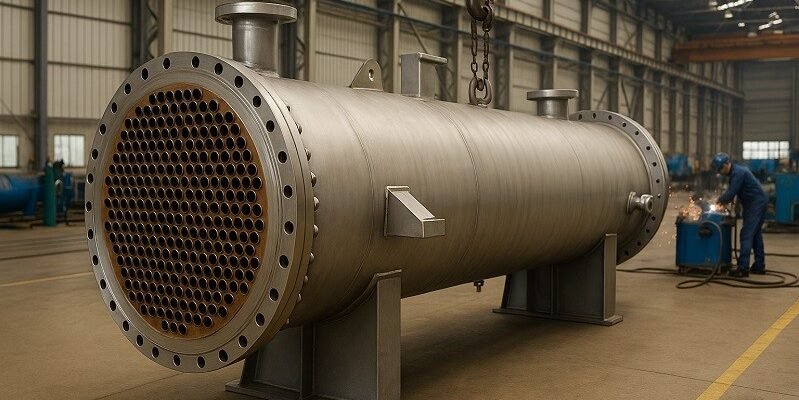
U-bend stainless steel tubes are a critical component in shell and tube heat exchangers, designed to increase heat transfer area while optimizing space. These tubes must meet strict dimensional, metallurgical, and mechanical standards to perform reliably under thermal cycling and high-pressure environments.

This article guides you through the key specifications and considerations when sourcing U-bend tubes for industrial heat exchanger applications.


1. What Are U-Bend Stainless Steel Tubes?

U-bend tubes are stainless steel tubes that are mechanically or thermally bent into a U-shape. Commonly used in heat exchangers for:

  • Petrochemical plants
  • Power generation boilers
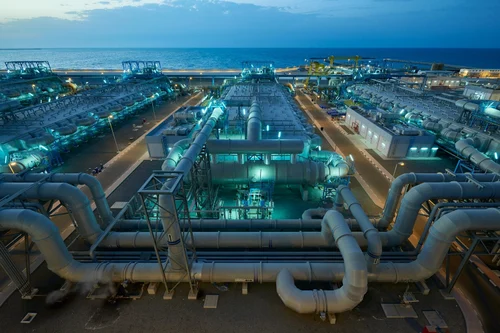
  • Seawater desalination
  • Refineries and gas processing units

They eliminate the need for return headers and allow compact bundle design.


2. Common Materials for U-Bend Tubes

GradeStandardKey Features
TP304 / TP304LASTM A213General-purpose, moderate corrosion resistance
TP316 / TP316LASTM A213High chloride resistance
TP321 / TP347ASTM A213Stabilized grades for high-temp service
S32205 DuplexASTM A789High strength, excellent SCC and pitting resistance
C70600 / C44300ASTM B111Admiralty and CuNi alloys for marine applications

3. Bending Radius (R): How to Specify

  • Standard Bending Radius: 1.5 × OD (Outside Diameter)
  • Custom Radius: 2D, 3D, or as per drawing
  • Tight Radius (<1.5D) may increase wall thinning risk

Tip: Confirm if the radius is inner or centerline for precise fabrication.


4. Wall Thinning Allowance

During bending, wall thinning occurs on the outer arc. Most specs limit thinning to:

  • ≤10% of nominal wall thickness for critical service
  • Wall thickness must remain above minimum ASTM requirement

DLSS Testing: We perform ultrasonic or micrometer inspection after bending.


5. Tolerances and Dimensional Control

ParameterTolerance
Leg length±1.5 mm (or per customer drawing)
Centerline radius±1.5 mm
Ovality (OD)≤10% difference max
Wall thinning≤10% (unless otherwise specified)

DLSS provides full dimensional inspection reports upon request.


6. Heat Treatment: Stress Relief Post-Bending

To avoid stress cracking, especially in austenitic stainless steel and duplex grades, U-bend tubes must undergo:

  • Bright annealing or
  • Solution annealing at 1050–1150°C
  • Quenching (water/air) to stabilize grain structure

DLSS performs furnace-controlled annealing in inert atmosphere for mirror-clean inner surface.


7. Surface Finish

Options include:

  • Pickled & Passivated (standard)
  • Bright Annealed (pharma or food-grade)
  • Polished (for decorative or hygienic applications)

Recommended Ra (roughness) for clean applications: ≤0.5 μm


8. Packing & Handling of U-Bend Tubes

Proper packaging is essential to avoid damage during shipment.

  • Packed in customized wooden frames or crates
  • Each leg supported to prevent stress at the bend
  • Ends protected with plastic or rubber caps
  • Tags include heat number, size, grade, and standard

DLSS ships globally with export-compliant packing per ASTM A700


9. Testing & Inspection for U-Bend Tubes

DLSS offers full QA/QC per ASTM, ASME, and client specs:

  • Hydrostatic or Pneumatic Test
  • Eddy Current Testing (ECT)
  • Hardness Test
  • Intergranular Corrosion (IGC) Test
  • Grain Size Measurement
  • EN 10204 3.1 / 3.2 Certification
  • Third-Party Inspection (SGS, TUV, BV)

10. Common Standards Referenced

  • ASTM A213 (TP304/316/321)
  • ASTM A789 (Duplex)
  • ASTM B111 (C44300 / C70600)
  • ASME SA213 / SA789
  • TEMA R / C / B Class Heat Exchanger Design
  • EN 10216-5 for seamless stainless tubes
  • NACE MR0175 for sour service

SEO Keywords

U-bend stainless steel tube, heat exchanger U tubes, stainless U tubes bending radius, TP316L U tube specification, ASTM A213 U bend tube, seamless U tube supplier, duplex steel U tubes, stress-relieved heat exchanger tube, pickled and passivated U tubes, DLSS stainless U tube manufacturer, 1.5D U bend tube, CuNi U bend tube ASTM B111, EN10204 3.2 certified U tubes


Conclusion

Specifying U-bend stainless steel tubes requires attention to material grade, bending parameters, wall thinning, and inspection requirements. Proper sourcing ensures long service life and system integrity under fluctuating thermal loads.

DLSS is an experienced manufacturer and exporter of U-bend tubes for global heat exchanger OEMs and EPC contractors.


Contact DLSS for Custom U-Bend Tube Solutions

Email: info@dlsspipe.com
Website: www.dlsspipeline.com

Let us help you engineer precision, performance, and peace of mind into your next heat exchanger project.
Wonderful! Share This Case:

Austenitic Stainless Steel

Duplex Stainless Steel

Nickel Alloys

▪ Incoloy Family

▪ Inconel Family

▪ Monel Family

▪ Hastelloy Family

▪ Other Special Alloys

Cobalt Alloys

Related Posts

Finned Tube Cleaning and Maintenance Best Practices – Keep Your Heat Exchanger at Peak Performance

Finned Tube Cleaning and Maintenance

Finned tube cleaning and maintenance are critical to ensuring optimal heat transfer performance and extending the service life of heat exchangers. Without proper care, fouling, corrosion, and fin damage can reduce efficiency and increase operating costs. For background on preventing fouling, read our article How to Prevent Corrosion and Fouling in Finned Tubes. If you […]

Read More

15-Day Delivery of ASTM A182

DLSS recently fulfilled an urgent order for a Dubai-based equipment manufacturer, delivering five 16″ STD CL600 Weld Neck Raised Face (WNRF) flanges made from ASTM A182 F53 (UNS S32750) super duplex stainless steel. Operating in a high-chloride, highly corrosive seawater environment, the client required ASME B16.5 compliance with an exceptionally fast 15-day lead time. Project […]

Read More
Hygienic-Grade Stainless Steel Tubes in the Food and Pharmaceutical Industries: Global Trends and Compliance

Hygienic-Grade Stainless Steel Tubes in

The demand for hygienic-grade stainless steel seamless tubes is rapidly expanding, particularly in the food & beverage (F&B) and pharmaceutical industries. These sectors require tubing with ultra-smooth surfaces, precise dimensional control, and strict compliance with international sanitary standards such as 3-A, ASME BPE, and ISO 2037. In this article, we explore the latest market trends, […]

Read More
ASTM B163 Incoloy 825 (UNS N08825) Seamless Tube – 25.4 × 2.11 × 5555 mm, Bright Annealed Surface

ASTM B163 Incoloy 825 (UNS

Product Details Chemical Composition of Incoloy 825 (UNS N08825) Element Composition (%) Nickel (Ni) 38.0 – 46.0 Chromium (Cr) 19.5 – 23.5 Iron (Fe) Balance Molybdenum (Mo) 2.5 – 3.5 Copper (Cu) 1.5 – 3.0 Titanium (Ti) 0.6 – 1.2 Carbon (C) ≤ 0.05 Incoloy 825 is a nickel-iron-chromium alloy with added molybdenum, copper, and titanium for enhanced corrosion […]

Read More
Corrosion-Resistant Heat Exchanger Tubes: When to Choose Titanium and Nickel Alloys

Corrosion-Resistant Heat Exchanger Tubes: When

In highly corrosive environments—such as seawater cooling, chemical processing, and offshore oil and gas—traditional stainless steel may not offer sufficient durability. Selecting the right material for heat exchanger tubes in these conditions is crucial for ensuring long service life, process safety, and reduced maintenance costs. This article explores two high-performance materials: Titanium and Nickel Alloy […]

Read More
Understanding Electropolished (EP) Tubes – Surface Roughness, Applications, and Manufacturing

Understanding Electropolished (EP) Tubes –

Meta Description:Explore what electropolished (EP) stainless steel tubes are, how they are manufactured, and why they are essential for ultra-clean applications such as pharmaceuticals, biotechnology, and semiconductors. Introduction In ultra-clean environments like pharmaceutical plants, biotech labs, and semiconductor fabs, the surface of a stainless steel tube must be as smooth and contamination-free as possible. This […]

Read More
How to Choose the Right Pipe Material for Your Industrial Project

How to Choose the Right

Meta Description:Choosing pipe material can make or break your project. Learn how engineers weigh cost, corrosion, pressure, and long-term reliability when selecting stainless steel and alloy pipes. Introduction If you’ve ever been responsible for building or maintaining an industrial pipeline—whether it’s for steam, chemical transfer, or even chilled water—you know one thing: Choosing the right […]

Read More
What is a Finned Tube and How It Improves Heat Exchanger Efficiency

What is a Finned Tube

Finned tubes are a specialized type of heat transfer component designed to increase the surface area available for heat exchange between fluids. By adding extended surfaces or “fins” to the tube’s exterior, these components can significantly improve the efficiency of heat exchangers, making them ideal for applications where space is limited, or higher heat transfer […]

Read More

Request A Quote

*We respect your confidentiality and all information are protected.