How to Read a Stainless Steel Tube Mill Test Certificate (MTC)

DLSS - Pipe&Tube - How to Read a Stainless Steel Tube Mill Test Certificate (MTC)

Meta Description:
Understand how to interpret a stainless steel tube Mill Test Certificate (MTC). Learn what each section means, how to verify compliance, and why it matters for project quality and traceability.


Introduction

When sourcing stainless steel tubes for critical applications, the Mill Test Certificate (MTC) is more than a formality — it’s your proof of compliance, traceability, and technical integrity.

This article breaks down the structure of an MTC based on EN 10204 standards, explains how to verify key data, and shows how DLSS ensures your certificate matches your delivery.


1. What Is a Mill Test Certificate (MTC)?

A Mill Test Certificate (also called a Material Test Certificate or Inspection Certificate) is a quality assurance document issued by the manufacturer to confirm that the material complies with the relevant standards and specifications.

DLSS typically issues certificates according to EN 10204 Type 3.1 or 3.2, which are commonly required in industries like oil & gas, power, chemical, and marine.


2. EN 10204 Certificate Types Overview

  • 2.1: Declaration of compliance only (not recommended for critical use)
  • 2.2: Includes basic test results but no traceability
  • 3.1: Issued by manufacturer’s QA department, includes actual test results and heat number
  • 3.2: Verified by a third party (e.g. SGS, BV, TÜV) along with manufacturer — used for high-risk projects

For detailed reference, visit BSI: EN 10204 Explained


3. Key Sections in a Stainless Steel Tube MTC

Here’s a typical breakdown of sections you’ll find in a Mill Test Certificate:

1. Header Information

  • Manufacturer name and logo
  • Purchase order (PO) number
  • Customer name and reference
  • Date of issue
  • MTC serial number

2. Product Description

  • Product name (e.g., Stainless Steel Seamless Tube)
  • Dimensions: OD, wall thickness, length
  • Quantity and total weight
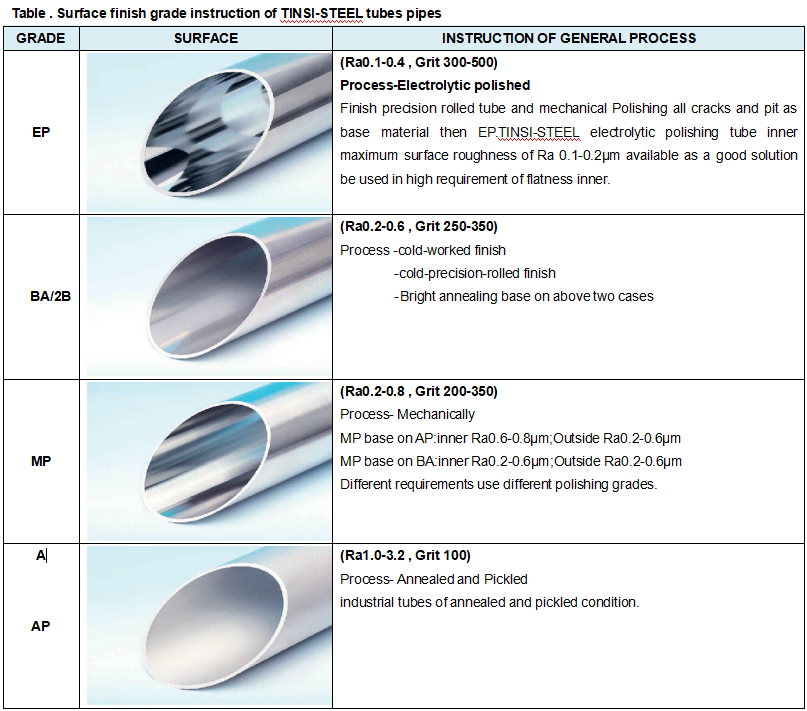
  • Surface finish: Pickled, Bright Annealed (BA), Electropolished (EP), etc.
  • Delivery condition (annealed, cold drawn)

3. Material Grade and Standard

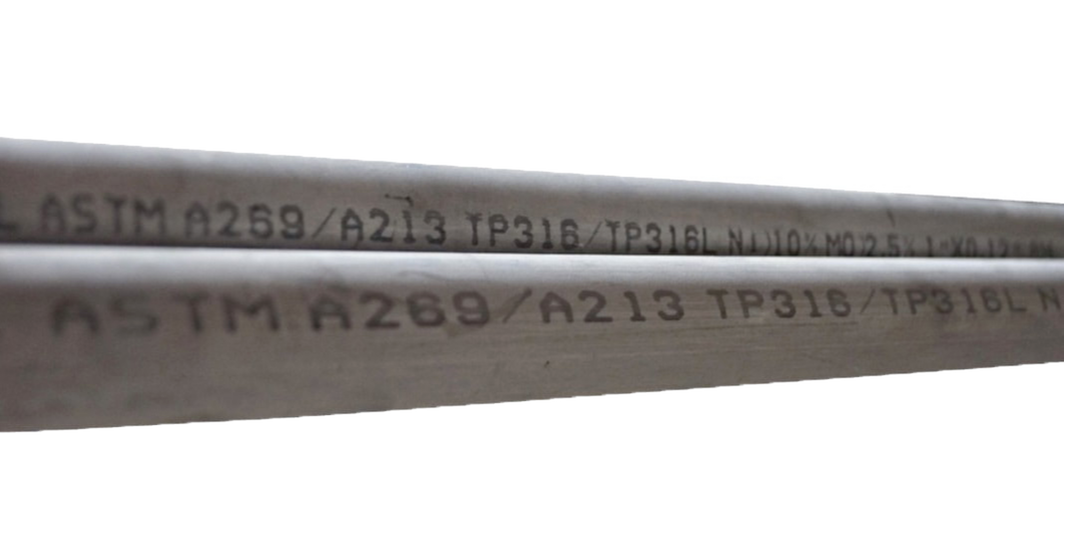
  • Designation (e.g., TP316L, 1.4404, UNS S31603)
  • Manufacturing standard (e.g., ASTM A213 / EN 10216-5)

4. Heat Number and Batch Number

  • Unique identifier to trace material back to production batch and raw material source

5. Chemical Composition (Heat Analysis)

  • Shows actual % values of C, Si, Mn, P, S, Cr, Ni, Mo, N, etc.
  • Should comply with the standard’s specification range

6. Mechanical Properties

  • Yield strength (MPa or N/mm²)
  • Tensile strength
  • Elongation (%)
  • Hardness (HB or HRB)
  • Impact test results (if required)

7. Non-Destructive Testing (NDT)

  • Ultrasonic Test (UT), Eddy Current (ET), Hydrostatic pressure test results
  • Compliance with standards such as ASTM A450, EN ISO 10893

8. Surface Roughness (for EP/BA tubes)

  • Ra values reported (e.g., ≤ 0.25 µm for EP finish)

9. Certifications and Approvals

  • EN 10204 3.1 or 3.2 endorsement
  • Third-party inspector signature and stamp (for 3.2)
  • DLSS QA stamp and representative signature

4. How to Verify an MTC

  • Cross-check heat number on MTC and on tube marking
  • Verify chemical and mechanical values match the standard
  • Ensure NDT and surface finish values meet project requirements
  • Check traceability to raw material source
  • Look for original signatures and stamps from the manufacturer or third party

5. DLSS MTC Best Practices

DLSS includes these additional measures:

  • PDF MTC with watermark and digital signature for security
  • Color-coded highlight of critical values (on request)
  • Project-specific tagging on tubes and crates
  • MTCs archived for 10+ years, available on request
  • Bilingual MTCs (English + Chinese) for international clients

FAQs

Q1: Is a 3.1 certificate sufficient for oil & gas projects?
Yes, in many cases. But for high-risk or offshore applications, a 3.2 certificate may be mandated by the end user or EPC contractor.

Q2: Can DLSS issue MTCs with dual standard compliance?
Absolutely. For example, TP316L tubes can be certified under ASTM A213, EN 10216-5, and NACE MR0175 simultaneously.

Q3: What if the MTC data doesn’t match the product?
DLSS follows strict QA protocols to ensure every MTC is batch-matched and verified before shipping. Discrepancies trigger a full investigation and corrective action.


Conclusion

Reading and verifying a Mill Test Certificate is essential to project quality, material traceability, and safety. At DLSS, we ensure every stainless steel tube is delivered with a complete, accurate, and verifiable MTC — helping you build with confidence.


Contact DLSS
Email: info@dlsspipe.com
Website: www.dlsspipeline.com

Need help understanding or customizing your MTCs? Our technical team is ready to support your QA and procurement documentation needs.

Wonderful! Share This Case:

Austenitic Stainless Steel

Duplex Stainless Steel

Nickel Alloys

▪ Incoloy Family

▪ Inconel Family

▪ Monel Family

▪ Hastelloy Family

▪ Other Special Alloys

Cobalt Alloys

Related Posts

Applications of Nickel Alloy Pipes in LNG and Refinery Projects

Applications of Nickel Alloy Pipes

1. Introduction Liquefied Natural Gas (LNG) terminals and oil refineries operate under some of the most challenging conditions in the energy sector. Piping systems in these facilities are constantly exposed to high pressure, fluctuating temperatures, and corrosive media such as hydrogen sulfide, chlorides, and acids. Nickel alloy pipes, including Inconel 625 (ASTM B444) and Incoloy […]

Read More
Top Surface Finishes for Stainless Steel Tubes – BA, EP, Polished, and More

Top Surface Finishes for Stainless

Meta Description:Discover the most common surface finishes for stainless steel tubes—BA, EP, polished, pickled—and how each impacts corrosion resistance, cleanliness, and application suitability. Introduction Surface finish plays a critical role in determining the performance and aesthetics of stainless steel tubes, especially in industries like pharmaceuticals, food processing, heat exchangers, and instrumentation systems. Whether your project […]

Read More
Understanding ASTM A213 – Seamless Tubes for Heat Exchangers and Boilers

How to Choose Stainless Steel

Meta Description:Not all stainless steel pipes are suitable for heat exchangers. Learn how to select the right grade, surface finish, and compliance standard for maximum thermal efficiency and corrosion resistance. Introduction Heat exchangers are the heart of many industrial systems—refineries, petrochemicals, power plants, and HVAC units. And at the core of any heat exchanger is […]

Read More
Corrosion Protection in Underground Piping Systems: What You Need to Know

Corrosion Protection in Underground Piping

Meta Description:Underground pipelines are out of sight—but never out of risk. Learn how coatings, cathodic protection, and smart material choices prevent corrosion and extend service life. Introduction Underground pipes may be hidden, but the damage they suffer is very real. Whether transporting water, gas, or chemicals, buried pipelines face harsh, invisible threats—especially corrosion from soil […]

Read More
Understanding EN 10204 3.1 vs 3.2: Certification Types for Stainless Steel Tubes

Understanding EN 10204 3.1 vs

Meta Description:Learn the key differences between EN 10204 3.1 and 3.2 material certificates for stainless steel tubes. Understand which certificate your project needs and how DLSS ensures compliance. Introduction Material certification is essential for traceability and quality assurance in the supply of stainless steel tubes, especially in industries like oil & gas, power generation, and […]

Read More
Titanium Tubes vs Stainless Steel Tubes: Which One is Right for Your Heat Exchanger?

Titanium Tubes vs Stainless Steel

Meta Description:Compare titanium tubes and stainless steel tubes in terms of corrosion resistance, mechanical strength, cost, and applications. Find out which is the better material for your heat exchanger or industrial system. Introduction In corrosive or high-performance environments—such as desalination, chemical processing, or marine applications—material selection is crucial. Two common choices for heat exchanger tubing […]

Read More
Nickel Alloy Steel Seamless Pipes and Tubes: Industrial Advantages and Applications

Nickel Alloy Steel Seamless Pipes

Introduction Nickel alloy steel seamless pipes and tubes are essential materials in demanding industries where components must withstand extreme temperatures, corrosive chemicals, and high pressure. Their seamless structure combined with the superior characteristics of nickel-based alloys makes them the material of choice for chemical processing, petrochemical, marine, power generation, and LNG applications. Nickel-based alloys are […]

Read More
ASTM A269 vs ASTM A213: What’s the Difference for Stainless Steel Tubes?

ASTM A269 vs ASTM A213:

Meta Description:Confused between ASTM A269 and ASTM A213 stainless steel tube standards? This guide compares their differences in application, mechanical properties, testing, and surface finish. Introduction When sourcing stainless steel tubes, understanding the applicable ASTM standards is crucial. Two commonly referenced specifications are ASTM A269 and ASTM A213. While they may seem similar, these standards […]

Read More

Request A Quote

*We respect your confidentiality and all information are protected.