How to Choose Stainless Steel Pipe for Heat Exchanger Applications

DLSS - Tubes For Heat Exchanger - How to Choose Stainless Steel Pipe for Heat Exchanger Applications

Meta Description:
Not all stainless steel pipes are suitable for heat exchangers. Learn how to select the right grade, surface finish, and compliance standard for maximum thermal efficiency and corrosion resistance.


Introduction

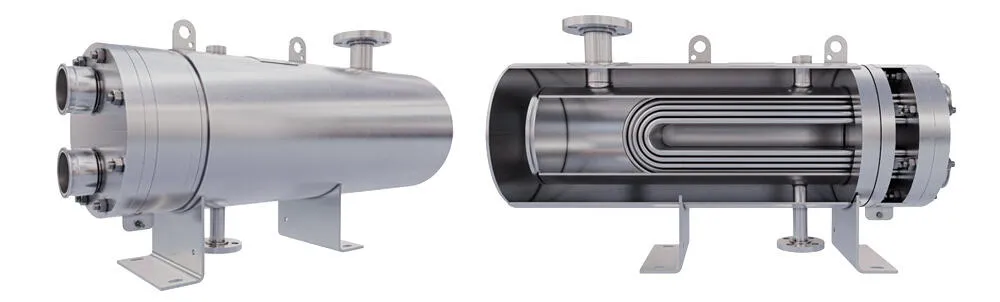
Heat exchangers are the heart of many industrial systems—refineries, petrochemicals, power plants, and HVAC units. And at the core of any heat exchanger is a network of tubes or pipes that must perform under thermal, chemical, and mechanical stress.

But not all stainless steel pipes are created equal.

Selecting the wrong grade or finish can lead to corrosion, fouling, or thermal inefficiency. In this article, we guide you through choosing the best stainless steel pipe for your heat exchanger application, based on industry standards, process media, and real-world performance.


Key Factors When Choosing Pipes for Heat Exchangers

1. Operating Temperature and Pressure

Refer to design codes like ASME Section VIII or TEMA guidelines.
Pipes used in condensers or boilers must withstand cyclic loading, temperature swings, and possible overpressure.

2. Type of Process Fluid

  • For seawater → high chlorides → use Duplex 2205 or Super Duplex
  • For acids → consider Alloy 825 or TP317L
  • For steam → TP321/347H is preferred over TP304 due to thermal stability
  • For clean water or glycol → TP304L or TP316L is sufficient

More on corrosion behavior: Nickel Institute Corrosion Guide

3. Corrosion Risk

Assess:

  • Chloride concentration
  • pH levels
  • Fouling risk (scaling, organic films)
  • Stress corrosion cracking potential (especially in H₂S or sour service)

If risk is high, use NACE-compliant materials and consider NACE MR0175.


Recommended Grades by Application

ApplicationRecommended Grade(s)Reason
Steam BoilersTP321, TP347HStabilized against carbide precipitation
Seawater Cooled CondensersDuplex 2205, Super Duplex 2507Chloride pitting & stress corrosion
Acid Recovery SystemsIncoloy 825, Alloy 625Resistance to H₂SO₄ and chlorides
Heat Exchangers in RefineriesTP316L, TP317LReliable under hydrocarbons + water
Power Plant Feedwater SystemsTP304L, TP316LBalanced cost-performance

Surface Finish Matters

  • Pickled (descaled) for general use
  • Bright Annealed (BA) for clean service and energy recovery units
  • Electropolished (EP) for food/pharma or high-purity exchangers
  • ID Clean / Nitrogen purged for precision thermal control systems

Smooth internal surface improves thermal transfer, reduces fouling, and facilitates inspection and cleaning.


Standards to Consider

  • ASTM A213: Seamless stainless tubes for boilers and heat exchangers
  • ASTM A312: Stainless steel pipe (general use)
  • TEMA (Tubular Exchanger Manufacturers Association) for design and tolerances
  • NACE MR0175 / ISO 15156 for sour service

Common Mistakes to Avoid

  • Using TP304 in chloride environments → leads to pitting
  • Ignoring welding requirements → intergranular corrosion
  • Overlooking wall thickness → impacts pressure rating and longevity
  • Choosing decorative grades (e.g., A554) for pressure systems → non-compliant

Frequently Asked Questions (FAQ)

Q1: Can TP316L be used in seawater heat exchangers?
It can, but only if chloride concentration is low. Duplex or Super Duplex is safer in continuous seawater exposure.

Q2: Are seamless pipes mandatory in heat exchangers?
Yes, for most critical zones. Seamless pipes have better integrity under pressure and thermal cycles.

Q3: What is the best finish for pharmaceutical applications?
Electropolished (EP) or BA finish, with internal roughness Ra < 0.4 μm, is recommended.

Q4: How does DLSS ensure performance for exchanger pipes?
We offer ASTM-compliant seamless tubes with PMI, eddy current, and 3.1/3.2 MTCs—plus tailored surface finishes and cutting.


Conclusion

Heat exchanger performance depends heavily on the right pipe material, finish, and specification. By choosing properly, you reduce corrosion, improve heat transfer, and extend system lifespan.

At DLSS, we supply stainless and nickel alloy tubes engineered for exchanger performance—tested, certified, and globally trusted.


Contact DLSS
Email: info@dlsspipe.com
Website: www.dlsspipeline.com

Wonderful! Share This Case:

Austenitic Stainless Steel

Duplex Stainless Steel

Nickel Alloys

▪ Incoloy Family

▪ Inconel Family

▪ Monel Family

▪ Hastelloy Family

▪ Other Special Alloys

Cobalt Alloys

Related Posts

How to Prevent Common Failures in Stainless Steel Tubes: 5 Case-Based Insights

How to Prevent Common Failures

Meta Description:Explore the 5 most common failure types in stainless steel tubes and how to prevent them. Learn from real-world applications across heat exchangers, refineries, and chemical plants. Introduction Even the best-grade stainless steel tubes can fail—if not properly selected, processed, or installed. From pitting corrosion in chloride-rich environments to stress corrosion cracking (SCC) in […]

Read More
Understanding Electropolished (EP) Tubes – Surface Roughness, Applications, and Manufacturing

Understanding Electropolished (EP) Tubes –

Meta Description:Explore what electropolished (EP) stainless steel tubes are, how they are manufactured, and why they are essential for ultra-clean applications such as pharmaceuticals, biotechnology, and semiconductors. Introduction In ultra-clean environments like pharmaceutical plants, biotech labs, and semiconductor fabs, the surface of a stainless steel tube must be as smooth and contamination-free as possible. This […]

Read More
Global Outlook: Growth Trajectory of Stainless Steel Seamless Tube Market (2025–2030)

Global Outlook: Growth Trajectory of

The global stainless steel seamless tube market is entering a phase of steady, diversified, and value-driven expansion. As industries demand higher performance under increasingly harsh conditions, seamless tubes are gaining preference over welded ones—especially in heat exchanger, petrochemical, power, and clean energy applications. According to recent market reports, the stainless steel seamless tube market is […]

Read More
How to Interpret EN 10204 3.1 vs 3.2 Material Test Certificates

How to Interpret EN 10204

Meta Description:Discover the key differences between EN 10204 3.1 and 3.2 Material Test Certificates (MTCs). Learn why MTCs matter in stainless steel tube procurement and how DLSS ensures full traceability and certification compliance. Introduction When sourcing stainless steel tubes, especially for critical applications in oil & gas, power, or chemical industries, the Material Test Certificate […]

Read More
africa-refinery-power-projects-stainless-steel-demand

Africa’s Refining and Power Surge:

Africa is undergoing a once-in-a-generation infrastructure transformation. New refineries, LNG terminals, combined cycle power plants, and mining developments are emerging across Nigeria, Egypt, Algeria, Angola, Kenya, and beyond. For stainless steel tube and pipe suppliers, this is not just a trend—it’s a new frontier. The continent’s demand for high-quality industrial piping, heat exchanger tubes, and […]

Read More
Stainless Steel Tubes for Hydrogen Production and Electrolysis Systems

Stainless Steel Tubes for Hydrogen

Meta Description:Explore the role of stainless steel seamless tubes in hydrogen production and electrolysis systems. Understand material selection, corrosion challenges, and how DLSS supports green energy. Introduction As the global push toward green hydrogen accelerates, the materials used in hydrogen production systems are under intense scrutiny. Stainless steel tubes—especially those used in electrolyzers, high-pressure pipelines, […]

Read More
ccus-carbon-capture-stainless-steel-pipe-requirements

Stainless Steel Tube Requirements in

As countries ramp up efforts to reach net-zero emissions, Carbon Capture, Utilization, and Storage (CCUS) technologies are being deployed at scale. These systems capture CO₂ from industrial processes or power generation and inject it deep underground—or repurpose it for industrial use. But behind every CCUS facility lies a network of high-performance stainless steel piping and […]

Read More
Top 10 Applications of Stainless Steel Tubes in the Oil & Gas Industry

Top 10 Applications of Stainless

Meta Description:Explore the top 10 critical applications of stainless steel tubes in the oil & gas industry. Learn how DLSS tubes perform under high pressure, corrosion, and extreme conditions. Introduction The oil and gas industry operates under extreme conditions—high pressure, corrosive environments, and fluctuating temperatures. To ensure safety and durability, stainless steel tubes are essential […]

Read More

Request A Quote

*We respect your confidentiality and all information are protected.