EN vs ASTM Standards for Stainless Steel Tubes – What’s the Difference and How to Choose?

DLSS - Tubes For Heat Exchanger - EN vs ASTM Standards for Stainless Steel Tubes – What’s the Difference and How to Choose?

Meta Description:
Explore the key differences between EN and ASTM standards for stainless steel tubes. Understand specifications, testing requirements, tolerances, and how to choose the right standard for your project.


Introduction

Global industrial projects often involve suppliers and clients from different regions—especially Europe, America, and Asia. As a result, you may encounter both ASTM and EN standards when sourcing stainless steel seamless tubes.

Understanding how these standards differ helps ensure proper specification alignment, regulatory compliance, and performance reliability.


1. Overview: What Are EN and ASTM Standards?

  • ASTM: American Society for Testing and Materials – Widely used in North America and international trade
  • EN: European Norm (Euro Norm) – Harmonized standards for European Union (EU) markets

Both set requirements for:

  • Chemical composition
  • Mechanical properties
  • Testing procedures
  • Dimensions and tolerances
  • Inspection and certification

Official reference sites:
ASTM International
CEN European Committee for Standardization


2. Common Tube Standards Comparison

SpecificationASTM StandardEN StandardNotes
General SeamlessASTM A213, A269, A312EN 10216-5, EN 10217-7A312 = EN 10216-5 (EN 1.4401 ~ TP316)
Heat ExchangerASTM A213EN 10216-5 TC1 / TC2Wall tolerance slightly tighter in EN
InstrumentationASTM A269EN 10305-1, EN 10297-2EN 10305-1 preferred for precision
Duplex StainlessASTM A789EN 10216-5 X2CrNiMoN22-5-3Dual certification often provided
Ferritic GradesASTM A268EN 10296-2EN includes more surface finish types

3. Key Differences Between EN and ASTM

3.1. Material Designation

  • ASTM uses UNS codes (e.g., TP316L = S31603)
  • EN uses numerical grades (e.g., 1.4404 = TP316L)

3.2. Tolerances

  • EN often requires stricter dimensional tolerance, especially for OD and WT
  • EN 10216-5 TC2 has more demanding tensile and impact test criteria

3.3. Test Certificates

  • EN requires EN 10204 (3.1 / 3.2) certification
  • ASTM may accept manufacturer MTR unless otherwise stated

3.4. NDT & Surface Finish

  • EN typically requires 100% Eddy Current Testing (ET)
  • EN 10216-5 specifies internal surface finish classifications

4. How to Choose the Right Standard

Project Location / RequirementRecommended Standard
European project / EPC / PED complianceEN
North American standard (e.g. ASME)ASTM
High precision or small ODEN 10305-1
General heat exchanger applicationsASTM A213 / EN 10216-5
Duplex and special alloy tubingDual EN + ASTM

For PED-certified applications, always request EN 10204 3.1 or 3.2 with CE marking.


5. DLSS Dual-Standard Support

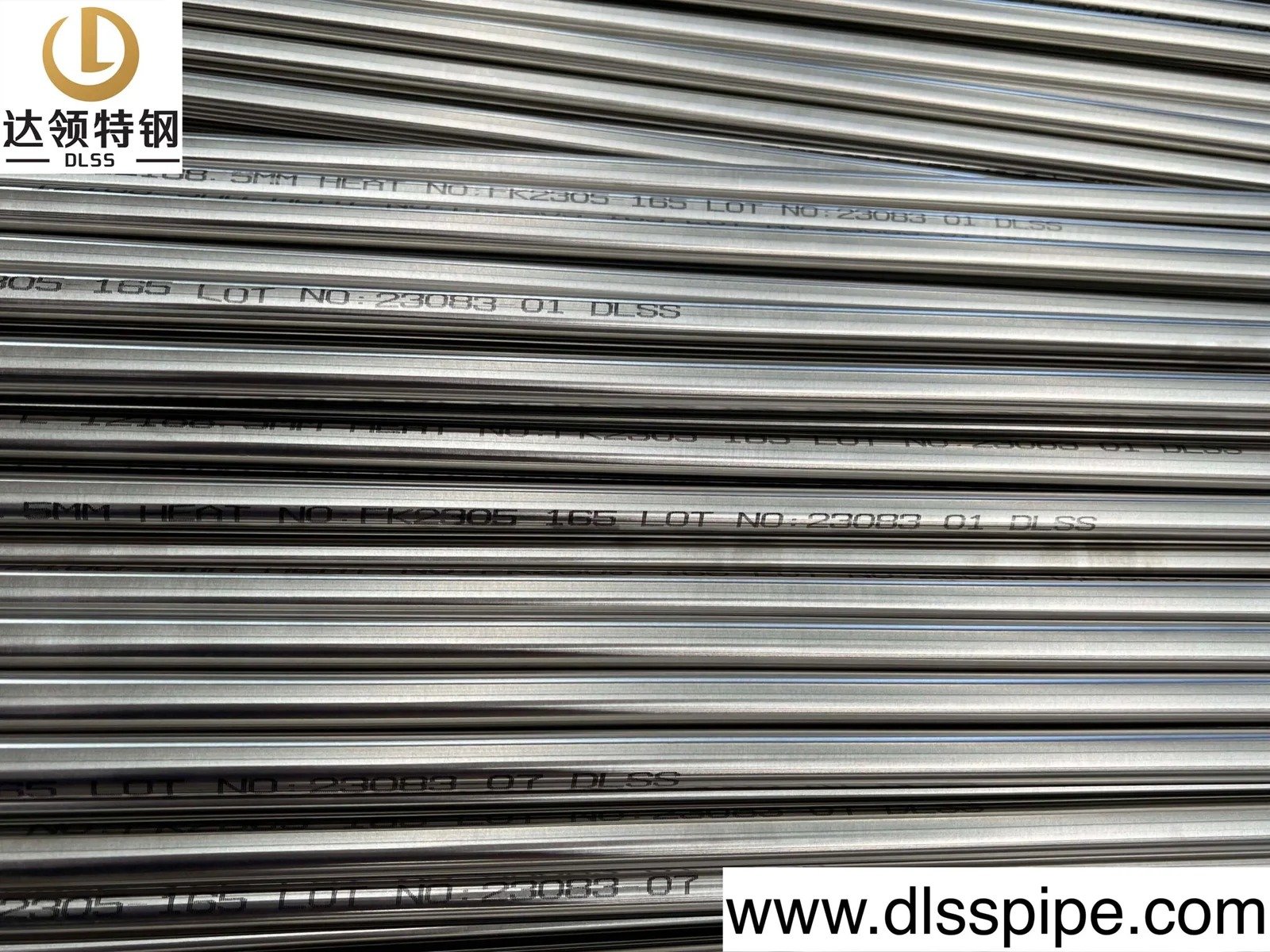
DLSS regularly supplies tubes with dual marking:

  • Example:
    TP316L / EN 1.4404 / S31603
    ASTM A213 / EN 10216-5 / EN 10204 3.1

We also provide:

  • Customized marking (on tube & packaging)
  • Dimensional reports matching both EN and ASTM tolerances
  • Full mechanical & chemical test data per both systems
  • Surface finish control per EN ISO 4287 and ASTM A480

FAQs

Q1: Can I substitute ASTM for EN in a European project?
Not unless approved by the client or local authority. EN standards are legally binding under CE/PED rules.

Q2: Does DLSS offer CE-certified tubes?
Yes. For EN 10216-5 and EN 10217-7, DLSS can issue CE-marked 3.1 / 3.2 MTCs with PED compliance.

Q3: Are EN standards more stringent than ASTM?
In terms of tolerance and documentation, EN is often stricter. However, ASTM standards are equally robust for global use when applied properly.

Q4: How do I convert between EN and ASTM grades?
DLSS provides equivalence charts and guidance. You can also check reliable sources like Matmatch or Total Materia.


Conclusion

Whether your project follows EN or ASTM standards, understanding the differences ensures material compatibility, compliance, and quality. DLSS supports both systems with dual-standard production, full documentation, and third-party testing on request.


Contact DLSS
Email: info@dlsspipe.com
Website: www.dlsspipeline.com

Need help selecting the correct standard for your stainless steel tubing? DLSS can guide you through EN/ASTM compliance, documentation, and export readiness.

Wonderful! Share This Case:

Austenitic Stainless Steel

Duplex Stainless Steel

Nickel Alloys

▪ Incoloy Family

▪ Inconel Family

▪ Monel Family

▪ Hastelloy Family

▪ Other Special Alloys

Cobalt Alloys

Related Posts

Top Surface Finishes for Stainless Steel Tubes – BA, EP, Polished, and More

Top Surface Finishes for Stainless

Meta Description:Discover the most common surface finishes for stainless steel tubes—BA, EP, polished, pickled—and how each impacts corrosion resistance, cleanliness, and application suitability. Introduction Surface finish plays a critical role in determining the performance and aesthetics of stainless steel tubes, especially in industries like pharmaceuticals, food processing, heat exchangers, and instrumentation systems. Whether your project […]

Read More
TP904L Stainless Pipes for Seawater Desalination in Japan – 日本海水淡水化向けTP904Lステンレス管

TP904L Stainless Pipes for Seawater

Introduction Japan’s seawater desalination plants operate in highly corrosive environments due to the presence of chlorides and high salinity. TP904L stainless pipes from DLSS offer superior resistance to pitting and crevice corrosion, making them an ideal choice for JIS G3459 – Stainless Steel Pipes for Corrosion Resistance compliance in marine applications. 1. Why TP904L for […]

Read More
Inconel 625 Seamless Tubes: Ultimate Solution for Corrosion and High-Temperature Performance

Inconel 625 Seamless Tubes: Ultimate

Introduction Inconel 625 seamless tubes are high-performance nickel-chromium-molybdenum-niobium alloys known for their extraordinary strength, thermal stability, and corrosion resistance. These tubes are widely used in marine environments, offshore oil & gas platforms, nuclear systems, and chemical process plants, especially where chloride-induced pitting, stress corrosion cracking, or elevated temperatures are major concerns. See: Inconel – Wikipedia […]

Read More
hardness testing MTC stainless steel tubes

Hardness Testing in Mill Test

Introduction Mill Test Certificates (MTCs) are essential documents for stainless steel tubes, certifying that products comply with ASTM, ASME, EN, and JIS standards. Among the critical mechanical properties included, hardness values (Brinell, Rockwell, Vickers) are especially important for ensuring suitability in demanding applications like boilers and heat exchangers. 1. Hardness in MTCs 2. Why Hardness […]

Read More
7 Effective Ways to Prevent Fouling in Heat Exchangers for Long-Term Performance

7 Effective Ways to Prevent

1. Introduction – Prevent Fouling in Heat Exchangers Knowing how to prevent fouling in heat exchangers is essential for maintaining high efficiency and reducing maintenance costs. Fouling occurs when unwanted deposits form on heat transfer surfaces, decreasing thermal performance and increasing operational expenses. Whether you operate a shell and tube heat exchanger in a chemical […]

Read More
Flange Sealing Techniques: How to Ensure a Leak-Proof Pipeline Connection

Flange Sealing Techniques: How to

Meta Description:Explore how proper flange sealing techniques, gasket selection, and installation methods impact pipeline integrity. Learn how to avoid flange leaks in industrial systems. Introduction If you’ve ever walked through an oil refinery or a chemical plant, you’ve probably seen a flange connection wrapped in insulation—maybe even dripping or steaming from a tiny leak. Flange […]

Read More
Electropolished vs Mechanically Polished Tubes: What’s Best for Hygienic Applications?

Electropolished vs Mechanically Polished Tubes:

Meta Description:Discover the key differences between electropolished (EP) and mechanically polished (MP) stainless steel tubes. Learn which surface finish is better for food, beverage, and pharmaceutical use in Latin America. Introduction In sanitary applications, cleanability is critical. Whether you’re building a milk pasteurizer in Brazil or a pharmaceutical system in Colombia, the inner surface of […]

Read More
The Role of Stainless Steel Tubes in Renewable Energy Systems – Solar, Wind, and Hydrogen

The Role of Stainless Steel

Meta Description:Discover how stainless steel tubes power the transition to renewable energy. Explore their critical applications in solar thermal systems, wind turbine cooling, and hydrogen infrastructure. Introduction As the global push for carbon neutrality intensifies, renewable energy systems are expanding at an unprecedented rate. From solar thermal plants to hydrogen pipelines, the infrastructure behind green […]

Read More

Request A Quote

*We respect your confidentiality and all information are protected.