Quality Inspection Methods for Stainless Steel Heat Exchanger Tubes

DLSS - Tubes For Heat Exchanger - Quality Inspection Methods for Stainless Steel Heat Exchanger Tubes

Ensuring the quality of stainless steel tubes is critical for the long-term reliability and safety of heat exchangers. Whether used in chemical plants, power stations, oil & gas facilities, or food processing systems, defective or poorly inspected tubes can lead to costly failures, shutdowns, or safety hazards.

In this article, we cover the most important inspection methods for stainless steel heat exchanger tubes, including dimensional control, surface checks, and non-destructive testing (NDT). As a trusted manufacturer, DLSS Pipeline applies comprehensive quality assurance practices to meet global standards.


1. Dimensional Inspection

Precision in outer diameter (OD), wall thickness (WT), and length is essential for proper installation, performance, and pressure integrity.

Key Measurements:

  • Outer diameter (OD): Checked using calipers or laser micrometers
  • Wall thickness (WT): Measured with ultrasonic or micrometer gauges
  • Straightness and ovality: Controlled for tube fitting and flow uniformity
  • Cut length tolerance: Usually within ±1.0 mm or as per customer specification

DLSS tubes are produced with strict tolerance control based on ASME, EN, and customer-specific standards. Learn more at www.dlsspipeline.com


2. Surface Quality and Visual Inspection

The internal and external surface finish affects both corrosion resistance and flow performance.

What is checked:

  • Surface cleanliness (scale, oil, grease, oxidation)
  • Dents, pits, cracks, folds, laminations
  • Weld seam (for welded tubes) or drawing flaws (for seamless tubes)

Tubes are visually inspected under proper lighting and may also undergo borescope inspection for internal surface verification.


3. Non-Destructive Testing (NDT)

NDT ensures that internal and external defects are detected without damaging the tube.

Common NDT Methods:

Eddy Current Testing (ECT)

  • Detects surface and near-surface defects such as cracks, inclusions, and porosity
  • Fast, continuous, suitable for 100% inline testing
  • Required for boiler, nuclear, and high-spec applications

Hydrostatic Testing

  • Tests tube integrity under pressure by filling with water
  • Confirms no leakage, structural strength
  • Usually performed at 1.5x working pressure

Ultrasonic Testing (UT)

  • Detects internal voids, delaminations, and wall thickness variations
  • Suitable for thicker or larger-diameter tubes

Dye Penetrant Testing (PT)

  • Used for detecting surface-breaking cracks on polished or machined surfaces
  • Typically applied to cut ends or suspected zones

DLSS offers all major NDT methods in-house or via certified third-party labs. Visit www.dlsspipeline.com to explore our inspection capabilities.


4. Mechanical & Chemical Testing

Beyond surface and structural checks, the following tests verify material strength and chemical composition:

  • Tensile Test: Confirms yield and tensile strength
  • Hardness Test: Brinell, Rockwell, or Vickers
  • Flattening/Flare Test: Checks ductility and weld quality
  • Chemical Analysis (PMI): Ensures correct alloy composition using spectrometer

DLSS provides full mill test certificates (MTC) in accordance with EN 10204 3.1 or 3.2, traceable to each heat number.


5. Industry Standards Followed

Our tube inspection process complies with:

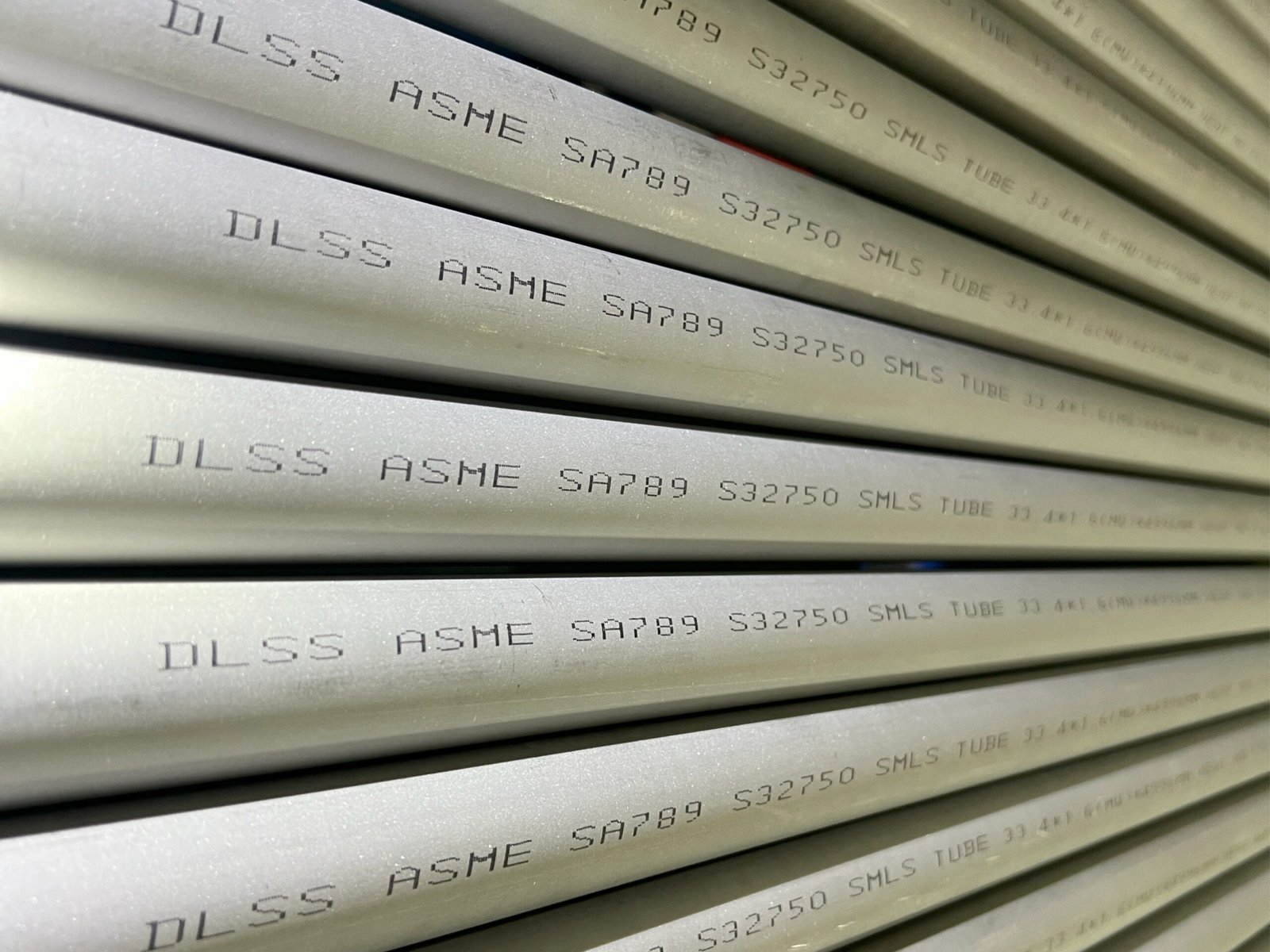
  • ASME SA213 / SA789
  • EN 10216-5, EN 10305
  • ISO 9001, PED 2014/68/EU
  • TEMA, ASTM A450 (general inspection)

Clients can also request customized inspection plans (ITPs) and third-party witnessing (e.g., TÜV, BV, SGS).


Frequently Asked Questions (FAQ)

Q1: Is eddy current testing mandatory for all stainless steel tubes?
It is not always required but is highly recommended for heat exchanger, boiler, or critical applications, especially seamless tubes.

Q2: Can DLSS provide third-party inspection reports?
Yes, we support inspections by SGS, BV, TÜV, or your appointed agency. All documents are traceable and certified.

Q3: What’s the standard surface condition for DLSS tubes?
We offer both pickled (AP) and bright annealed (BA) finishes with clean, defect-free internal surfaces as standard.


Conclusion

High-quality stainless steel tubes begin with precise manufacturing—and are only trusted when verified by comprehensive inspection. At DLSS Pipeline, we ensure every heat exchanger tube meets or exceeds industry standards, from dimensions to NDT to final documentation.

Contact our team to request an inspection specification or sample report.

Wonderful! Share This Case:

Austenitic Stainless Steel

Duplex Stainless Steel

Nickel Alloys

▪ Incoloy Family

▪ Inconel Family

▪ Monel Family

▪ Hastelloy Family

▪ Other Special Alloys

Cobalt Alloys

Related Posts

Quality Inspection Methods for Stainless Steel Heat Exchanger Tubes

Quality Inspection Methods

Ensuring the quality of stainless steel tubes is critical for the long-term reliability and safety of heat exchangers. Whether used in chemical plants, power stations, oil & gas facilities, or food processing systems, defective or poorly inspected tubes can lead to costly failures, shutdowns, or safety hazards. In this article,...

Read More
Applications of Stainless Steel Seamless Pipes in the Oil & Gas Industry

Applications of Stainless

Introduction In the global steel market, stainless steel seamless pipes are projected to grow from USD 3.88 B in 2025 to USD 5.15 B by 2030, driven largely by demand in the oil and gas sector linkedin.com+1gerabnationalenterprises.com+1marketsandmarkets.com+4globenewswire.com+4marketsandmarkets.com+4. Their unmatched resistance to high pressure, corrosion, and temperature make them essential across the entire petroleum value...

Read More
Heat Exchanger Tube Manufacturing for Japan’s Power Industry(日本の発電産業向け熱交換器チューブ製造)

Heat Exchanger Tube

1. Introduction Japan’s power sector—including 火力発電所 (thermal power plants), 原子力発電所 (nuclear power plants), and 再生可能エネルギー施設 (renewable energy facilities)—demands high-performance heat exchanger tube Japan that can withstand high pressure, high temperature, and corrosive environments. DLSS provides stainless steel and special alloy tubes that meet JIS G3463 and ASTM standards, ensuring long...

Read More
southeast-asia-industrial-parks-heat-exchanger-demand

Who’s Buying Heat

Southeast Asia is entering a new wave of industrial growth. Governments across the ASEAN region—including Thailand, Vietnam, Malaysia, and Indonesia—are investing billions in industrial parks, refineries, food processing plants, and energy facilities. For global suppliers of heat exchanger tubes, U-bent coils, and industrial stainless steel piping, this presents an exciting...

Read More
Aleaciones Especiales para Tuberías en Plataformas Offshore en Brasil

Aleaciones Especiales para

Meta descripción:Las plataformas marinas brasileñas enfrentan desafíos extremos: alta salinidad, presión y exposición constante a H₂S. Conozca qué aleaciones inoxidables ofrecen mayor seguridad y vida útil en ambientes offshore. Introducción Brasil es líder en producción de petróleo en aguas profundas gracias a regiones como Campos, Santos y Pre-Sal. Estas plataformas...

Read More
Advanced Pipe-Based Heat Exchanger Designs: U-Tube, Shell-and-Tube, and Coiled Tube Systems

Advanced Pipe-Based Heat

As industrial demands for thermal efficiency, space optimization, and corrosion resistance continue to grow, the design and selection of heat exchangers have become increasingly specialized. Beyond basic double tube systems, engineers often turn to more advanced pipe configurations to meet rigorous process requirements. In this article, we explore three widely...

Read More
Selecting Stainless Steel Tubes for Boilers and High-Temperature Heaters (2025 Guide)

Selecting Stainless Steel

Why High-Temperature Applications Require Specialized Tubes Boilers, reheaters, and furnace coils operate in environments that push materials to their thermal limits. Stainless steel tubes used in these systems must withstand continuous exposure to temperatures ranging from 500°C to over 1000°C, while also resisting oxidation, creep deformation, and thermal fatigue. Without...

Read More
Spiral Finned Tube vs Extruded Finned Tube: Which is Better for Your Project?

Spiral Finned Tube

When selecting spiral finned tube vs extruded finned tube for a heat exchanger, engineers must weigh performance, durability, and operating costs. Both fin types enhance heat transfer, but their differences can significantly affect long-term efficiency. If you’re new to finned tubes, start with What is a Finned Tube and How...

Read More

Request A Quote

*We respect your confidentiality and all information are protected.