Meta Description:
Discover the most common surface finishes for stainless steel tubes—BA, EP, polished, pickled—and how each impacts corrosion resistance, cleanliness, and application suitability.
Introduction
Surface finish plays a critical role in determining the performance and aesthetics of stainless steel tubes, especially in industries like pharmaceuticals, food processing, heat exchangers, and instrumentation systems.
Whether your project demands sanitary-grade tubing, decorative appeal, or maximum corrosion resistance, the right surface finish ensures both functionality and long-term durability.
1. Why Surface Finish Matters
- Affects corrosion resistance by reducing surface irregularities
- Determines cleanability in hygienic and ultra-clean environments
- Enhances appearance in architectural or visible installations
- Impacts fluid flow characteristics (Ra value control in small-diameter tubes)
Proper finishing also improves compliance with international standards like ASME BPE, ASTM A270, and ISO 4287.
2. Overview of Common Surface Finishes
2.1. Bright Annealed (BA)
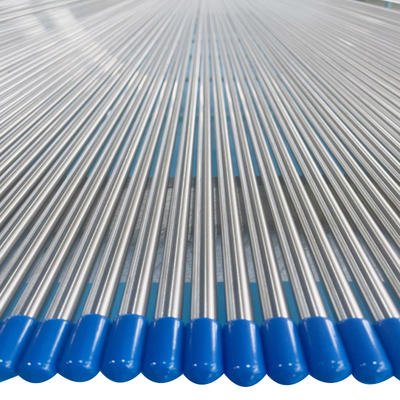
- Process: Heat-treated in a controlled atmosphere to prevent oxidation
- Appearance: Smooth, reflective, light gray finish
- Surface Roughness (Ra): Typically ≤ 0.5 µm
- Applications: Heat exchangers, hydraulic tubing, high-purity systems
- Standards: ASTM A269, ASTM A213
2.2. Electropolished (EP)
- Process: Electrochemical removal of surface metal in a controlled bath
- Appearance: Bright, mirror-like finish
- Surface Roughness (Ra): Can reach ≤ 0.25 µm
- Applications: Semiconductor, food & beverage, pharma-grade piping
- Advantages: Highest cleanability, reduced bacterial adhesion
- Reference: Electropolishing Explained – Micron Metal
2.3. Mechanical Polished (MP)
- Process: Abrasive grinding and polishing
- Finish Levels: 180 grit (standard), 240, 320, 400 grit
- Applications: Architectural, sanitary tubing, visible piping
- Note: May have micro-scratches that affect ultra-clean use
2.4. Pickled and Passivated
- Process: Acid treatment to remove scale, followed by passivation to restore chromium oxide layer
- Appearance: Dull matte gray
- Applications: Chemical processing, marine piping
- Standards: ASTM A967, EN ISO 16048
- Read More: Passivation Guide by ASTM International
3. Finish Comparison Table
| Finish Type | Process Method | Ra Value (Typical) | Appearance | Key Applications |
|---|---|---|---|---|
| Bright Annealed | Controlled furnace | ≤ 0.5 µm | Bright grey | Heat exchangers, hydraulic systems |
| Electropolished | Electrochemical | ≤ 0.25 µm | Mirror-like | Pharma, food, ultra-clean piping |
| Mechanical Polished | Abrasive grinding | 0.4 – 0.8 µm | Satin to bright | Decorative, sanitary fittings |
| Pickled | Acid + water rinse | Variable | Dull, uniform gray | Chemical, marine, structural use |
4. DLSS Surface Finish Capabilities
DLSS provides precision-controlled surface finishes for all tubing orders, including:
- BA (Bright Annealed): For seamless and welded tubes
- EP (Electropolished): Internal Ra control down to 0.25 µm
- MP (Mechanical Polished): Custom grit per request
- Pickled + Passivated: Fully compliant with ASTM A380/A967
- Custom Surface Reports: Available with Ra graph and inspection records
5. How to Select the Right Finish
| Industry / Requirement | Suggested Finish |
|---|---|
| Pharmaceutical, Biotech | Electropolished (EP) |
| Food & Beverage | BA or EP (depending on Ra requirement) |
| Petrochemical & Refining | Pickled + Passivated |
| Decorative / Architectural | MP or Polished 320+ grit |
| Instrumentation / Hydraulic Lines | Bright Annealed (BA) |
| Marine / Desalination | Pickled + Passivated |
For hygiene-critical uses, always request Ra reports and consider ASME BPE or DIN 11866 compliance.
FAQs
Q1: What is the difference between BA and EP finish?
BA is produced by heat treatment in a controlled atmosphere, while EP involves post-processing electrochemical treatment to further reduce Ra and remove surface contaminants.
Q2: Can EP finish be applied on welded tubes?
Yes. DLSS offers electropolishing for both welded and seamless tubes, including internal polishing.
Q3: Does surface finish affect corrosion resistance?
Yes. Smoother surfaces reduce crevice formation and bacterial adhesion, improving corrosion resistance, especially in chloride-rich or clean environments.
Q4: How do I verify surface finish quality?
DLSS provides Ra inspection reports using certified profilometers per ISO 4287.
Conclusion
Choosing the right surface finish for stainless steel tubes depends on your application’s cleanliness, aesthetics, and corrosion requirements. DLSS offers a full range of finishing services, complete documentation, and custom Ra control to ensure every tube meets your exact specification.
Contact DLSS
Email: info@dlsspipe.com
Website: www.dlsspipeline.com
Need advice on which surface finish suits your project? DLSS provides expert guidance and full QA documentation on request.