Hardness Testing in Mill Test Certificates (MTCs) for Stainless Steel Tubes

DLSS - Pipe&Tube - Hardness Testing in Mill Test Certificates (MTCs) for Stainless Steel Tubes

Introduction

Mill Test Certificates (MTCs) are essential documents for stainless steel tubes, certifying that products comply with ASTM, ASME, EN, and JIS standards. Among the critical mechanical properties included, hardness values (Brinell, Rockwell, Vickers) are especially important for ensuring suitability in demanding applications like boilers and heat exchangers.


1. Hardness in MTCs

  • Location: Listed under the Mechanical Properties section.
  • Typical Representation:
    • Brinell: HBW 10/3000 = 160
    • Rockwell: HRB 85 / HRC 22
    • Vickers: HV10 = 190
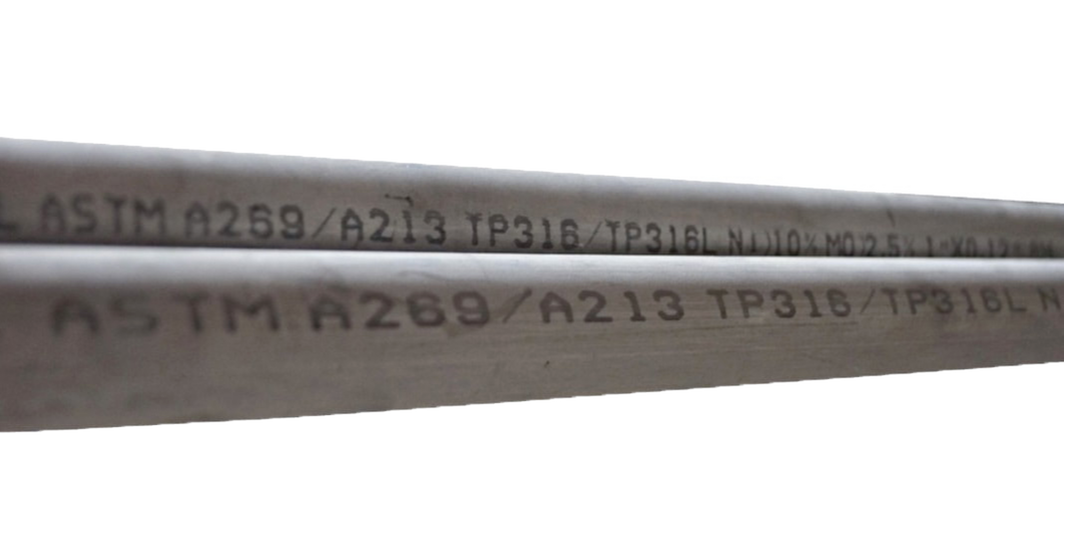
  • Example: ASTM A213 TP316L tubes typically specify maximum HBW 192.

2. Why Hardness Testing Appears in MTCs

  1. Verify Heat Treatment: Ensures proper annealing or quenching.
  2. Confirm Compliance: ASTM and EN standards specify hardness limits.
  3. Guarantee Reliability: Prevents tube failures in high-pressure, high-temperature operations.

3. How to Interpret Hardness Data

  • Compare values with standard limits.
  • Cross-check with tensile and elongation data.
  • Note conversion tables (ASTM E140) when multiple scales appear.

4. DLSS Quality Control

At DLSS, hardness testing is mandatory before issuing MTCs:

  • Brinell (HBW): For thick-walled tubes and forgings.
  • Rockwell (HRB/HRC): For seamless tubes and fittings.
  • Vickers (HV): For thin-walled tubes, welds, and precision parts.

All MTCs from DLSS include accurate hardness values, ensuring customers receive products that meet both international standards and end-use requirements.


Conclusion

Hardness values in Mill Test Certificates are vital indicators of stainless steel tube quality. By reviewing Brinell, Rockwell, and Vickers results, engineers and inspectors can confirm product reliability and compliance.

DLSS provides detailed MTCs with transparent hardness data, reinforcing our commitment to quality assurance for global clients.


Series Navigation

Wonderful! Share This Case:

Austenitic Stainless Steel

Duplex Stainless Steel

Nickel Alloys

▪ Incoloy Family

▪ Inconel Family

▪ Monel Family

▪ Hastelloy Family

▪ Other Special Alloys

Cobalt Alloys

Related Posts

Heat Exchanger Tube Materials: Pros and Cons of Stainless Steel, Copper, and Titanium

Heat Exchanger Tube

1. Introduction – Heat Exchanger Tube Materials Selecting the right heat exchanger tube material is critical for optimizing performance, extending service life, and minimizing maintenance costs. This article compares stainless steel, copper, and titanium—three of the most common materials used in shell and tube as well as plate heat exchanger...

Read More
Aleaciones Especiales para Tuberías en Plataformas Offshore en Brasil

Aleaciones Especiales para

Meta descripción:Las plataformas marinas brasileñas enfrentan desafíos extremos: alta salinidad, presión y exposición constante a H₂S. Conozca qué aleaciones inoxidables ofrecen mayor seguridad y vida útil en ambientes offshore. Introducción Brasil es líder en producción de petróleo en aguas profundas gracias a regiones como Campos, Santos y Pre-Sal. Estas plataformas...

Read More
ASTM A269 vs ASTM A213: What’s the Difference for Stainless Steel Tubes?

ASTM A269 vs

Introduction When sourcing stainless steel tubes, understanding the applicable ASTM standards is crucial. Two commonly referenced specifications are ASTM A269 and ASTM A213. While they may seem similar, these standards differ significantly in intended use, required testing, surface finish, and tolerances. In this article, we compare ASTM A269 and ASTM...

Read More
Nickel Alloy Steel Seamless Pipes and Tubes: Industrial Advantages and Applications

TP321 Heat Exchanger

Introduction Japanese industries such as power generation, petrochemicals, and marine engineering often require high-temperature-resistant stainless steel tubes. TP321 heat exchanger tubes from DLSS meet JIS G3463 – Stainless Steel Boiler and Heat Exchanger Tubes, providing exceptional stability against oxidation and creep at elevated temperatures. 1. Why TP321 for High-Temperature Applications(高温用途でTP321が選ばれる理由)...

Read More
In‑Depth Guide to Finned Tubes: Why They’re Trending in 2025

In‑Depth Guide to

Overview & Industry Outlook Finned tubes are rapidly gaining attention in 2025 due to their unmatched ability to enhance thermal transfer efficiency in compact spaces. According to MarketWatch, the finned tube heat exchanger market is projected to reach USD 20+ billion globally, driven by the expanding needs of HVAC systems,...

Read More
Understanding Electropolished (EP) Tubes – Surface Roughness, Applications, and Manufacturing

EP Tube Surface

Electropolished stainless steel tubes are often called EP tubes. They are used in clean and high-purity systems. These systems need a smooth inner surface, low particle risk, and good corrosion resistance. EP tubes are common in: The most important point for many buyers is surface roughness. Surface roughness is usually...

Read More
How to Choose Between Seamless and Welded Stainless Steel Tubes

Seamless vs Welded

When buying stainless steel tubes, one common question is: should we choose seamless or welded tubes? There is no single answer for every project. Seamless stainless steel tubes are often preferred for high-pressure, high-temperature, U-bend, or critical corrosion service. Welded stainless steel tubes can also be a practical and cost-effective...

Read More

Why Seamless Stainless

When designing a high-performance heat exchanger, tube material is a critical factor. Stainless steel, particularly in seamless form, is gaining popularity across industries thanks to its mechanical strength, corrosion resistance, and thermal reliability. In this article, we’ll break down why seamless stainless steel tubes are the ideal choice for demanding heat exchanger...

Read More

Request A Quote

*We respect your confidentiality and all information are protected.