How to Choose the Right Hardness Test for Stainless Steel Tubes

DLSS - Pipe&Tube - How to Choose the Right Hardness Test for Stainless Steel Tubes

Introduction

Hardness testing is essential for verifying the mechanical properties of stainless steel seamless tubes. With multiple methods available—Brinell (HBW), Rockwell (HRB/HRC), and Vickers (HV)—engineers and inspectors must decide which method is most appropriate for each application.

This article provides practical guidelines to help you choose the right hardness testing method for stainless steel tubes in boilers, heat exchangers, and petrochemical systems.


1. Brinell Hardness (HBW) – For Coarse or Heavy Materials

  • Advantages: Large indenter reduces the influence of microstructural irregularities.
  • Limitations: Leaves a large indentation, unsuitable for thin tubes.
  • When to Use: Forged, cast, or thick-walled stainless steel components.
  • Typical DLSS Application: Heavy boiler tubes and forged flanges.

2. Rockwell Hardness (HRB/HRC) – Fast and Practical

  • Advantages: Quick, direct readings without calculations.
  • Limitations: Less accurate for very thin or soft materials.
  • When to Use:
    • HRB: Softer stainless steels, e.g., annealed TP304 or TP316L.
    • HRC: Harder grades or heat-treated steels, e.g., TP321H, Duplex S32205.
  • Typical DLSS Application: Routine inspection of seamless tubes and heat exchanger pipes.

3. Vickers Hardness (HV) – Universal and Precise

  • Advantages: Can test thin or micro samples with high accuracy.
  • Limitations: Requires microscope measurement and skilled operation.
  • When to Use: Thin-walled tubes, welded joints, precision components.
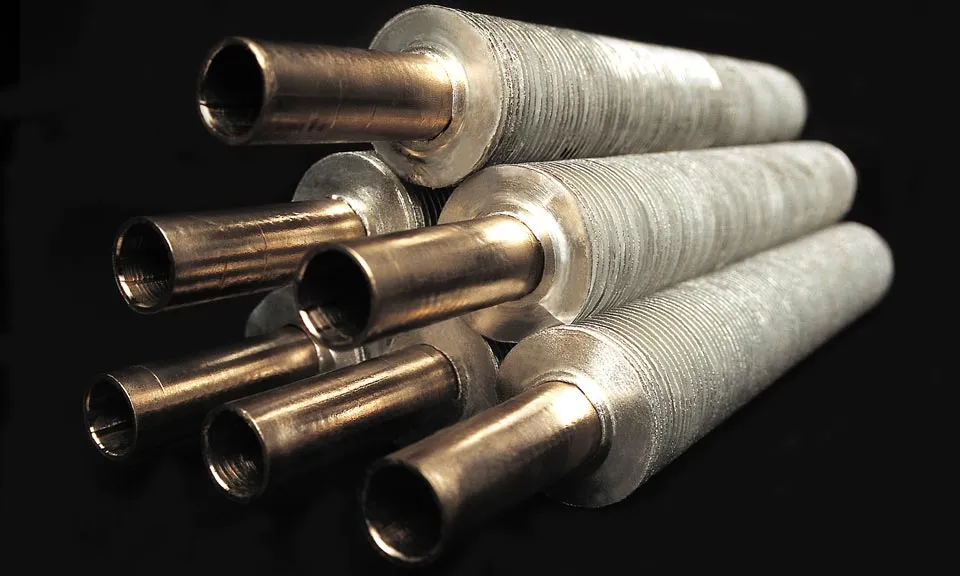
  • Typical DLSS Application: Bright annealed tubes, U-tubes, finned tubes.

4. Comparison Table

Test MethodIndenterLoad RangeBest ForLimitationExample in DLSS Products
Brinell (HBW)10 mm ballUp to 3000 kgfForgings, castingsLarge indentationThick boiler tubes, forged flanges
Rockwell (HRB/HRC)Ball / Cone60–150 kgfProduction checksNot ideal for thin tubesSeamless tubes, heat exchanger pipes
Vickers (HV)Diamond pyramid1–100 kgfPrecision testingTime-consumingBright annealed tubes, U-tubes, finned tubes

Practical Guidelines

  1. Use Brinell → For heavy, thick-walled stainless steels or forged products.
  2. Use Rockwell → For quick production and inspection checks.
  3. Use Vickers → For thin-walled, precision tubes or welded joints.

Conclusion

Choosing the right hardness test ensures reliable performance and compliance with standards in stainless steel tubes. Brinell is suited for heavy sections, Rockwell for routine checks, and Vickers for thin-walled precision applications.

At DLSS, we apply the most appropriate hardness method depending on the product type, ensuring accuracy and client satisfaction.


Series Navigation

Wonderful! Share This Case:

Austenitic Stainless Steel

Duplex Stainless Steel

Nickel Alloys

▪ Incoloy Family

▪ Inconel Family

▪ Monel Family

▪ Hastelloy Family

▪ Other Special Alloys

Cobalt Alloys

Related Posts

wind-farm-heat-exchanger-finned-tube-market

Global Wind Farm

With wind power accounting for over 25% of electricity in key global markets, operators are facing a new challenge: maintaining, upgrading, and replacing aging cooling and heat transfer systems, especially in offshore environments. As a result, demand for stainless steel finned tubes—used in turbine cooling, nacelle HVAC, and heat exchangers—is...

Read More
Finned Tube Material Selection Guide for Different Industrial Applications

Finned Tube Material

Selecting the right finned tube material is critical to achieving optimal performance, durability, and cost-effectiveness in heat exchanger systems. Different industries face different environmental and operational challenges, so your material choice should align with your application’s specific needs. If you are new to finned tube technology, start with Different Types...

Read More
electropolished-tube-id-ra-035

Sanitary Stainless Steel

Introduction As the food and beverage sector in South America expands rapidly—with leading producers in Brazil, Chile, and Argentina—hygiene and quality control are more critical than ever. From dairy lines in São Paulo to wineries in Mendoza, processing systems depend on stainless steel sanitary tubes to ensure cleanliness, durability, and...

Read More
Stainless Steel Instrumentation Tubing for Japan’s Oil & Gas Projects – 日本石油・ガス産業向けステンレス計装チューブ

Stainless Steel Instrumentation

Introduction The oil and gas industry in Japan demands high-precision stainless steel instrumentation tubing for safe and efficient operation of control systems. DLSS supplies JIS G3446-compliant tubes with excellent corrosion resistance, precision dimensional tolerances, and long service life in harsh offshore and onshore environments. 1. Why Stainless Instrumentation Tubes for...

Read More
Heat Exchanger Tube Manufacturing for Japan’s Power Industry(日本の発電産業向け熱交換器チューブ製造)

Heat Exchanger Tube

1. Introduction Japan’s power sector—including 火力発電所 (thermal power plants), 原子力発電所 (nuclear power plants), and 再生可能エネルギー施設 (renewable energy facilities)—demands high-performance heat exchanger tube Japan that can withstand high pressure, high temperature, and corrosive environments. DLSS provides stainless steel and special alloy tubes that meet JIS G3463 and ASTM standards, ensuring long...

Read More
Top Heat Exchanger Trends to Watch in 2025

Top Heat Exchanger

1. Hybrid Heat Exchangers: The Next Evolution Hybrid systems combine multiple heat transfer technologies (e.g., plate-fin + shell-and-tube) to boost energy efficiency and reduce installation space. This market is growing rapidly, fueled by decarbonization goals and integrated renewable systems. Market projection from LinkedIn They’re ideal for LNG plants, HVAC systems,...

Read More

Stainless Steel Ship

Stainless steel ship piping is used in many marine and shipbuilding systems. Ships work in a hard environment. The piping may face salt air, seawater, vibration, pressure, heat and long service time. If the wrong pipe material is used, the system may face corrosion, leakage, high repair cost or shutdown...

Read More
Flange Sealing Techniques: How to Ensure a Leak-Proof Pipeline Connection

Flange Sealing Techniques:

Introduction If you’ve ever walked through an oil refinery or a chemical plant, you’ve probably seen a flange connection wrapped in insulation—maybe even dripping or steaming from a tiny leak. Flange connections are everywhere in pipeline systems, but when not sealed properly, they’re one of the most common sources of...

Read More

Request A Quote

*We respect your confidentiality and all information are protected.