Material Selection for Seawater-Cooled Heat Exchangers: What Engineers Must Consider
Mr. Toey
DLSS-Tubes For Heat Exchanger-Material Selection for Seawater-Cooled Heat Exchangers: What Engineers Must Consider
Seawater is one of the most aggressive environments for heat exchanger systems. High levels of chlorides, biofouling, and oxygenated saline water create ideal conditions for pitting, crevice corrosion, and stress corrosion cracking (SCC).
Choosing the wrong material for tubes in seawater-cooled heat exchangers can lead to early failure, frequent maintenance, and high replacement costs.
In this article, we compare common stainless steel and alloy options for seawater service—and explain how DLSS Pipeline helps engineers select the right tube for long-term durability and cost efficiency.
Deposit-induced crevice corrosion from fouling or scaling
In tube systems, localized attack often initiates on the inner surface and accelerates quickly, especially in stagnant or low-velocity zones.
2. Material Options for Seawater Heat Exchangers
A. TP316L Stainless Steel
Affordable and widely available
Moderate resistance to chlorides
Not suitable for continuous seawater flow
Recommended only in indirect or brackish water systems
B. 904L Stainless Steel
High-alloy austenitic stainless steel
Better pitting and crevice resistance than 316L
Weldability and price are acceptable
Suitable for low-to-medium chlorides
C. Duplex 2205 (UNS S32205)
Higher strength and corrosion resistance than 316L
Good resistance to stress corrosion and pitting
Requires controlled welding and post-treatment
Used in offshore platforms, water-cooled gas systems
D. Super Duplex 2507 (UNS S32750)
Excellent chloride SCC and pitting resistance
High strength and good erosion resistance
Often used in marine condensers, FPSOs, and power plant intakes
E. Titanium Grade 2
Outstanding corrosion resistance in seawater
Excellent biofouling resistance
High cost, but extremely long service life
Ideal for desalination, naval systems, and offshore cooling
DLSS supplies 316L, 317L, 904L, 2205, and S32750 stainless steel tubes. Learn more at www.dlsspipeline.com
3. Performance Comparison
Material
Pitting Resistance (PREN)
Seawater Suitability
Typical Use Cases
TP316L
~25
Low (not continuous use)
HVAC, low-chloride water
904L
~35
Moderate
Heat exchangers in coastal plants
2205 Duplex
~35
High
Offshore cooling, ballast systems
2507 Super Duplex
~42–45
Very High
Subsea exchangers, marine condensers
Titanium Gr.2
>50
Excellent
Desalination, navy systems
4. Other Factors to Consider
Operating temperature: High temps (>60°C) increase SCC risk, especially in austenitic grades
Welding requirements: Duplex and titanium need specific welding expertise
Cost vs. lifecycle: Higher alloy cost often justified by reduced maintenance and replacement
Availability & lead time: DLSS maintains stable supply of seawater-grade stainless tubes
Frequently Asked Questions (FAQ)
Q1: Can I use 316L in seawater heat exchangers? Only in indirect contact or low-chloride applications. For direct seawater cooling, consider 2205 or higher-grade alloys.
Q2: How do I know if duplex is enough, or I need super duplex/titanium? Check chloride content, temperature, flow rate, and life expectancy. DLSS can help assess the correct material based on your process.
Q3: Can DLSS supply tubes with both corrosion and mechanical test certificates? Yes, all DLSS seawater-grade tubes are supplied with full EN 10204 3.1/3.2 certificates, including PMI, hydro test, and surface roughness inspection if needed.
Conclusion
In seawater-cooled systems, material selection is not optional—it’s a critical engineering decision. With aggressive chloride levels and long expected lifespans, choosing the right stainless or alloy tube prevents failure, reduces life-cycle cost, and protects equipment integrity.
DLSS Pipeline supports global projects with corrosion-resistant stainless steel and duplex tubes engineered for marine and offshore environments.
Introduction When selecting stainless steel tubes for industrial use, choosing the right grade can significantly affect corrosion resistance, mechanical performance, and cost efficiency. Among the most widely used austenitic stainless steels are 304L, 316L, and 317L. Though they may appear similar, their chemical makeup and performance differ greatly in environments...
In various industrial and domestic applications, heat exchangers are essential for optimizing thermal efficiency, reducing energy waste, and lowering operational costs. Among the many designs, pipe-based heat exchangers play a crucial role due to their structural simplicity and high effectiveness. This blog explores four common types: the Double Tube Heat...
A Double Pipe Heat Exchanger, also known as a double tube heat exchanger, is one of the simplest yet most effective types of heat exchangers for small to medium heat transfer needs. It consists of two concentric pipes—one inside the other—allowing two fluids to exchange heat without mixing. This blog...
Finned tube cleaning and maintenance are critical to ensuring optimal heat transfer performance and extending the service life of heat exchangers. Without proper care, fouling, corrosion, and fin damage can reduce efficiency and increase operating costs. For background on preventing fouling, read our article How to Prevent Corrosion and Fouling...
Introduction Heat exchanger tubes are the most critical components in shell and tube heat exchangers. They directly determine the heat transfer efficiency, corrosion resistance, and operational reliability of the entire system. Selecting the wrong tube material can result in serious issues such as: For engineers and procurement specialists, understanding how...
Product Overview: ASTM A213/ASME SA213 TP321 Seamless Tube (1.4541) The ASTM A213/ASME SA213 TP321 (1.4541) seamless tube is a high-performance, austenitic stainless steel tube designed for critical applications in heat exchangers and other high-temperature, high-stress systems. Known for its excellent corrosion resistance, especially against sulfuric and nitric acids, and its ability to...
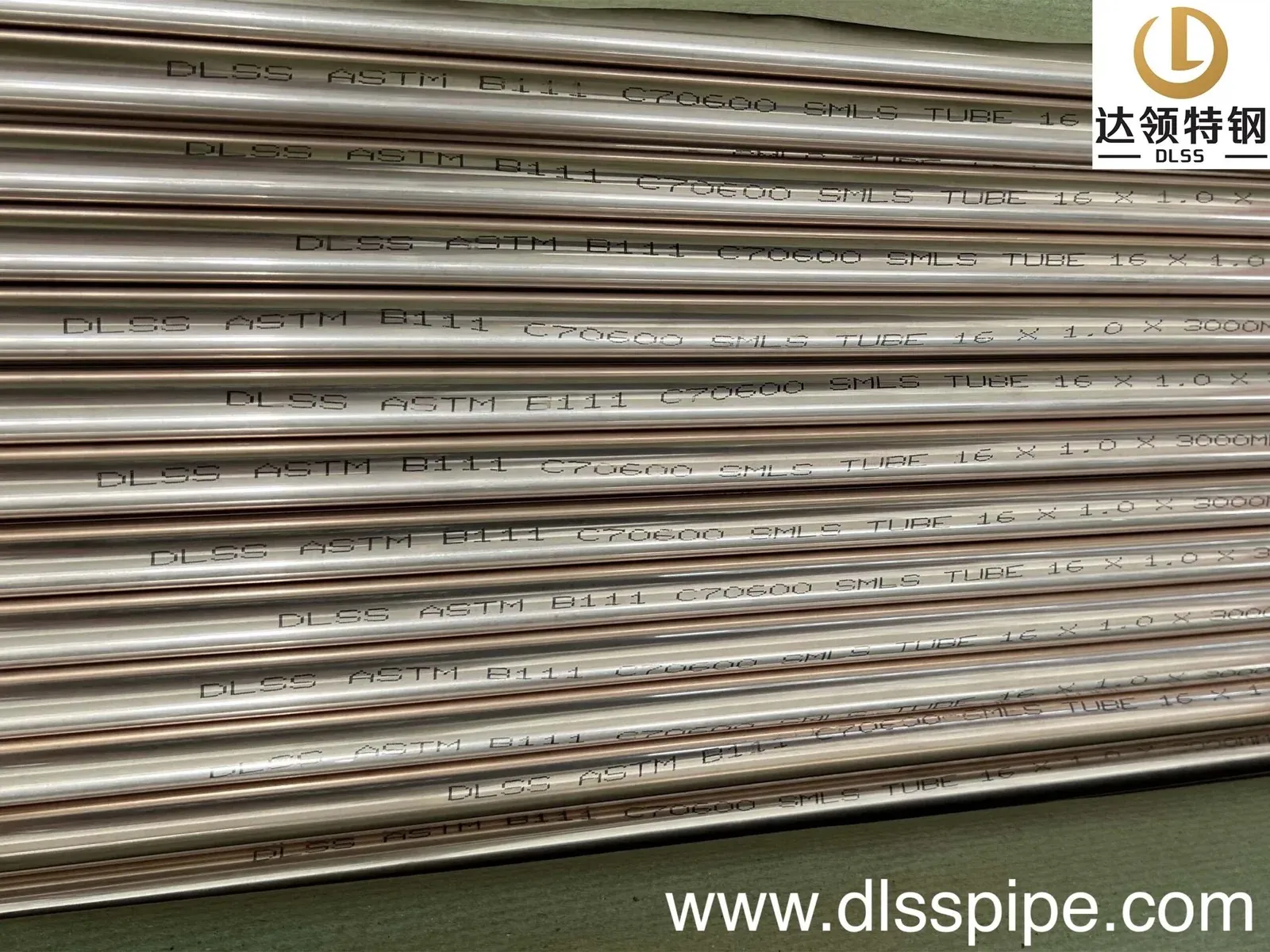
Product Overview: ASTM B111 C70600 Seamless Copper-Nickel Tube (16×1.0mm, 3000mm) C70600, also known as 90/10 Copper-Nickel, is a marine-grade copper alloy containing 90% copper and 10% nickel. It’s renowned for its outstanding resistance to seawater corrosion, biofouling, and stress corrosion cracking, making it a top choice for condenser tubes and heat exchanger...
1. Introduction – Heat Exchanger Maintenance Checklist Following a structured heat exchanger maintenance checklist is the most effective way to keep your equipment running efficiently, avoid costly breakdowns, and extend service life. Whether you operate a shell and tube heat exchanger, a plate heat exchanger, or an air-cooled model, regular...