Hardness Testing in Mill Test Certificates (MTCs) for Stainless Steel Tubes

DLSS - Pipe&Tube - Hardness Testing in Mill Test Certificates (MTCs) for Stainless Steel Tubes

Introduction

Mill Test Certificates (MTCs) are essential documents for stainless steel tubes, certifying that products comply with ASTM, ASME, EN, and JIS standards. Among the critical mechanical properties included, hardness values (Brinell, Rockwell, Vickers) are especially important for ensuring suitability in demanding applications like boilers and heat exchangers.


1. Hardness in MTCs

  • Location: Listed under the Mechanical Properties section.
  • Typical Representation:
    • Brinell: HBW 10/3000 = 160
    • Rockwell: HRB 85 / HRC 22
    • Vickers: HV10 = 190
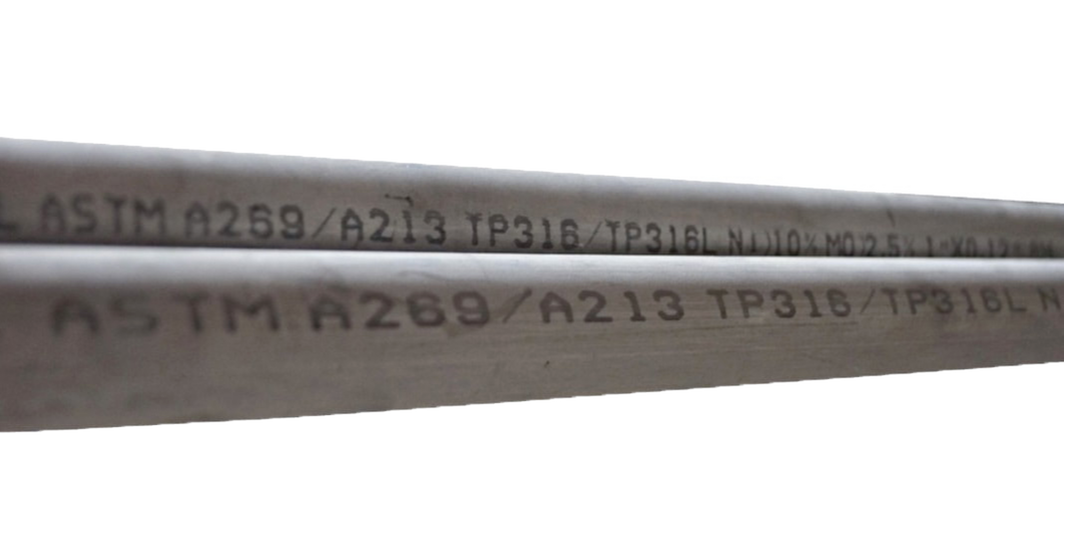
  • Example: ASTM A213 TP316L tubes typically specify maximum HBW 192.

2. Why Hardness Testing Appears in MTCs

  1. Verify Heat Treatment: Ensures proper annealing or quenching.
  2. Confirm Compliance: ASTM and EN standards specify hardness limits.
  3. Guarantee Reliability: Prevents tube failures in high-pressure, high-temperature operations.

3. How to Interpret Hardness Data

  • Compare values with standard limits.
  • Cross-check with tensile and elongation data.
  • Note conversion tables (ASTM E140) when multiple scales appear.

4. DLSS Quality Control

At DLSS, hardness testing is mandatory before issuing MTCs:

  • Brinell (HBW): For thick-walled tubes and forgings.
  • Rockwell (HRB/HRC): For seamless tubes and fittings.
  • Vickers (HV): For thin-walled tubes, welds, and precision parts.

All MTCs from DLSS include accurate hardness values, ensuring customers receive products that meet both international standards and end-use requirements.


Conclusion

Hardness values in Mill Test Certificates are vital indicators of stainless steel tube quality. By reviewing Brinell, Rockwell, and Vickers results, engineers and inspectors can confirm product reliability and compliance.

DLSS provides detailed MTCs with transparent hardness data, reinforcing our commitment to quality assurance for global clients.


Series Navigation

Wonderful! Share This Case:

Austenitic Stainless Steel

Duplex Stainless Steel

Nickel Alloys

▪ Incoloy Family

▪ Inconel Family

▪ Monel Family

▪ Hastelloy Family

▪ Other Special Alloys

Cobalt Alloys

Related Posts

Applications of Nickel Alloy Pipes in LNG and Refinery Projects

Applications of Nickel Alloy Pipes

1. Introduction Liquefied Natural Gas (LNG) terminals and oil refineries operate under some of the most challenging conditions in the energy sector. Piping systems in these facilities are constantly exposed to high pressure, fluctuating temperatures, and corrosive media such as hydrogen sulfide, chlorides, and acids. Nickel alloy pipes, including Inconel 625 (ASTM B444) and Incoloy […]

Read More
What Is a Double Pipe Heat Exchanger? Design, Benefits, and Industrial Applications

What Is a Double Pipe

A Double Pipe Heat Exchanger, also known as a double tube heat exchanger, is one of the simplest yet most effective types of heat exchangers for small to medium heat transfer needs. It consists of two concentric pipes—one inside the other—allowing two fluids to exchange heat without mixing. This blog will explore the design, working […]

Read More
Selecting Stainless Steel Tubes for Boilers and High-Temperature Heaters (2025 Guide)

Selecting Stainless Steel Tubes for

Why High-Temperature Applications Require Specialized Tubes Boilers, reheaters, and furnace coils operate in environments that push materials to their thermal limits. Stainless steel tubes used in these systems must withstand continuous exposure to temperatures ranging from 500°C to over 1000°C, while also resisting oxidation, creep deformation, and thermal fatigue. Without proper material selection, high temperatures […]

Read More
ASTM B111 C44300 (O61) Admiralty Brass Seamless Tube – 19.05 × 1.65 × 6100mm

ASTM B111 C44300 (O61) Admiralty

Product Summary Material Overview – C44300 Admiralty Brass C44300, commonly referred to as Admiralty Brass, is a copper-zinc alloy with a small amount of tin. It is specifically developed for excellent corrosion resistance in seawater and brine environments, making it ideal for refinery and power station heat exchanger tubes. Element Typical Composition (%) Copper (Cu) 70.0 – 73.0 Zinc […]

Read More
Corrosion-Resistant Heat Exchanger Tubes: When to Choose Titanium and Nickel Alloys

Corrosion-Resistant Heat Exchanger Tubes: When

In highly corrosive environments—such as seawater cooling, chemical processing, and offshore oil and gas—traditional stainless steel may not offer sufficient durability. Selecting the right material for heat exchanger tubes in these conditions is crucial for ensuring long service life, process safety, and reduced maintenance costs. This article explores two high-performance materials: Titanium and Nickel Alloy […]

Read More
hardness testing MTC stainless steel tubes

Hardness Testing in Mill Test

Introduction Mill Test Certificates (MTCs) are essential documents for stainless steel tubes, certifying that products comply with ASTM, ASME, EN, and JIS standards. Among the critical mechanical properties included, hardness values (Brinell, Rockwell, Vickers) are especially important for ensuring suitability in demanding applications like boilers and heat exchangers. 1. Hardness in MTCs 2. Why Hardness […]

Read More

Stainless Steel Seamless Pipe for

Meta Description:Explore how stainless steel seamless pipes tested to NACE MR0175 / ISO 15156 and MR0103 standards ensure safety in sour service environments. Learn about SSC, HIC, and corrosion resistance. Introduction Sour service environments—such as oil and gas fields containing hydrogen sulfide (H₂S)—pose serious challenges to piping materials. Without the proper metallurgy and testing, stainless […]

Read More
Understanding Duplex and Super Duplex Stainless Steel Tubes – Grades, Benefits, Applications

Understanding Duplex and Super Duplex

Meta Description:Explore the differences between duplex and super duplex stainless steel tubes. Learn about their chemical composition, corrosion resistance, mechanical strength, and best-use applications in harsh environments. Introduction When stainless steel isn’t enough for aggressive environments—duplex and super duplex stainless steels step in. These high-performance materials combine the advantages of both austenitic and ferritic structures, […]

Read More

Request A Quote

*We respect your confidentiality and all information are protected.