Surface finish is an important part of stainless steel tube selection. For stainless steel tubes, duplex tubes, nickel alloy tubes and heat exchanger tubes, the surface condition can affect corrosion resistance, cleanliness, inspection results, welding quality and final application performance.
Common stainless steel tube surface finishes include pickled surface, bright annealed surface and electropolished surface. They are often called Pickled Tubes, BA Tubes and EP Tubes. Each finish has different advantages and suitable applications.
Need stainless steel tubes with suitable surface finish?
DLSS supplies pickled stainless steel tubes, bright annealed tubes and electropolished tubes for heat exchangers, food and beverage, pharmaceutical, semiconductor, instrumentation and industrial applications.
Send us your OD, wall thickness, length, material grade, standard, surface finish and inspection requirement. We can help check the suitable supply solution.
View Heat Exchanger Seamless Tubes | Send RFQ
Pickled, BA and EP Stainless Steel Tubes Comparison
| Surface Finish | Full Name | Main Feature | Common Applications | Typical Requirement |
|---|---|---|---|---|
| Pickled Tube | Pickled and passivated surface | Removes scale and oxide after heat treatment | Heat exchangers, boilers, pressure equipment, general industrial piping | Clean surface, no heavy oxide, suitable for standard inspection |
| BA Tube | Bright Annealed Tube | Bright and clean surface after annealing in controlled atmosphere | Food and beverage, pharmaceutical, instrumentation, clean gas and fluid lines | Bright surface, clean inner and outer surface, controlled oxidation |
| EP Tube | Electropolished Tube | Smoother and cleaner internal surface after electropolishing | Semiconductor, high-purity gas, pharmaceutical and ultra-clean systems | High inner surface cleanliness, smoothness and strict inspection |
DLSS can support stainless steel tubes with different surface finish requirements, including pickled, bright annealed and electropolished tubes. For project orders, surface finish should be confirmed together with material grade, standard, size, tolerance, inspection and packing requirements.
What Is a Pickled Stainless Steel Tube?
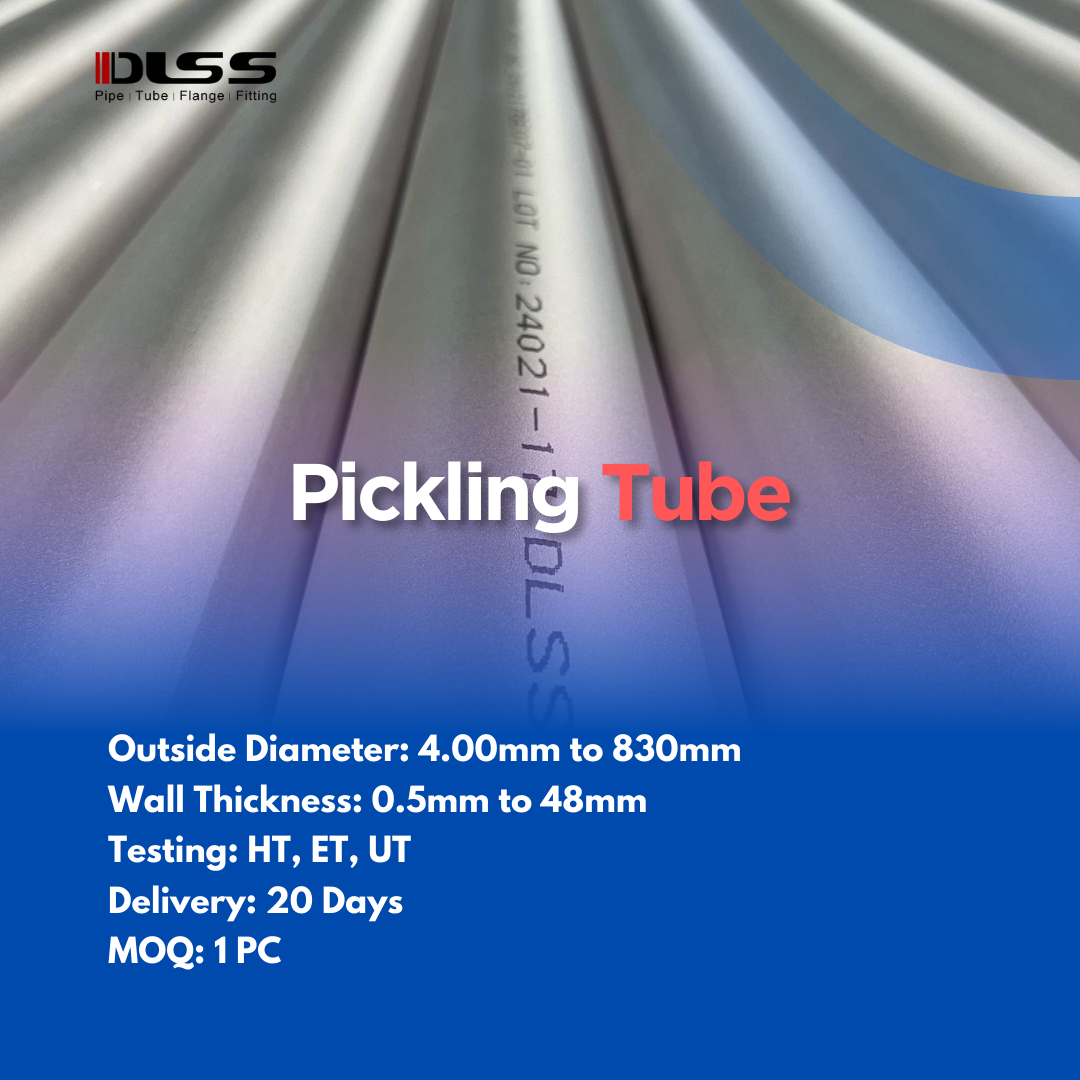
A pickled stainless steel tube is treated to remove oxide scale, heat treatment marks and surface contamination after production or annealing. Pickling helps restore a cleaner stainless steel surface and is widely used for industrial stainless steel tubes.
Pickled tubes are commonly used in heat exchangers, boilers, pressure equipment, chemical plants, oil and gas, power plants and general industrial piping systems.
Advantages of Pickled Tubes
Removes oxide scale after heat treatment
Suitable for many industrial tube applications
Cost-effective compared with BA or EP surface
Commonly used for seamless and welded stainless steel tubes
Suitable for heat exchanger and pressure equipment projects
When to Choose Pickled Tubes
Pickled tubes are suitable when the project focuses on industrial performance, standard inspection, pressure service and cost control, but does not require a mirror-bright or ultra-clean internal surface.
What Is a Bright Annealed Tube?
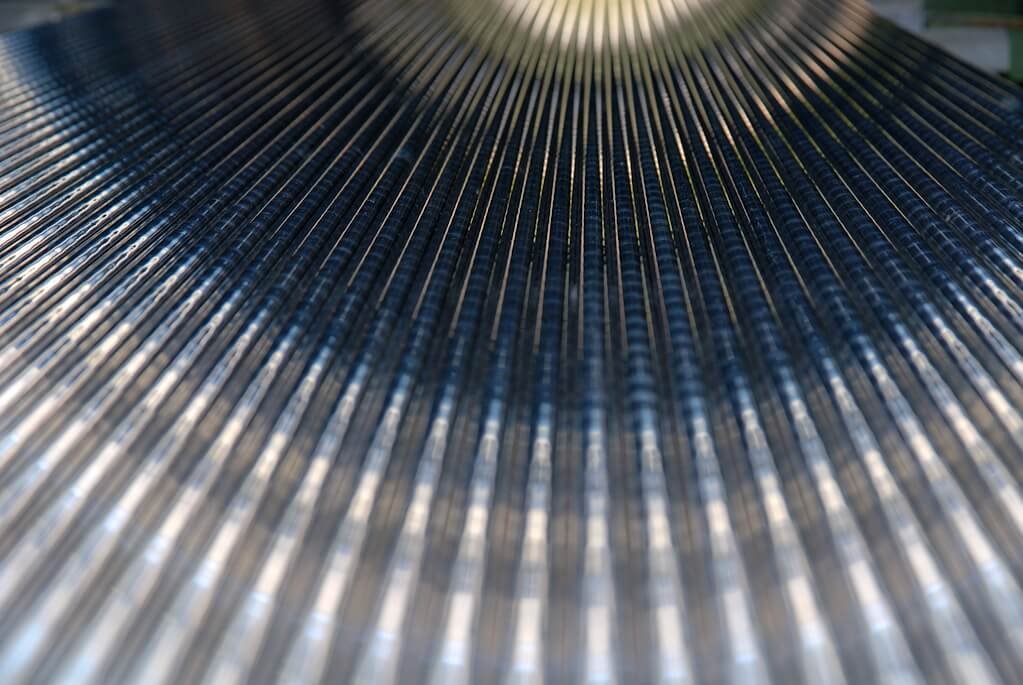
A bright annealed tube, also called BA tube, is annealed in a controlled atmosphere to reduce oxidation and keep the surface bright and clean. Compared with normal pickled tubes, BA tubes usually have a cleaner and brighter surface appearance.
BA tubes are widely used in applications where surface cleanliness, appearance and internal cleanliness are more important than normal industrial piping.
Advantages of BA Tubes
Bright and clean surface
Reduced surface oxidation after annealing
Good choice for clean fluid and gas applications
Suitable for food, beverage, pharmaceutical and instrumentation systems
Better surface appearance than normal pickled tubes
When to Choose BA Tubes
BA tubes are often selected for clean systems, process lines, instrumentation tubes and applications where the customer requires better surface appearance and cleanliness than standard pickled tubes.
What Is an Electropolished Tube?
An electropolished tube, also called EP tube, is treated by an electrochemical process to improve the internal surface condition. EP tubes are often used in ultra-clean or high-purity applications.
EP tubes are commonly required in semiconductor, high-purity gas, pharmaceutical, biotechnology and other clean system projects. For these applications, internal surface cleanliness, inspection and packing are very important.
Advantages of EP Tubes
Cleaner internal surface
Smoother surface condition compared with normal industrial tubes
Suitable for high-purity gas and clean fluid systems
Commonly used in semiconductor and pharmaceutical applications
Can support stricter inspection and packing requirements
When to Choose EP Tubes
EP tubes should be considered when the project requires very clean internal surface, high-purity media, strict contamination control or special inspection and packing requirements.
How to Choose Pickled, BA or EP Tubes
The right surface finish depends on the application, working medium, cleanliness requirement, inspection level and project budget.
| Application | Recommended Surface Finish | Reason |
|---|---|---|
| Heat exchanger tubes | Pickled or BA | Depends on material, process requirement and cleanliness level |
| Boiler and pressure equipment | Pickled | Common industrial choice with good cost control |
| Food and beverage process lines | BA or polished surface | Better cleanliness and surface appearance |
| Pharmaceutical tubing | BA or EP | Higher cleanliness and inspection requirements |
| Semiconductor high-purity gas system | EP | Strict internal surface cleanliness requirement |
| Instrumentation tubing | BA | Clean and bright surface, suitable for precision systems |
Key Points to Confirm Before Ordering
Before ordering stainless steel tubes, buyers should confirm the surface finish requirement clearly. Different surface finishes require different production, inspection and packing controls.
Material grade, such as 304L, 316L, 321, 904L, S31803, S32205 or nickel alloy
Tube standard, such as ASTM A213, ASTM A269, ASTM A312, ASTM A789 or project specification
Outside diameter, wall thickness and length
Seamless or welded tube requirement
Pickled, BA or EP surface finish
Inner surface and outer surface requirements
Inspection items, such as PMI, hydrostatic test, ET, UT or visual inspection
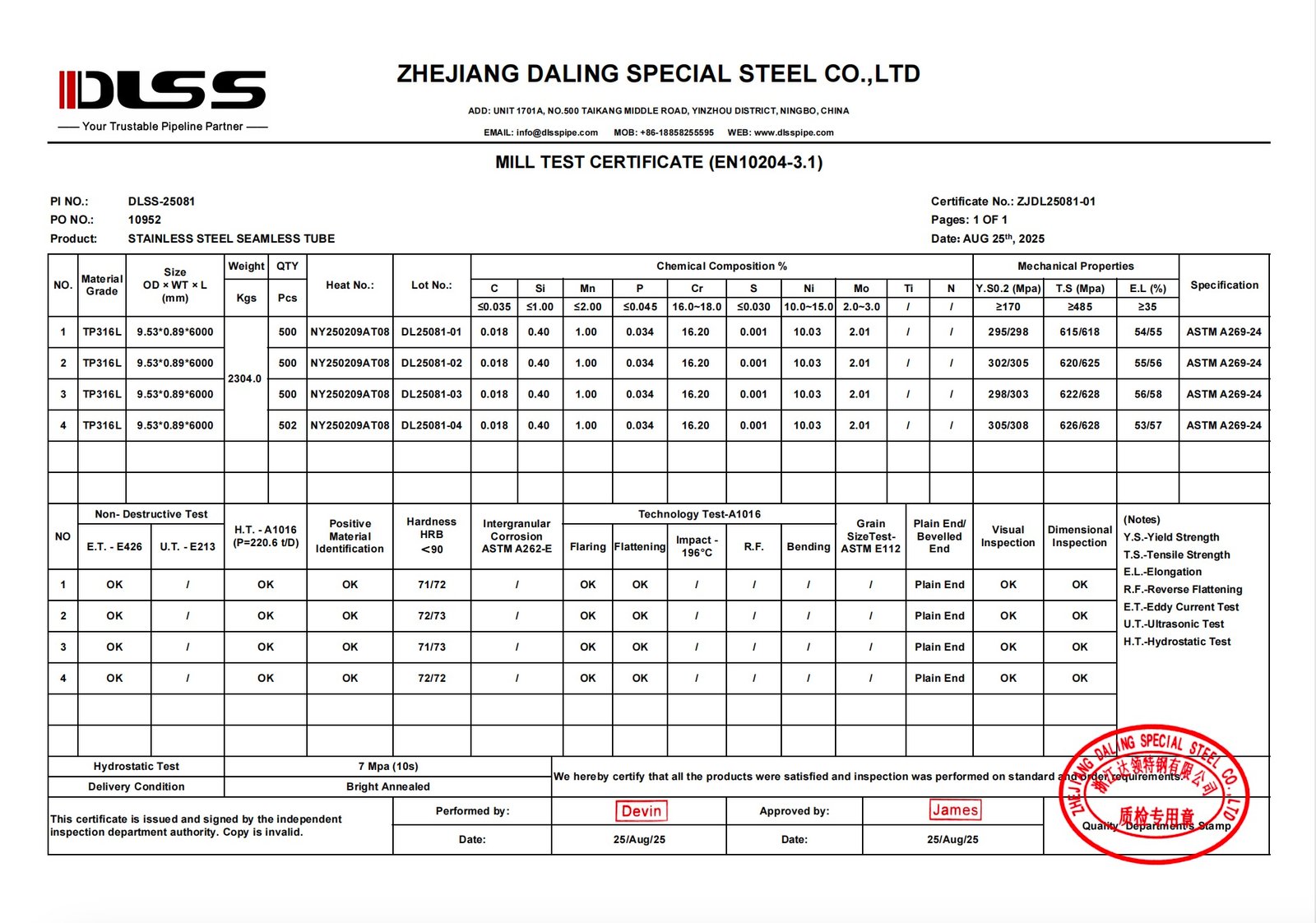
Certificate requirement, such as EN 10204 3.1 or 3.2
Cleaning and packing requirement
Third-party inspection requirement, if any
Inspection and Quality Control
Surface finish should be checked together with dimensional inspection, material verification and required testing. For clean tubes such as BA and EP tubes, inner surface condition and packing method are also important.
Depending on project requirements, DLSS can support:
Visual inspection
Dimensional inspection
PMI testing
Hydrostatic test
Eddy current testing
Ultrasonic testing
Inner surface inspection
MTC according to project requirement
Third-party inspection by TUV, BV, SGS, LR, ABS or appointed agencies
You can also learn more about DLSS inspection support on our Quality Control page.
FAQ: Stainless Steel Tube Surface Finish
Q1: What is the difference between pickled tube and BA tube?
Pickled tubes are treated to remove oxide scale and surface contamination after heat treatment. BA tubes are bright annealed in a controlled atmosphere and usually have a cleaner and brighter surface appearance.
Q2: What is the difference between BA tube and EP tube?
BA tube focuses on bright annealed surface and cleanliness. EP tube has an electropolished surface, especially on the inner surface, and is often used for higher cleanliness applications such as semiconductor and pharmaceutical systems.
Q3: Which surface finish is suitable for heat exchanger tubes?
For many industrial heat exchanger tubes, pickled surface is common. BA surface may be selected when the project requires better cleanliness or surface appearance. The final choice depends on material, application and project specification.
Q4: Are EP tubes necessary for all clean systems?
No. EP tubes are usually required for high-purity or ultra-clean systems. For general clean fluid or gas systems, BA tubes may be enough, depending on the project requirement.
Q5: Can DLSS supply tubes with MTC and third-party inspection?
Yes. DLSS can supply stainless steel tubes, duplex tubes, super duplex tubes and nickel alloy tubes with MTC and third-party inspection support according to project requirements.
Conclusion
Pickled, BA and EP tubes are used for different applications. Pickled tubes are common for industrial heat exchangers, boilers and pressure equipment. BA tubes are suitable for cleaner applications with better surface appearance. EP tubes are used for high-purity and ultra-clean systems.
When choosing stainless steel tube surface finish, buyers should consider not only price, but also application, cleanliness requirement, inspection level, certificate requirement and packing condition.
Looking for Pickled, BA or EP stainless steel tubes?
Send us your tube size, material grade, quantity, surface finish and inspection requirements. DLSS can help check the suitable production and supply solution.
View Heat Exchanger Seamless Tubes | Contact DLSS