How to Size a Shell and Tube Heat Exchanger: Key Design Parameters

DLSS - Heat Exchanger Knowledge Hub - How to Size a Shell and Tube Heat Exchanger: Key Design Parameters

1. Introduction – Shell and Tube Heat Exchanger Sizing

Proper shell and tube heat exchanger sizing ensures optimal performance, energy efficiency, and long service life. Incorrect sizing can lead to excessive pressure drops, fouling, or insufficient heat transfer.

This guide outlines the key design parameters to consider when sizing a shell and tube heat exchanger, whether for new installations or retrofits.

For related topics, see Shell and Tube Heat Exchanger Design Considerations, 5 Proven Ways to Improve Heat Exchanger Efficiency, and Heat Exchanger Troubleshooting Guide.


2. Determine Thermal Duty

Thermal duty (Q) is the total heat load the exchanger must handle, calculated as:

Q=m×Cp×ΔT

Where:

  • m = mass flow rate
  • Cₚ = specific heat of the fluid
  • ΔT = temperature change required

Accurate thermal duty ensures the exchanger has enough surface area to meet process requirements.


3. Select Flow Arrangement

  • Counterflow: Maximizes temperature difference, improving efficiency.
  • Parallel Flow: Simpler design but lower heat recovery.
  • Multi-Pass: Allows greater heat transfer in compact units but may increase pressure drop.

4. Tube Count and Length

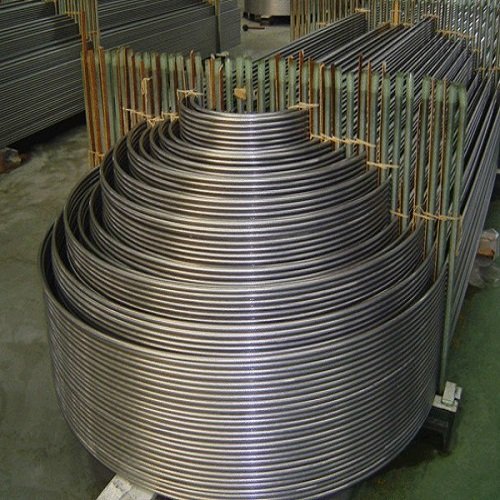
The number and length of tubes directly impact heat transfer surface area.


5. Tube Diameter and Pitch

  • Tube Diameter: Common sizes range from 12.7 mm (½”) to 25.4 mm (1″).
  • Tube Pitch: Triangular pitch maximizes surface area; square pitch facilitates cleaning.

6. Shell Diameter

Shell size must accommodate the tube bundle plus clearance for thermal expansion. The relationship between shell diameter and tube layout is defined in TEMA standards.


7. Baffle Design

  • Baffle Spacing: Closer spacing increases heat transfer but raises pressure drop.
  • Baffle Cut: Typically 20–40% of shell diameter to balance turbulence and flow distribution.

8. Pressure Drop Considerations

Excessive pressure drop reduces system efficiency and increases pump power requirements. Aim for the lowest pressure drop that still maintains adequate turbulence for heat transfer.


9. Fouling Factors

Include fouling resistance in calculations to ensure long-term performance. For prevention tips, see 7 Effective Ways to Prevent Fouling in Heat Exchangers.


10. Real-World Example

An oil refinery resized its seawater-cooled shell and tube exchanger using duplex stainless steel tubes, optimized baffle spacing, and a counterflow arrangement. The redesign improved heat recovery by 15% and extended cleaning intervals by 40%.


11. Conclusion

Correctly sizing a shell and tube heat exchanger requires balancing thermal performance, pressure drop, fouling resistance, and mechanical constraints. A well-sized unit can deliver years of efficient and reliable service.

For guidance on material selection and long-term maintenance, read Best Material for Seawater Heat Exchanger and Heat Exchanger Maintenance Checklist.


Contact DLSS
At DLSS, we manufacture high-quality stainless steel tubes for heat exchanger applications, ensuring optimal heat transfer, corrosion resistance, and long service life.
Email: info@dlsspipe.com
Website: www.dlsspipeline.com

Related Reading

Wonderful! Share This Case:

Austenitic Stainless Steel

Duplex Stainless Steel

Nickel Alloys

▪ Incoloy Family

▪ Inconel Family

▪ Monel Family

▪ Hastelloy Family

▪ Other Special Alloys

Cobalt Alloys

Related Posts

Ultrasonic vs Eddy Current Testing: Which Is Best for Heat Exchanger Tube Inspection?

Ultrasonic vs Eddy Current Testing:

Meta Description:Understand the key differences between ultrasonic testing (UT) and eddy current testing (ECT) for stainless steel and alloy heat exchanger tubes. Learn which method is best for your application. Introduction Non-destructive testing (NDT) is essential in the manufacturing and inspection of stainless steel tubes used in critical heat exchanger systems. Among the most widely […]

Read More
Why Japanese Heat Exchanger Manufacturers Prefer TP316L Tubes(日本の熱交換器メーカーがTP316Lチューブを選ぶ理由)

Why Japanese Heat Exchanger Manufacturers

1. Introduction TP316L heat exchanger tube Japan is the top choice for many 日本の熱交換器メーカー (Japanese heat exchanger manufacturers) that require exceptional corrosion resistance, precise dimensions, and long service life. Whether for 海水淡水化プラント (seawater desalination plants), chemical processing, or power generation, TP316L delivers consistent performance in Japan’s demanding industrial environments. 2. Material Properties of TP316L Stainless […]

Read More
Nickel Alloy Steel Seamless Pipes and Tubes: Industrial Advantages and Applications

Alloy Steel Heat Exchanger Tubes

Introduction In high-temperature environments such as boilers, power plants, and petrochemical heat exchangers, alloy steel tubes are indispensable. One common choice is ASTM A199 T11, a Cr-Mo alloy steel that provides excellent creep resistance, mechanical strength, and durability. Recently, a customer requirement for T11 cold drawn tubes offers a valuable example of how this material […]

Read More
Finned Tube Heat Transfer Coefficient: Key Factors and Optimization Strategies

Finned Tube Heat Transfer Coefficient:

The heat transfer coefficient is one of the most important performance indicators of a finned tube. It determines how efficiently heat can be transferred between the tube-side and the air-side or shell-side medium. By understanding and optimizing the key factors that influence this coefficient, engineers can significantly improve overall heat exchanger efficiency. For an overview […]

Read More
Nickel 200 and Nickel 201 Seamless Tubes: Properties, Applications, and Selection Guide

Nickel 200 and Nickel 201

Introduction Nickel 200 seamless tubes and Nickel 201 seamless tubes are widely used in industries requiring high-purity, corrosion-resistant, and thermally conductive materials. These nickel alloy seamless pipes offer exceptional performance in chemical processing, caustic environments, cryogenic systems, and electrolytic applications. According to Wikipedia, both Nickel 200 and 201 belong to the category of commercially pure […]

Read More
Exploring Different Types of Pipe-Based Heat Exchangers: Double Tube, Stove Pipe, Exhaust Pipe, and Heat Pipe Designs

Exploring Different Types of Pipe-Based

In various industrial and domestic applications, heat exchangers are essential for optimizing thermal efficiency, reducing energy waste, and lowering operational costs. Among the many designs, pipe-based heat exchangers play a crucial role due to their structural simplicity and high effectiveness. This blog explores four common types: the Double Tube Heat Exchanger, Stove Pipe Heat Exchanger, […]

Read More
Corrosion Resistance in Marine Applications: Stainless Tubes for Japan(海洋用途における耐食性:日本向けステンレスチューブ)

Corrosion Resistance in Marine Applications:

1. Introduction Japan, an island nation surrounded by seawater, faces constant challenges from 塩化物腐食 (chloride corrosion) in its marine industries. Stainless steel tubes with high corrosion resistance are essential in 海水淡水化プラント (seawater desalination plants), offshore oil & gas facilities, and shipbuilding. DLSS specializes in supplying marine corrosion resistant tube Japan to meet these demanding conditions. […]

Read More
Top 10 Applications of Stainless Steel Tubes in the Oil & Gas Industry

Top 10 Applications of Stainless

Meta Description:Explore the top 10 critical applications of stainless steel tubes in the oil & gas industry. Learn how DLSS tubes perform under high pressure, corrosion, and extreme conditions. Introduction The oil and gas industry operates under extreme conditions—high pressure, corrosive environments, and fluctuating temperatures. To ensure safety and durability, stainless steel tubes are essential […]

Read More

Request A Quote

*We respect your confidentiality and all information are protected.