Ultrasonic vs Eddy Current Testing: Which Is Best for Heat Exchanger Tube Inspection?

DLSS - Pipe&Tube - Ultrasonic vs Eddy Current Testing: Which Is Best for Heat Exchanger Tube Inspection?

Meta Description:
Understand the key differences between ultrasonic testing (UT) and eddy current testing (ECT) for stainless steel and alloy heat exchanger tubes. Learn which method is best for your application.


Introduction

Non-destructive testing (NDT) is essential in the manufacturing and inspection of stainless steel tubes used in critical heat exchanger systems. Among the most widely used methods are:

  • Ultrasonic Testing (UT)
  • Eddy Current Testing (ECT)

But which one is better for your project? The answer depends on material type, tube thickness, surface condition, and defect detection goals.

This article breaks down each method’s principles, pros and cons, and their suitability for different tube inspection needs.
Ultrasonic vs Eddy Current Testing: Which Is Best for Heat Exchanger Tube Inspection?

What Is Ultrasonic Testing (UT)?

Ultrasonic testing uses high-frequency sound waves (typically 1–10 MHz) to detect internal defects. A transducer sends sound into the tube wall, and any echo (reflection) reveals anomalies such as:

  • Laminations
  • Inclusions
  • Cracks
  • Wall thickness variations
Ultrasonic vs Eddy Current Testing: Which Is Best for Heat Exchanger Tube Inspection?

UT Standards for Tubes:

  • ASTM E213: UT for seamless metal tubes
  • ASME SA-388: UT for forged products
  • EN ISO 10893-10: UT of steel tubes for pressure purposes

See official ASTM E213 overview


What Is Eddy Current Testing (ECT)?

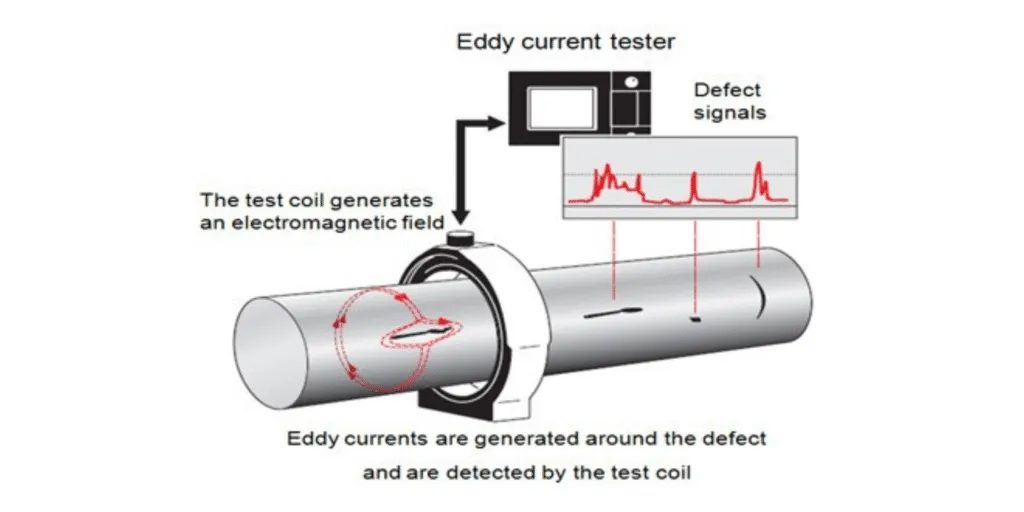
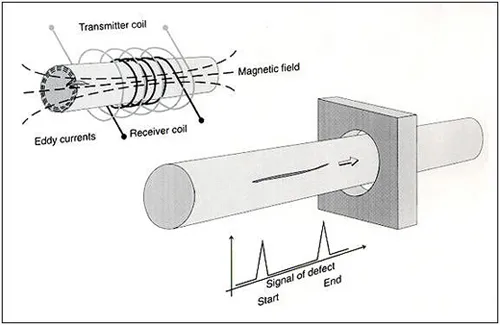
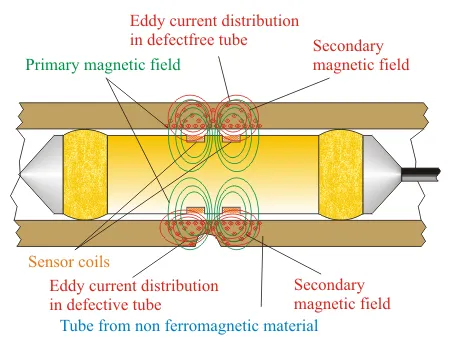
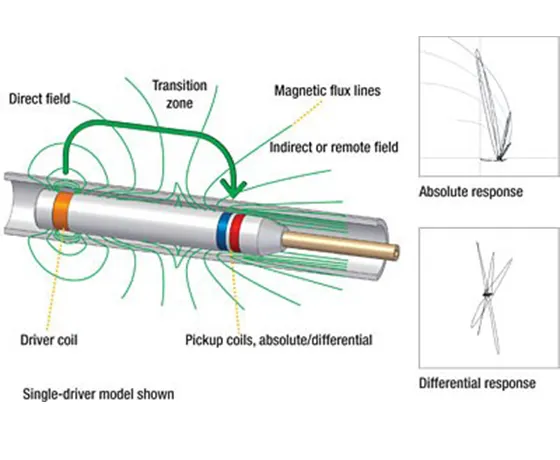
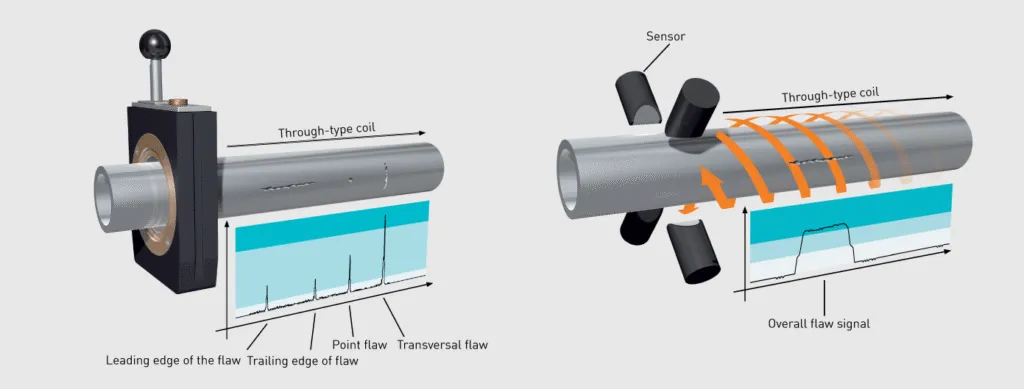
Eddy current testing works by generating electromagnetic fields in conductive materials. When a probe passes through or around the tube, variations in conductivity or permeability cause distortions, revealing:

  • Surface defects
  • Subsurface flaws (within 1–2 mm depth)
  • Corrosion pitting
  • Seam weld defects

ECT is highly effective on non-magnetic stainless steels (like 316L) and thin-wall tubes.
Ultrasonic vs Eddy Current Testing: Which Is Best for Heat Exchanger Tube Inspection?

ECT Standards for Tubes:

  • ASTM E426: ECT of nonferrous tubes
  • EN ISO 10893-2: ECT of seamless and welded steel tubes

Side-by-Side Comparison Table

FeatureUltrasonic Testing (UT)Eddy Current Testing (ECT)
PrincipleHigh-frequency sound wavesElectromagnetic induction
DetectsInternal flaws, wall thicknessSurface and near-surface defects
Penetration DepthFull-wall1–2 mm max
Surface Prep NeededYes (couplant, clean surface)Minimal
Suitable for Magnetic MaterialsYesNo (limited to non-magnetic)
SpeedSlower (requires calibration)Faster (especially for 100% ECT)
Ideal ForWeld flaws, laminations, thicknessSurface cracks, ID/OD pitting
Common StandardsASTM E213, ISO 10893-10ASTM E426, ISO 10893-2

When to Use UT vs ECT in Heat Exchanger Tubes

ApplicationRecommended MethodReason
High-pressure boiler tubesUTDetects wall thickness & deep flaws
Non-ferrous condenser tubes (CuNi, Brass)ECTFast and effective for surface pitting
Austenitic stainless steel (316L)ECT + optional UTGood surface scan; combine if full wall is critical
Duplex/super duplex tubesUTBetter for through-wall inclusions
Welded tubesUT or combination with ECTValidate weld seam + surface finish

DLSS Inspection Capabilities

DLSS provides 100% NDT inspection options upon request, including:

  • 100% UT for seamless heat exchanger tubes
  • 100% ECT for thin-wall or condenser-grade tubes
  • Hydrostatic Testing for pressure validation
  • Visual + Dimensional Checks as per EN 10216, ASTM A213

All tests are certified in the Mill Test Certificate (MTC) with traceable results and heat numbers.
Ultrasonic vs Eddy Current Testing: Which Is Best for Heat Exchanger Tube Inspection?

Real-World Example: Duplex Tube Order for Offshore Platform

A Norwegian client requested 25.4×2.11 mm S32205 duplex tubes for an offshore cooler. Their specification required:

  • 100% UT to EN ISO 10893-10
  • Wall thickness verification (±0.05 mm)
  • Seam weld confirmation via PT (for welded samples)

DLSS successfully delivered the order with zero rejection—verified by third-party TUV inspector onsite.
Ultrasonic vs Eddy Current Testing: Which Is Best for Heat Exchanger Tube Inspection?

Conclusion

UT and ECT are complementary tools in stainless steel tube inspection. Depending on your tube grade, wall thickness, and defect sensitivity:

  • Use UT for deep defects and structural soundness
  • Use ECT for surface flaw detection and fast screening

DLSS supports both methods in-house or via certified third parties, ensuring the integrity of your heat exchanger tubes before shipment.


Contact DLSS for NDT-Qualified Tubes
Email: info@dlsspipe.com
Website: www.dlsspipeline.com

Need help specifying the right inspection method for your project? We’re here to guide you—test by test.

Wonderful! Share This Case:

Austenitic Stainless Steel

Duplex Stainless Steel

Nickel Alloys

▪ Incoloy Family

▪ Inconel Family

▪ Monel Family

▪ Hastelloy Family

▪ Other Special Alloys

Cobalt Alloys

Related Posts

Low Finned Tubes in Duplex Steel for High-Efficiency Heat Exchangers

Low Finned Tubes in Duplex

Introduction Heat exchangers play a critical role in maximizing thermal performance across industries such as geothermal energy, petrochemical, and power generation. Among the different tube designs, low finned tubes stand out as a proven solution to increase the surface area and improve heat transfer efficiency without requiring more installation space. Recently, a customer presented us […]

Read More
How DLSS Controls Grain Size for Austenitic Stainless Steel Tubes – Why It Matters

How DLSS Controls Grain Size

Meta Description:Discover why grain size matters in stainless steel tubing and how DLSS ensures optimal grain structure through precise heat treatment, testing, and quality control. Introduction Grain size in stainless steel is more than just a microscopic characteristic—it directly affects mechanical strength, corrosion resistance, formability, and creep performance. For critical applications such as heat exchangers, […]

Read More
Cost vs Performance: Are Titanium Pipes Worth It in Power Plant Condensers?

Cost vs Performance: Are Titanium

1. Introduction Power plants around the world rely on efficient condenser systems to maximize energy output and minimize downtime. Material choice for condenser tubes directly impacts operating costs and plant reliability. While stainless steel and copper alloys have traditionally been used, titanium pipes (Grade 2, ASTM B338) are increasingly recognized as the most cost-effective solution […]

Read More
Top Stainless Steel Industry Trends in 2025: Sustainability, Advanced Alloys, and Smart Manufacturing

Top Stainless Steel Industry Trends

Meta Description:Explore the top 6 stainless steel industry trends in 2025, including green steel initiatives, duplex and super duplex stainless steels, nickel alloy pipes, and intelligent tube manufacturing. 1. Sustainable Stainless Steel Production With the global push toward decarbonization, the stainless steel industry is rapidly transitioning to green steel production. In 2025: Key Keywords: green […]

Read More
Selecting Stainless Steel Tubes for Seawater, Desalination, and Marine Applications (2025 Guide)

Selecting Stainless Steel Tubes for

Why Seawater and Desalination Systems Require Specialized Tubing Seawater contains high concentrations of chlorides, which are extremely aggressive toward most conventional stainless steels. In marine environments or desalination plants, tubes are exposed to continuous flow of saline water, biofouling, crevice conditions, and temperature fluctuations. To ensure long service life and avoid premature failure due to […]

Read More
Low-Fin Tubes: Compact Heat Transfer Solutions for Refrigeration and HVAC

Low-Fin Tubes: Compact Heat Transfer

Low-fin tubes are designed to improve heat transfer efficiency while maintaining a compact design, making them ideal for applications where space and weight are limited. These tubes feature external fins with a low height, which increases the surface area for heat exchange without significantly increasing the overall size. For a broader look at finned tube […]

Read More
Stainless Steel Tube Defects – Common Issues, Causes, and How to Prevent Them

Stainless Steel Tube Defects –

Meta Description:Discover the most common defects in stainless steel tubes, such as pitting, cracking, and weld flaws. Learn what causes them and how DLSS prevents them through rigorous quality control. Introduction Stainless steel tubes are used in critical applications across industries—from heat exchangers and boilers to instrumentation and food processing. But even high-grade stainless steel […]

Read More

Understanding NACE MR0175 / ISO

Meta Description:Learn the essential requirements of NACE MR0175 / ISO 15156 for stainless steel tubing. Discover how to ensure compliance in sour gas environments and avoid material failure. Introduction In the oil and gas industry, hydrogen sulfide (H₂S) poses one of the greatest threats to material performance. It causes Sulfide Stress Cracking (SSC) and Hydrogen-Induced […]

Read More

Request A Quote

*We respect your confidentiality and all information are protected.