Heat Exchanger Tube Types Explained – U-Bend, Straight, Corrugated, and Low-Fin

DLSS - Tubes For Heat Exchanger - Heat Exchanger Tube Types Explained – U-Bend, Straight, Corrugated, and Low-Fin

Meta Description:
Explore the differences between U-bend, straight, corrugated, and low-fin stainless steel heat exchanger tubes. Learn how to select the right type for your application and improve thermal efficiency.


Introduction

In the world of thermal systems, heat exchanger tubes are essential to transferring energy efficiently and reliably. From chemical processing to HVAC systems, selecting the correct tube type can directly affect performance, cost, and lifespan.

At DLSS, we supply a wide range of custom-formed stainless steel tubes for heat exchangers. This article breaks down the most common types—U-bend, straight, corrugated, and low-fin—to help engineers make the right selection.


1. Straight Tubes

Description

Straight tubes are the most basic and commonly used form of heat exchanger tubing. They run directly from one tube sheet to another without any bends or surface modifications.

Applications

  • Shell-and-tube exchangers in oil & gas
  • Power plant condensers
  • Sugar mill air heaters

Advantages

  • Simple to manufacture
  • Easy to clean and inspect
  • Available in wide sizes (OD 6mm to 88.9mm)

Considerations

  • Requires more space in layout
  • Less compact compared to U-bend systems

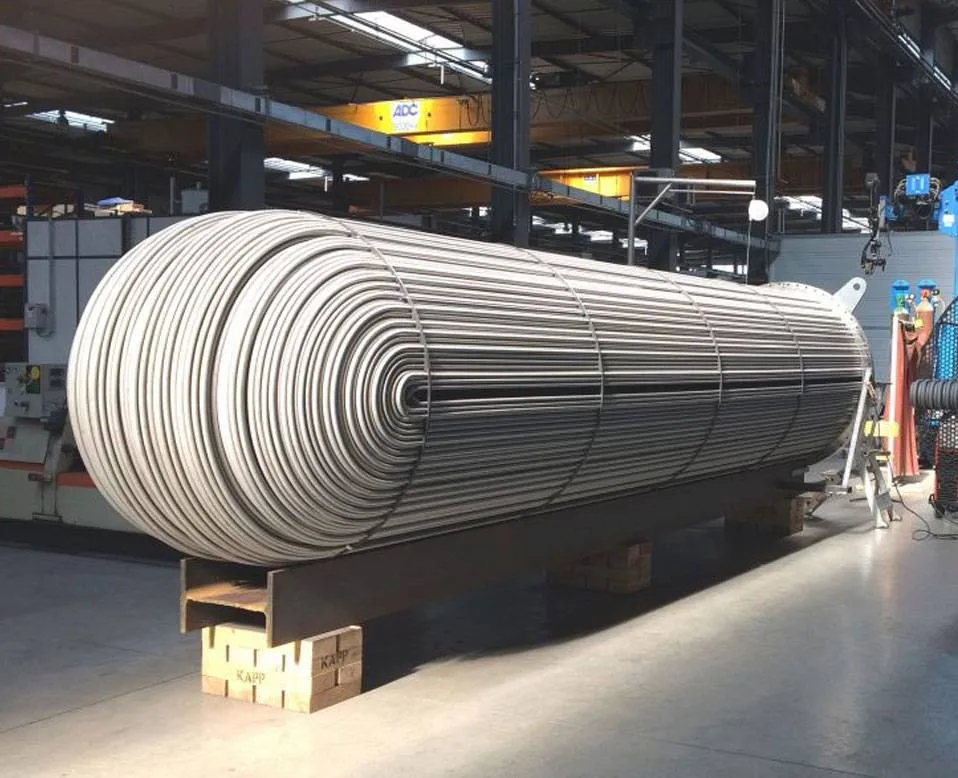
2. U-Bend Tubes

Description

U-bend tubes are formed by bending straight tubes into a tight 180° curve, allowing a double pass in a single shell.

Applications

  • Heat recovery steam generators (HRSG)
  • Marine evaporators
  • Pharmaceutical condensers

Advantages

  • Space-saving design
  • Simplifies tube sheet layout
  • Reduces the number of connections and joints

Considerations

  • Bending requires annealing to prevent cracking
  • Must be inspected for thinning at the bend radius
  • Bending radius often follows ASTM A556 or customer spec

3. Corrugated Tubes

Description

Corrugated tubes feature a periodic wave pattern along their length, which enhances turbulence and improves heat transfer.

Applications

  • Compact air-cooled heat exchangers
  • Chemical chillers
  • Gas-liquid contact systems

Advantages

  • Higher heat transfer efficiency
  • Reduced fouling due to turbulent flow
  • Smaller footprint exchangers possible

Considerations

  • More complex to manufacture
  • Requires precise forming equipment
  • Harder to clean mechanically

4. Low-Fin Tubes

Description

Low-fin tubes have external spiral fins machined into the outer wall to increase surface area and improve heat exchange.

Applications

  • Refrigeration evaporators
  • LNG heat exchangers
  • Fuel coolers in power stations

Advantages

  • High surface area to volume ratio
  • Efficient heat transfer in gas-to-liquid systems
  • Available in copper, cupronickel, and stainless alloys

Considerations

  • Must select fin height and pitch carefully
  • Typically used where pressure drop is tolerable

DLSS Tube Manufacturing Capabilities

Tube TypeAvailable MaterialsStandards Supported
StraightTP304/L, TP316/L, Duplex 2205, Alloy 825ASTM A213, A789, EN 10216-5
U-bendSame as above, bend radius as per ASTM A556AD2000 W0, PED, 3.2 Certification
CorrugatedTP316L, C70600, C68700, TP304Custom forming based on client design
Low-FinCuNi, SS, Admiralty Brass, Aluminum BrassASTM B111, B359, ISO 13706

How to Choose the Right Tube Type

ConditionRecommended Tube Type
Space-limited layoutU-bend
High thermal efficiency neededCorrugated / Low-fin
Easy maintenance requiredStraight
Air-side cooling systemsLow-fin
Aggressive cleaning neededStraight / U-bend

FAQs

Q1: Can corrugated tubes be used in high-pressure exchangers?
Corrugated tubes are generally suited for moderate pressure. For high pressure, seamless straight or U-bend tubes with thicker walls are recommended.

Q2: What’s the maximum bend radius for U-tubes?
It depends on the material and OD. Typically 1.5 to 3 times the OD, as per ASTM A556.

Q3: Are low-fin tubes seamless or welded?
DLSS supplies both. For critical applications, seamless low-fin tubes are preferred to ensure no leakage through fin roots.

Q4: Can DLSS supply pre-inspected tubes with eddy current and hydro test?
Yes. All tube types can be supplied with 100% eddy current testing, hydrostatic test, and full documentation (EN 10204 3.1 / 3.2).


Conclusion

Selecting the right heat exchanger tube type isn’t just a matter of form—it directly affects efficiency, durability, and maintenance. At DLSS, we work closely with engineers and OEMs to deliver tubes that meet exact thermal and mechanical requirements.


Contact DLSS
Email: info@dlsspipe.com
Website: www.dlsspipeline.com

Need help selecting the right heat exchanger tube? DLSS offers expert guidance, quick quotations, and global shipping of precision-engineered stainless steel tubing.

Wonderful! Share This Case:

Austenitic Stainless Steel

Duplex Stainless Steel

Nickel Alloys

▪ Incoloy Family

▪ Inconel Family

▪ Monel Family

▪ Hastelloy Family

▪ Other Special Alloys

Cobalt Alloys

Related Posts

New Growth Frontiers: Latin America’s Stainless Steel Tube Market in Energy and Industry

New Growth Frontiers: Latin America’s

Latin America (LATAM) is becoming an increasingly important region for stainless steel seamless tube suppliers—especially in the energy, mining, petrochemical, and food sectors. Countries like Brazil, Mexico, Argentina, and Chile are actively investing in infrastructure modernization, oil & gas projects, and renewable energy systems, all of which require heat exchangers, boilers, and industrial piping built […]

Read More
ASME SA213 TP316H Seamless Tube (19.05 × 2.0mm, up to 6000mm in length)

ASME SA213 TP316H Seamless Tube

Product Overview: ASME SA213 TP316H Seamless Tube ASME SA213 TP316H is a high-performance austenitic stainless steel seamless tube specifically designed for applications in high-temperature and highly corrosive environments. Widely used in critical industrial systems such as heat exchangers, boilers, condensers, and high-pressure fluid systems, this material meets the stringent standards set by ASTM A213 / […]

Read More
Selecting Stainless Steel Tubes for Seawater, Desalination, and Marine Applications (2025 Guide)

Selecting Stainless Steel Tubes for

Why Seawater and Desalination Systems Require Specialized Tubing Seawater contains high concentrations of chlorides, which are extremely aggressive toward most conventional stainless steels. In marine environments or desalination plants, tubes are exposed to continuous flow of saline water, biofouling, crevice conditions, and temperature fluctuations. To ensure long service life and avoid premature failure due to […]

Read More
fraudulent steel suppliers in China

Beware of Fraudulent Companies Among

In recent months, several cases have surfaced regarding fraudulent activities among certain steel and metal material suppliers in China. One particular case highlights the risks faced by overseas buyers when dealing with unreliable companies. Case Study: Brazilian Importer Defrauded In April and May 2025, a Brazilian company reported that it had purchased approximately 125 tonnes […]

Read More
Stainless Steel Tubes for Pharmaceutical and Cleanroom Systems – Surface Standards and Certification

Stainless Steel Tubes for Pharmaceutical

Meta Description:Explore the critical requirements for stainless steel tubing in pharmaceutical and cleanroom applications. Understand surface finish standards, certifications, and DLSS’s high-purity solutions. Introduction In pharmaceutical production and cleanroom environments, the cleanliness and surface integrity of stainless steel tubing are paramount. Even microscopic contamination can compromise product quality, regulatory compliance, or batch sterility. DLSS manufactures […]

Read More
Nickel Alloy Steel Seamless Pipes and Tubes: Industrial Advantages and Applications

Nickel Alloy Steel Seamless Pipes

Introduction Nickel alloy steel seamless pipes and tubes are essential materials in demanding industries where components must withstand extreme temperatures, corrosive chemicals, and high pressure. Their seamless structure combined with the superior characteristics of nickel-based alloys makes them the material of choice for chemical processing, petrochemical, marine, power generation, and LNG applications. Nickel-based alloys are […]

Read More
EN vs ASTM Standards for Stainless Steel Tubes – What’s the Difference and How to Choose?

EN vs ASTM Standards for

Meta Description:Explore the key differences between EN and ASTM standards for stainless steel tubes. Understand specifications, testing requirements, tolerances, and how to choose the right standard for your project. Introduction Global industrial projects often involve suppliers and clients from different regions—especially Europe, America, and Asia. As a result, you may encounter both ASTM and EN […]

Read More
How DLSS Controls Grain Size for Austenitic Stainless Steel Tubes – Why It Matters

How DLSS Controls Grain Size

Meta Description:Discover why grain size matters in stainless steel tubing and how DLSS ensures optimal grain structure through precise heat treatment, testing, and quality control. Introduction Grain size in stainless steel is more than just a microscopic characteristic—it directly affects mechanical strength, corrosion resistance, formability, and creep performance. For critical applications such as heat exchangers, […]

Read More

Request A Quote

*We respect your confidentiality and all information are protected.