Definitions and Representation Methods for Brinell, Rockwell, Vickers, and Shore Hardness in Stainless Steel Tubes

DLSS - Pipe&Tube - Definitions and Representation Methods for Brinell, Rockwell, Vickers, and Shore Hardness in Stainless Steel Tubes

Introduction

Hardness is one of the most important mechanical properties for evaluating metallic materials. It reflects a material’s resistance to deformation, wear, and penetration, which is critical for stainless steel seamless tubes used in boilers, heat exchangers, and petrochemical equipment.

The most widely used hardness testing methods are Brinell (HB), Rockwell (HR), Vickers (HV), and Shore (HS). Each method has its own definition, test procedure, and representation format. Understanding these hardness scales is essential for engineers, inspectors, and procurement teams to ensure product quality and compliance with international standards.
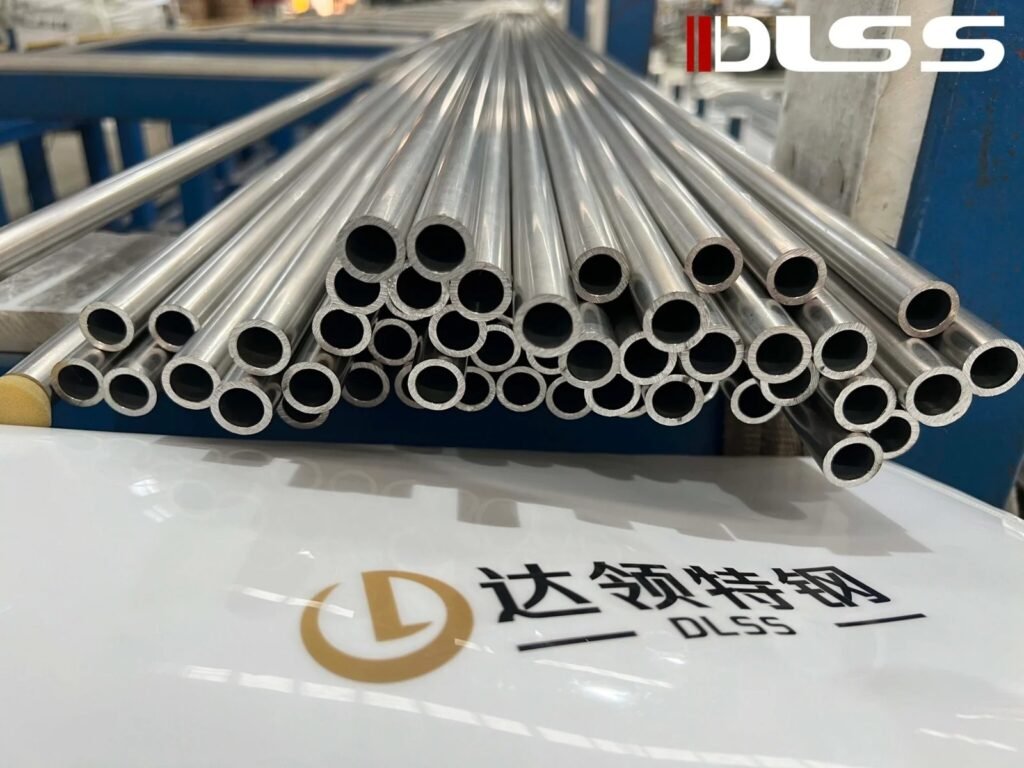
ASTM A213 TP304 Bright Annealed Tube

1. Brinell Hardness (HB)

  • Definition: Determined by pressing a hardened steel or tungsten carbide ball into the surface of the material under a specified load.
  • Representation: Expressed as HB followed by ball diameter (mm), test load (kgf), and ball material.
    • Example: HBW 10/3000 → 10 mm tungsten carbide ball, 3000 kgf load.
  • Application: Best for coarse-grained or non-uniform materials, such as forged stainless steel or thick-walled boiler tubes.

2. Rockwell Hardness (HR)

  • Definition: Measures the depth of indentation caused by a steel ball or diamond cone under a defined load.
  • Representation: Shown as HR plus a scale letter (A, B, C, etc.).
    • Example: HRC 35 → Rockwell hardness, C scale, value 35.
  • Application: Commonly used for stainless steel seamless tubes, flanges, and fittings due to quick and direct readings.

3. Vickers Hardness (HV)

  • Definition: Uses a diamond pyramid indenter with a square base, pressed into the material under a controlled load.
  • Representation: Expressed as HV followed by the test load.
    • Example: HV10 = 220 → Vickers hardness measured with a 10 kgf load equals 220.
  • Application: Ideal for thin-walled tubes and precision components because of its high accuracy and wide load range.

4. Shore Hardness (HS)

  • Definition: Originally designed for rubbers and plastics, Shore hardness can also be used for some softer metals by rebound or indentation methods.
  • Representation: Expressed as HS followed by the scale designation (A, D, etc.).
    • Example: HS 70D.
  • Application: Rarely used for stainless steels, but sometimes applied for quick comparative checks of softer alloys or non-metallic parts in heat exchanger systems.

Why Hardness Testing Matters for Stainless Steel Tubes

For DLSS stainless steel seamless tubes, hardness testing is essential because:

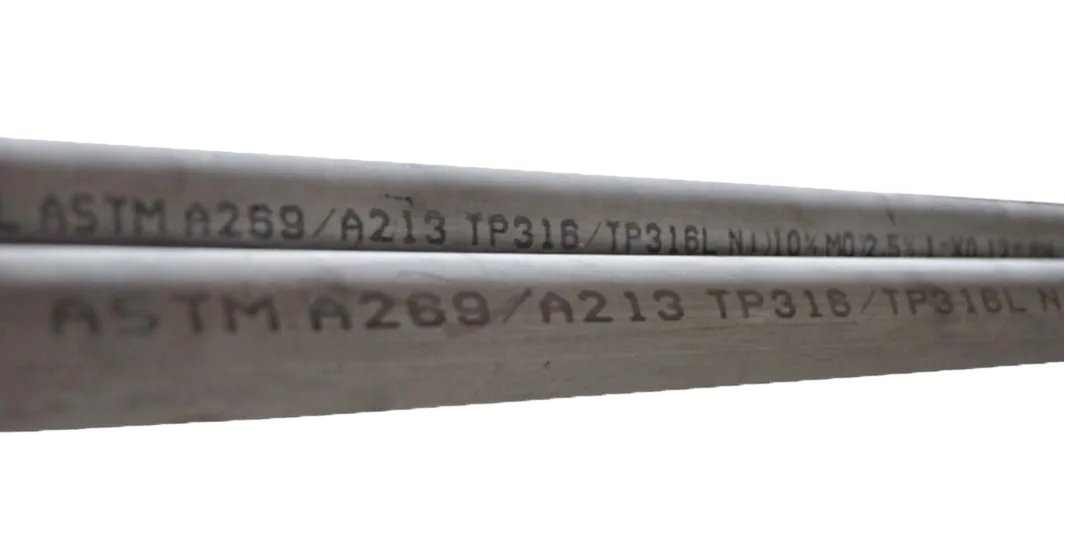
  1. Material Compliance – Ensures conformity with ASTM, ASME, EN, and JIS standards. For example, ASTM A213 specifies maximum hardness values for grades like TP304 and TP316L.
  2. Heat Treatment Verification – Confirms annealing or other processes were performed correctly.
  3. Quality Assurance – Prevents premature failure in high-temperature, high-pressure environments.
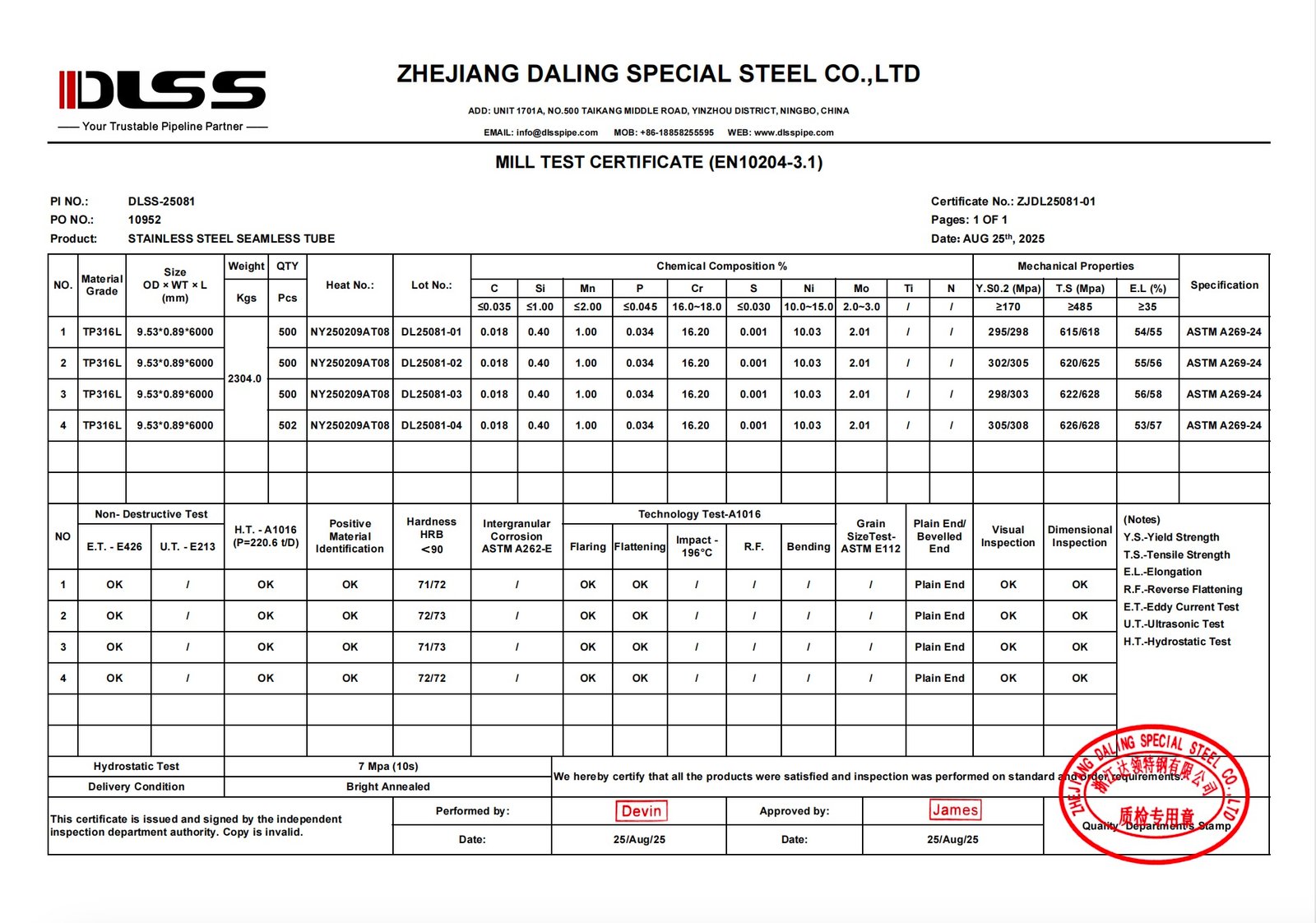
  4. Customer Confidence – Provides transparent MTC (Mill Test Certificates) with hardness results alongside tensile strength and elongation.

Conclusion

Brinell, Rockwell, Vickers, and Shore hardness each serve specific purposes in evaluating the properties of stainless steel tubes. By understanding their definitions and representation methods, engineers and inspectors can select the right approach for different applications.

At DLSS, we apply strict hardness testing as part of our quality assurance process to guarantee that every stainless steel tube meets international standards and delivers reliable performance in demanding industries.


Series Navigation

Wonderful! Share This Case:

Austenitic Stainless Steel

Duplex Stainless Steel

Nickel Alloys

▪ Incoloy Family

▪ Inconel Family

▪ Monel Family

▪ Hastelloy Family

▪ Other Special Alloys

Cobalt Alloys

Related Posts

How Stainless Steel Tubes Ensure Safety and Efficiency in South American Power Plants

How Stainless Steel Tubes Ensure

Meta Description:Discover how stainless steel tubes support thermal efficiency, corrosion resistance, and long-term reliability in South American power generation plants. Introduction South America’s growing energy demand is driving the expansion of both conventional and renewable power plants. Whether it’s a thermoelectric station in Brazil or a biomass facility in Chile, one common requirement persists: reliable, […]

Read More
Choosing the Right Pipe Materials for the Oil & Gas Industry

Choosing the Right Pipe Materials

Meta Description:The oil & gas industry demands corrosion-resistant, high-pressure-rated piping solutions. Learn how to select the best pipe materials for upstream, midstream, and downstream applications. Introduction In the oil and gas sector, pipelines are more than just infrastructure—they are lifelines of the operation. From offshore rigs and sour gas fields to refineries and LNG terminals, […]

Read More
Titanium GR2 Condenser Tubes for Seawater Desalination Plants

Titanium GR2 Condenser Tubes for

1. Introduction Seawater desalination projects are expanding rapidly across the Middle East, North Africa, and Asia, with a market size of over 25 billion USD. One of the most critical components in desalination plants is the condenser and heat exchanger tubing, where Titanium Grade 2 (GR2) tubes are the preferred material. With unmatched corrosion resistance […]

Read More

How to Read a Mill

Meta Description:Learn how to interpret a Mill Test Certificate (EN 10204 3.1/3.2) for stainless steel tubes. Understand chemical composition, mechanical properties, NDT results, and traceability data. Introduction Mill Test Certificates (MTCs) are essential documents that verify the compliance and traceability of stainless steel tubes with international standards. Whether you’re a procurement officer, quality inspector, or […]
Read More
3 Essential Heat Exchanger Design Guides Every Thermal Engineer Should Know

3 Essential Heat Exchanger Design

In industries such as oil and gas, power generation, chemical processing, and HVAC, heat exchangers play a critical role in transferring energy efficiently. Whether you’re designing a new system or optimizing an existing one, understanding the fundamentals of heat exchanger design is vital for thermal engineers. This article introduces three essential technical guides that every […]

Read More
How to Size a Shell and Tube Heat Exchanger: Key Design Parameters

How to Size a Shell

1. Introduction – Shell and Tube Heat Exchanger Sizing Proper shell and tube heat exchanger sizing ensures optimal performance, energy efficiency, and long service life. Incorrect sizing can lead to excessive pressure drops, fouling, or insufficient heat transfer. This guide outlines the key design parameters to consider when sizing a shell and tube heat exchanger, […]

Read More
Inconel 625 Seamless Tubes: Ultimate Solution for Corrosion and High-Temperature Performance

Inconel 625 Seamless Tubes: Ultimate

Introduction Inconel 625 seamless tubes are high-performance nickel-chromium-molybdenum-niobium alloys known for their extraordinary strength, thermal stability, and corrosion resistance. These tubes are widely used in marine environments, offshore oil & gas platforms, nuclear systems, and chemical process plants, especially where chloride-induced pitting, stress corrosion cracking, or elevated temperatures are major concerns. See: Inconel – Wikipedia […]

Read More
wind-farm-heat-exchanger-finned-tube-market

Global Wind Farm Upgrades: A

With wind power accounting for over 25% of electricity in key global markets, operators are facing a new challenge: maintaining, upgrading, and replacing aging cooling and heat transfer systems, especially in offshore environments. As a result, demand for stainless steel finned tubes—used in turbine cooling, nacelle HVAC, and heat exchangers—is rapidly rising. For precision tube […]

Read More

Request A Quote

*We respect your confidentiality and all information are protected.