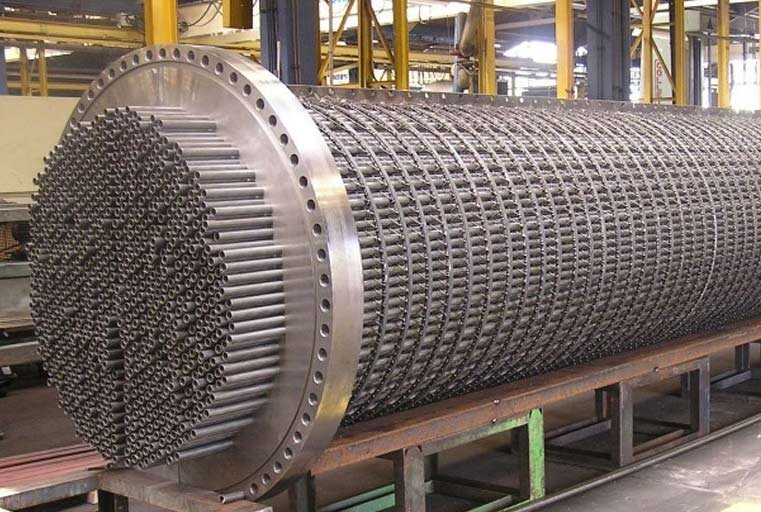
Different Types of Finned Tubes and Their Applications in Heat Exchangers

DLSS - Finned Tube Knowledge Hub - Different Types of Finned Tubes and Their Applications in Heat Exchangers

Finned tubes come in a variety of designs, each engineered to meet specific heat transfer and operating conditions. Choosing the right type of finned tube is essential for achieving optimal heat exchanger efficiency and long-term durability.

If you are new to the concept, you can first read our article What is a Finned Tube and How It Improves Heat Exchanger Efficiency for an introduction.


1. High-Frequency Welded Finned Tubes

In this type, steel or alloy fins are helically wound around the tube and welded using high-frequency electric current. This method ensures:

  • Strong metallurgical bond between fin and tube
  • High thermal conductivity
  • Long service life in high-temperature environments
    Applications: Petrochemical plants, boilers, power plants.

2. Extruded Finned Tubes

Manufactured by extruding aluminum or copper over the base tube, producing a tight mechanical bond and excellent corrosion protection.

  • Superior resistance to environmental corrosion
  • Suitable for offshore and marine use
    Applications: Seawater condensers, HVAC systems, desalination plants.

3. Spiral (Continuous) Finned Tubes

These tubes feature continuous helical fins wrapped around the tube’s outer surface.

  • Increased heat transfer surface area
  • Good for air-side heat exchange
    Applications: Air-cooled heat exchangers, gas coolers, oil heaters.

4. Low-Fin Tubes

Fins are rolled directly into the outer surface of the tube wall, creating small, closely spaced fins.

  • Compact size with moderate heat transfer enhancement
  • Improved resistance to fouling
    Applications: Refrigeration, chillers, chemical processing.

5. Serrated Finned Tubes

Fins are cut into segments (serrations) to create turbulence in the air stream, improving heat transfer.

  • Higher heat transfer rates compared to smooth fins
    Applications: Gas-to-air heat exchangers, industrial dryers.

Choosing the Right Finned Tube

When selecting a finned tube, consider:

  • Operating Temperature – Choose materials that withstand your process conditions.
  • Corrosion Resistance – Select alloys resistant to the fluids and environment.
  • Heat Transfer Requirements – Match fin design to your required efficiency.

For guidance on improving performance, see our guide on Heat Exchanger Maintenance Checklist.


Conclusion

Each type of finned tube offers distinct advantages. The right choice depends on your application, process conditions, and desired efficiency. At DLSS, we provide customized finned tube manufacturing, from material selection to precise engineering, ensuring maximum heat exchanger performance.

Contact our engineering team today at www.dlsspipeline.com or email info@dlsspipe.com to discuss the best finned tube for your project.

Wonderful! Share This Case:

Austenitic Stainless Steel

Duplex Stainless Steel

Nickel Alloys

▪ Incoloy Family

▪ Inconel Family

▪ Monel Family

▪ Hastelloy Family

▪ Other Special Alloys

Cobalt Alloys

Related Posts

Hygienic Stainless Steel Seamless Tubes for Food and Pharmaceutical Industries in South America

Hygienic Stainless Steel Seamless Tubes

Meta Description:Need stainless steel tubes for sanitary use in food or pharmaceutical facilities across South America? Discover the best grades, surface finishes, and certifications for compliant, clean systems. Introduction In South America, the food & beverage and pharmaceutical industries are growing rapidly in countries like Chile, Peru, Colombia, and Argentina. Whether it’s a dairy processing […]

Read More
Brinell Rockwell Vickers Shore hardness stainless steel tubes

Definitions and Representation Methods for

Introduction Hardness is one of the most important mechanical properties for evaluating metallic materials. It reflects a material’s resistance to deformation, wear, and penetration, which is critical for stainless steel seamless tubes used in boilers, heat exchangers, and petrochemical equipment. The most widely used hardness testing methods are Brinell (HB), Rockwell (HR), Vickers (HV), and […]

Read More
Why NACE MR0175 & ISO 15156 Matter When Sourcing Tubes for Sour Service

Why NACE MR0175 & ISO

Meta Description:Learn why compliance with NACE MR0175 / ISO 15156 is essential when selecting stainless steel or alloy tubes for sour gas environments. Understand testing, materials selection, and DLSS compliance offerings. Introduction In oil and gas applications—especially those involving sour service environments with hydrogen sulfide (H₂S)—selecting the wrong material can lead to catastrophic failure. To […]

Read More

How Precision Stainless Steel Tubes

In high-demand industrial environments, precision stainless steel tubing is more than just a conduit—it plays a critical role in enhancing the overall efficiency and stability of a system. This article delves into how precision stainless steel tubes contribute to improving industrial system performance. The Importance of Precision Tubing 1、Enhanced Heat Transfer Efficiency The smoothness of a stainless […]

Read More
Automation and Advanced Inspection: How Technology Is Reshaping Stainless Steel Seamless Tube Manufacturing

Automation and Advanced Inspection: How

In the race to produce high-precision, high-reliability stainless steel seamless tubes for critical applications like heat exchangers, power plants, and offshore platforms, automation and quality control technologies are becoming true differentiators. Modern tube manufacturers are no longer just metal processors—they are tech-enabled precision producers. At DLSS Pipeline, we’ve embraced this transformation to deliver consistent, export-ready […]

Read More

15-Day Delivery of ASTM A182

DLSS recently fulfilled an urgent order for a Dubai-based equipment manufacturer, delivering five 16″ STD CL600 Weld Neck Raised Face (WNRF) flanges made from ASTM A182 F53 (UNS S32750) super duplex stainless steel. Operating in a high-chloride, highly corrosive seawater environment, the client required ASME B16.5 compliance with an exceptionally fast 15-day lead time. Project […]

Read More
Titanium Tubes vs Stainless Steel Tubes: Which One is Right for Your Heat Exchanger?

Titanium Tubes vs Stainless Steel

Meta Description:Compare titanium tubes and stainless steel tubes in terms of corrosion resistance, mechanical strength, cost, and applications. Find out which is the better material for your heat exchanger or industrial system. Introduction In corrosive or high-performance environments—such as desalination, chemical processing, or marine applications—material selection is crucial. Two common choices for heat exchanger tubing […]

Read More
Applications of Stainless Steel Seamless Pipes in the Oil & Gas Industry

Applications of Stainless Steel Seamless

Meta Description:Explore how stainless steel seamless pipes are critical in oil & gas—covering upstream, midstream, downstream, offshore, pipelines and more—with practical insights and sourcing tips. Introduction In the global steel market, stainless steel seamless pipes are projected to grow from USD 3.88 B in 2025 to USD 5.15 B by 2030, driven largely by demand in the oil and […]

Read More

Request A Quote

*We respect your confidentiality and all information are protected.