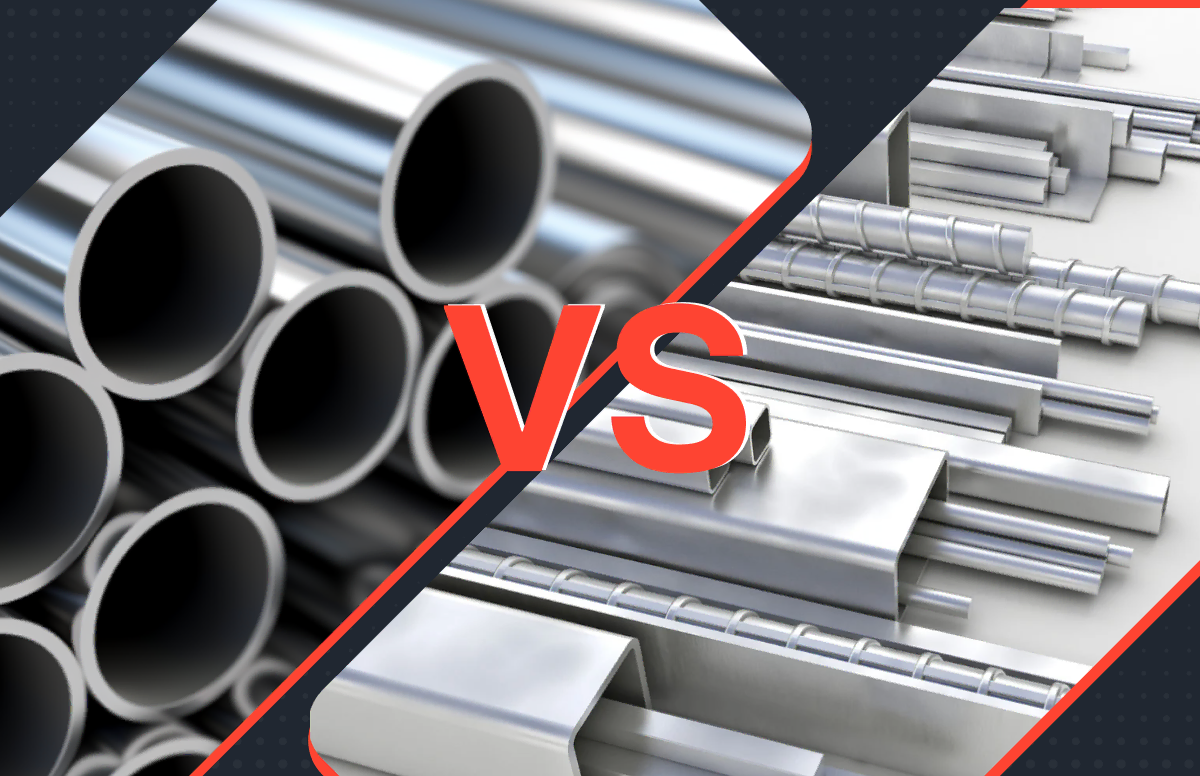
Understanding Duplex Stainless Steel Tubes – Grades, Benefits, and Applications

DLSS - Pipe&Tube - Understanding Duplex Stainless Steel Tubes – Grades, Benefits, and Applications

Meta Description:
Explore the advantages of duplex stainless steel tubes. Learn about key grades like 2205 and 2507, their properties, and why they are preferred in harsh industrial environments.


Introduction

Duplex stainless steel tubes are rapidly becoming the preferred solution for demanding industries such as oil & gas, marine, chemical processing, and desalination. With their dual-phase structure—combining austenitic and ferritic phases—these materials offer a balance of strength, corrosion resistance, and cost-efficiency.

This article provides an in-depth look at duplex stainless steel tube grades, their key benefits, and their real-world industrial applications.


1. What Is Duplex Stainless Steel?

Duplex stainless steels have a mixed microstructure of approximately 50% ferrite and 50% austenite. This dual-phase structure gives them mechanical properties and corrosion resistance superior to standard austenitic stainless steels like 304 or 316.


2. Common Duplex Tube Grades and Standards

Grade NameUNS NumberEN NumberCommon Standard
2205S322051.4462ASTM A789 / EN 10216-5
2507 (Super)S327501.4410ASTM A789 / EN 10216-5
Lean DuplexS321011.4162ASTM A789 / EN 10216-5
2304S323041.4362ASTM A789

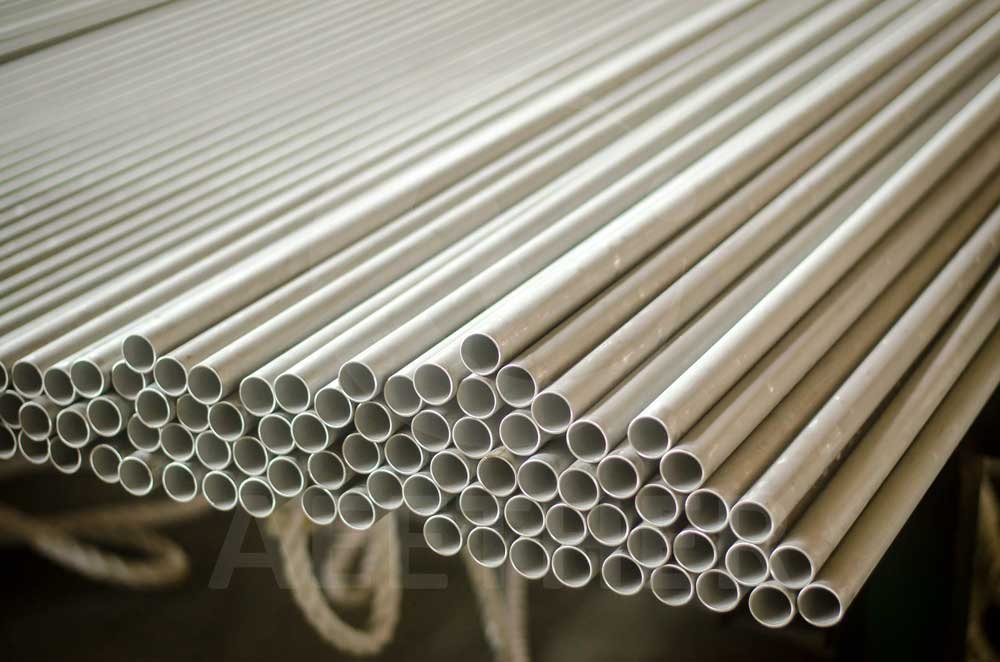
DLSS manufactures seamless duplex and super duplex tubes with full EN 10204 3.1/3.2 certification.


3. Key Benefits of Duplex Stainless Steel Tubes

3.1. Superior Strength

  • Yield strength is roughly twice that of 304/316 stainless steel
  • Enables thinner walls, saving weight and cost

3.2. Excellent Corrosion Resistance

  • Resists chloride stress corrosion cracking (SCC)
  • Ideal for seawater, brine, and chemical exposure

3.3. Cost Efficiency

  • Lower nickel and molybdenum content than 316L/904L
  • Long service life with reduced maintenance

3.4. Weldability & Toughness

  • Good weldability (but requires proper heat control)
  • Performs well in cryogenic and high-pressure environments

4. Typical Applications of Duplex Tubes

IndustryApplicationPreferred Grade
Oil & Gas OffshoreHeat exchangers, control lines, piping2205, 2507
Desalination PlantsBrine lines, evaporator tubes2507
Marine IndustryBallast systems, fire-fighting water lines2205, 2304
Chemical ProcessingPressure vessels, reactors2205, S32101
Pulp & PaperDigesters, bleach plants2205
ConstructionStructural tubing in corrosive environmentsLean Duplex (S32101)

5. Duplex vs Austenitic Stainless Steel (304/316)

PropertyDuplex (2205)Austenitic (316L)
Yield Strength (MPa)~450~200
Pitting Resistance (PREN)35–4025–28
Chloride SCC ResistanceHighModerate
Nickel Content~5–7%~10–14%
CostComparable or lowerHigher (nickel-driven)

For detailed reference:
Outokumpu Duplex Handbook (PDF)


6. DLSS Duplex Tube Capabilities

  • Seamless and welded options
  • Size range: 6 mm – 89 mm OD
  • Wall thickness: 0.5 mm – 6.0 mm
  • Surface finishes: Pickled, BA, EP
  • NDT available: UT, ET, Hydro, PMI
  • Certifications: ASTM A789 / A790, EN 10216-5, NACE MR0175

DLSS ensures tight dimensional tolerance and full traceability for duplex grades, suitable for critical international projects.


FAQs

Q1: Can duplex tubes replace 316L in most applications?
Yes, especially where strength and corrosion resistance are critical. However, consult a materials engineer for compatibility.

Q2: Are duplex tubes more difficult to weld?
They require careful control of heat input and cooling rate. DLSS provides welding support data upon request.

Q3: Is 2507 overkill for most applications?
2507 (super duplex) is ideal for extremely aggressive environments. For moderate chloride exposure, 2205 may be more cost-effective.

Q4: How do I request Ra or corrosion test data?
DLSS provides Ra reports, pitting resistance results, and full mechanical/chemical test data as part of every order.


Conclusion

Duplex stainless steel tubes offer a high-performance, cost-effective solution for industries facing high pressure, chloride corrosion, and weight constraints. DLSS supplies certified duplex and super duplex tubes tailored to your application’s demands.


Contact DLSS
Email: info@dlsspipe.com
Website: www.dlsspipeline.com

Looking for duplex tube solutions for marine, chemical, or oil & gas projects? Contact DLSS for expert support and high-precision manufacturing.

Wonderful! Share This Case:

Austenitic Stainless Steel

Duplex Stainless Steel

Nickel Alloys

▪ Incoloy Family

▪ Inconel Family

▪ Monel Family

▪ Hastelloy Family

▪ Other Special Alloys

Cobalt Alloys

Related Posts

ultrasonic testing tube inspection

5 Reasons Ultrasonic Testing Tube

Ultrasonic testing tube inspection is a critical non-destructive method used in the stainless steel tube industry to ensure product quality, safety, and compliance with international standards. Especially in industries such as heat exchangers, boilers, power plants, and oil & gas, even the smallest internal defect can lead to costly failures or system breakdowns. This article […]

Read More
Stainless Steel Tubing for Wind Energy, Hydrogen & Green Projects (2025 Guide)

Stainless Steel Tubing for Wind

Why Green Energy Systems Need Advanced Tubing Materials As the world transitions to low-carbon technologies, components like stainless steel tubes play a vital role in wind turbines, hydrogen production, carbon capture units, and biofuel systems. These environments demand materials that resist corrosion, pressure, vibration, and outdoor exposure over decades. From internal cooling circuits in offshore […]

Read More
Top 5 Causes of Heat Exchanger Tube Failures — and How to Prevent Them

Top 5 Causes of Heat

Meta Description:Learn the five most common causes of heat exchanger tube failure, including corrosion, fouling, and thermal fatigue. Find out how to prevent costly shutdowns through material selection and design. Introduction Heat exchanger tubes are critical components in industries ranging from petrochemical and power generation to pharmaceutical and food processing. Yet, even with high-quality stainless […]

Read More
How to Select the Right Stainless Steel Seamless Pipe for Projects in South America

How to Select the Right

Meta Description:Need stainless steel seamless pipes for a refinery, LNG terminal, or food plant in South America? Learn how to choose the correct grade, certification, and finish based on local conditions and client requirements. Introduction South America is home to diverse industries—from refineries in Brazil to mining operations in Chile, and LNG terminals in Colombia. […]

Read More
Comparing ASTM A213, A269, and A312 – Selecting the Right Stainless Steel Tube Standard

Comparing ASTM A213, A269, and

Meta Description:Confused by ASTM A213, A269, and A312 standards? Learn the key differences in scope, testing, and application for these stainless steel tube specifications to choose the right product for your project. Introduction When sourcing stainless steel tubes, choosing the correct ASTM standard is critical for compliance, safety, and performance. Among the most commonly used […]

Read More

TP304 vs TP316L: A Comprehensive

Introduction TP304 and TP316L are the two most widely used austenitic stainless steel grades in industrial piping, particularly in heat exchangers, boiler systems, and chemical plants. While both belong to the same stainless steel family, they differ in corrosion resistance, mechanical properties, and application suitability. In this article, we compare TP304 and TP316L across 5 key aspects to help engineers, procurement teams, and project […]

Read More
How to Size a Shell and Tube Heat Exchanger: Key Design Parameters

How to Size a Shell

1. Introduction – Shell and Tube Heat Exchanger Sizing Proper shell and tube heat exchanger sizing ensures optimal performance, energy efficiency, and long service life. Incorrect sizing can lead to excessive pressure drops, fouling, or insufficient heat transfer. This guide outlines the key design parameters to consider when sizing a shell and tube heat exchanger, […]

Read More
Stainless steel seamless bright tube

5 Key Factors to Choose

Introduction Choosing the right stainless steel heat exchanger tube is critical to ensuring long-term performance, safety, and efficiency—especially in industries like petrochemical, power generation, and marine engineering. At DLSS, we’ve supported projects in over 35 countries and understand what matters most when it comes to tube selection. In this article, we’ll share 5 key factors every engineer, […]

Read More

Request A Quote

*We respect your confidentiality and all information are protected.