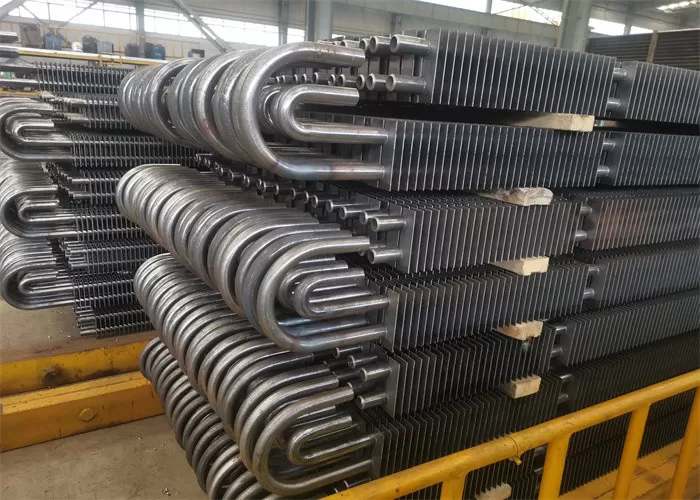
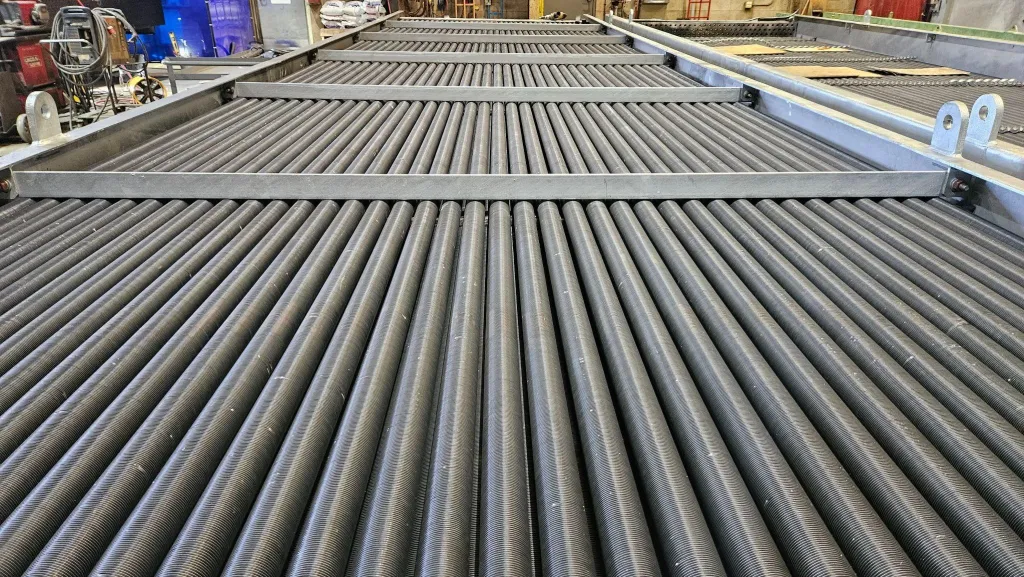
Finned tubes are used in heat exchangers, boilers, economizers, air coolers, condensers, evaporators, chillers, heat recovery systems, and industrial heating equipment. Their main purpose is to increase heat transfer area or improve heat transfer performance in a limited space.
However, not all finned tubes work in the same way. Some designs improve heat transfer by increasing external surface area. Some improve fin-to-tube contact. Some are made for higher temperature, stronger vibration resistance, better corrosion protection, or easier installation in specific heat exchanger designs.
For buyers and engineers, the key question is not only:
“Which finned tube has the highest heat transfer efficiency?”
The better question is:
“Which finned tube type is suitable for this medium, temperature, pressure, fouling condition, cleaning method, material, and inspection requirement?”
This guide explains 7 common types of finned tubes, their applications, advantages, limitations, and what buyers should confirm before ordering.
Quick Answer
The most common finned tube types include:
- Low finned tubes
- L-foot finned tubes
- LL-foot finned tubes
- KL-foot finned tubes
- G-type embedded finned tubes
- Extruded finned tubes
- High-frequency welded finned tubes
For clean air-side service and moderate temperature, L-foot or LL-foot finned tubes may be suitable.
For stronger mechanical bonding, KL-foot or G-type finned tubes may be better.
For corrosive outdoor environments, extruded finned tubes are often considered.
For boilers, economizers, heaters, and high-temperature gas service, high-frequency welded finned tubes are commonly used.
For shell-and-tube condensers, evaporators, and chillers, low finned tubes may be suitable when compact surface enhancement is required.
The final choice should be based on operating condition, not only price.
What Is a Finned Tube?
A finned tube is a tube with extended surface attached to or formed on the outside of the base tube. The fins increase the heat transfer surface area and help improve heat exchange between the tube wall and the surrounding fluid or gas.
A finned tube usually includes:
- Base tube
- Fin material
- Fin height
- Fin thickness
- Fin pitch or fins per inch
- Fin outside diameter
- Bare end length
- Total length
- Fin-to-tube bonding method
- Surface finish or coating, if required
The base tube carries the internal fluid. The fins improve heat transfer on the external side, especially when the outside medium has a lower heat transfer coefficient, such as air or flue gas.
Why Finned Tube Type Matters
Different fin designs create different performance and risk.
A finned tube selection should consider:
- Heat transfer improvement
- Fin-to-tube contact quality
- Operating temperature
- Pressure drop
- Fouling tendency
- Cleaning method
- Corrosion environment
- Vibration and thermal cycling
- Base tube material
- Fin material
- Manufacturing method
- Inspection requirement
- Installation condition
- Total lifecycle cost
More fins do not always mean better performance. If fin spacing is too narrow, dust, ash, oil mist, scale, or process deposits may block the flow path. If fin-to-tube contact is poor, the additional surface area may not transfer heat effectively. If the fin material is not suitable for the environment, corrosion may shorten service life.
A good finned tube design should balance heat transfer, pressure drop, fouling, cleaning, mechanical strength, and cost.
1. Low Finned Tubes
Low finned tubes have small fins formed on the surface of the tube. In many designs, the fins are formed from the base tube wall by cold rolling, creating an integral fin structure.
Low finned tubes are widely used when compact heat transfer enhancement is required.
Common applications include:
- Shell-and-tube heat exchangers
- Condensers
- Evaporators
- Chillers
- Refrigeration systems
- Marine heat exchangers
- Heat transfer equipment with limited space
Advantages:
- Increased external surface area
- Compact design
- Good fin-to-tube contact when fins are integral
- Suitable for many condenser and evaporator applications
- Can be made from copper alloy, stainless steel, titanium, nickel alloy, or other suitable materials depending on the project
Limitations:
- Fin geometry must match the drawing
- Fin height, fin pitch, and fin thickness must be controlled
- Fouling and cleaning should be reviewed
- Not every material or size can be processed in the same way
For copper and copper alloy integral enhanced tubes, ASTM B359 may be relevant if specified by the project. For stainless steel or special alloy low finned tubes, buyers should confirm the applicable drawing, standard, and inspection requirement before production.
2. L-Foot Finned Tubes
L-foot finned tubes use a strip fin wrapped around the base tube. The foot of the fin forms an L-shaped contact with the tube surface.
This type is commonly used in air-cooled heat exchangers and moderate-temperature air-side applications.
Common applications include:
- Air coolers
- Dry coolers
- HVAC coils
- Process air heaters
- Gas cooling systems
- Low to medium temperature heat recovery units
Advantages:
- Cost-effective
- Simple structure
- Good for many clean air-side applications
- Flexible material combinations
- Suitable when the operating condition is not too severe
Limitations:
- Mechanical bonding is weaker than embedded or welded designs
- Not ideal for severe vibration or high-temperature service
- Fin contact quality should be checked
- Corrosion at the fin root may be a concern in outdoor or humid environments
L-foot finned tubes are often selected when cost and delivery time are important and the service condition is moderate.
3. LL-Foot Finned Tubes
LL-foot finned tubes are similar to L-foot tubes, but the fin foot overlaps the previous fin. This creates better coverage of the base tube surface.
This design is often used when additional protection at the fin root is required.
Common applications include:
- Outdoor air coolers
- Humid environments
- Salt-laden air locations
- Dry coolers
- HVAC systems
- Industrial air-side heat exchangers
Advantages:
- Better base tube coverage than L-foot design
- Improved protection at the fin root
- More suitable for outdoor or mildly corrosive air-side environments
- Good balance between cost and performance
Limitations:
- Not as strong as embedded or welded fin attachment
- Still not the first choice for very high-temperature service
- Fouling and cleaning should be reviewed
- Fin material and base tube material compatibility must be confirmed
LL-foot finned tubes can be a practical choice when the project needs better protection than standard L-foot fins but does not require heavy-duty welded construction.
4. KL-Foot Finned Tubes
KL-foot finned tubes are made by knurling the base tube before applying the fin. The fin is then pressed into the knurled surface to improve mechanical bonding.
Compared with L-foot and LL-foot designs, KL-foot finned tubes generally provide stronger fin attachment.
Common applications include:
- Air coolers
- Heat recovery systems
- Industrial gas heaters
- Power plant auxiliary heat exchangers
- Applications with moderate vibration or higher mechanical requirements
Advantages:
- Stronger bonding than L-foot design
- Better mechanical stability
- Improved heat transfer contact
- More suitable for vibration-prone environments than simple wrap-on fins
Limitations:
- More complex manufacturing than L-foot design
- Higher cost than simple wrap-on fins
- Not always suitable for very severe high-temperature service
- Material and fin attachment must be confirmed before production
KL-foot finned tubes are often selected when the buyer needs a stronger mechanical bond but does not require fully embedded or welded fins.
5. G-Type Embedded Finned Tubes
G-type finned tubes are also known as embedded finned tubes. A groove is cut into the base tube, and the fin strip is embedded into the groove. The groove is then closed or rolled to lock the fin in place.
This provides strong mechanical attachment and good thermal contact.
Common applications include:
- Air-cooled heat exchangers
- Process gas coolers
- Higher-duty air-side service
- Applications with vibration or thermal cycling
- Petrochemical and refinery heat exchangers
- Industrial heat recovery systems
Advantages:
- Strong fin attachment
- Good thermal contact between fin and tube
- Better vibration resistance than simple wrap-on fins
- More stable performance under mechanical stress
Limitations:
- More expensive than L-foot or LL-foot fins
- Requires suitable base tube wall thickness for grooving
- Manufacturing tolerance must be controlled
- Not every material and wall thickness is suitable
G-type embedded finned tubes are useful when the project requires stronger attachment and more reliable fin performance.
6. Extruded Finned Tubes
Extruded finned tubes are produced by extruding an outer sleeve or outer layer over the base tube to form fins. In some designs, the fins provide good protection for the base tube and stable contact between tube and fin material.
This type is often used in outdoor, marine, or corrosive air-side environments.
Common applications include:
- Air coolers
- Offshore equipment
- Marine cooling systems
- HVAC and process cooling
- Gas coolers
- Humid or corrosive environments
- Applications requiring base tube protection
Advantages:
- Excellent fin-to-tube contact
- Good corrosion protection for the base tube
- Durable external surface
- Suitable for outdoor and marine-related environments
- Good long-term stability when the material combination is correct
Limitations:
- Higher cost than wrap-on fins
- Material combination must be reviewed
- Not always the best choice for extremely high-temperature service
- Outer sleeve and base tube compatibility must be confirmed
Extruded finned tubes are often selected when corrosion protection and long service life are more important than the lowest initial cost.
7. High-Frequency Welded Finned Tubes
High-frequency welded finned tubes use welding to bond the fin strip to the base tube. The fin is usually spirally wound and welded continuously to the tube surface.
This design is commonly used for high-temperature, heavy-duty, and industrial heat recovery applications.
Common applications include:
- Boilers
- Economizers
- Air preheaters
- Waste heat recovery systems
- Industrial furnaces
- Petrochemical heaters
- Power plant equipment
- Flue gas heat exchangers
Advantages:
- Strong welded bond
- Suitable for higher temperature applications
- Good mechanical strength
- Useful for gas-side heat recovery
- Can be used with carbon steel, stainless steel, and some alloy materials depending on design
Limitations:
- Welding quality must be controlled
- Surface condition and weld appearance should be inspected
- Higher production cost than simple wrap-on fins
- Not suitable for all materials or thin wall tubes
- Heat input and material compatibility must be reviewed
For boiler, economizer, and flue gas heat recovery projects, high-frequency welded finned tubes are often more suitable than mechanically wrapped fins.
Comparison Table: 7 Common Finned Tube Types
| Type | Main Feature | Typical Application | Key Buyer Check |
|---|---|---|---|
| Low finned tube | Integral or formed low fins | Condensers, evaporators, chillers | Fin OD, fin height, fin pitch, material |
| L-foot finned tube | Simple wrap-on fin | Air coolers, HVAC, dry coolers | Temperature, fin contact, corrosion risk |
| LL-foot finned tube | Overlapped fin foot | Outdoor air-side service | Fin root protection, humidity, salt air |
| KL-foot finned tube | Knurled base tube | Heat recovery, vibration-prone service | Mechanical bonding, fin stability |
| G-type embedded finned tube | Fin embedded into groove | Air-cooled heat exchangers, process coolers | Groove depth, wall thickness, bond strength |
| Extruded finned tube | Outer sleeve extruded into fins | Marine, offshore, outdoor service | Material combination, corrosion protection |
| High-frequency welded finned tube | Welded spiral fin | Boilers, economizers, furnaces | Weld quality, temperature, fin strength |
How to Select the Right Finned Tube Type
To select the right finned tube, buyers should review the actual operating condition.
Key questions include:
- What is the internal medium?
- What is the external medium?
- Is the external side air, gas, flue gas, seawater, or process fluid?
- What are the operating temperature and pressure?
- Is the system clean or fouling?
- Is mechanical cleaning required?
- Is the equipment indoor or outdoor?
- Is there vibration or thermal cycling?
- What material is required for the base tube?
- What material is required for the fin?
- What is the pressure drop limit?
- What inspection and MTC documents are required?
- Is third-party inspection required?
The best finned tube type is not the one with the largest surface area. It is the one that provides stable heat transfer under the real service condition.
What to Include in the RFQ
A clear RFQ helps avoid wrong fin type, wrong dimensions, and wrong inspection scope.
Buyers should provide:
- Base tube material and standard
- Base tube OD and wall thickness
- Fin type
- Fin material
- Fin outside diameter
- Fin height
- Fin thickness
- Fin pitch or fins per inch
- Total length
- Bare end length
- Quantity
- Straight tube or bent tube
- Operating medium
- Temperature and pressure
- Corrosion condition
- Fouling condition
- Surface treatment or coating
- Inspection requirement
- MTC requirement
- Third-party inspection requirement
- Packing requirement
- Drawing or sample, if available
If the buyer is not sure which finned tube type is suitable, the RFQ can state:
“Please recommend a suitable finned tube type based on the attached heat exchanger application, medium, operating temperature, pressure, fouling condition, corrosion environment, pressure drop limit, inspection requirement, and expected service life. Please advise the fin type, material combination, fin dimensions, and technical risks before quotation.”
What to Check Before Shipment
Before shipment, buyers should check both the base tube and the fins.
Key items include:
- Base tube material grade
- Heat number and traceability
- Base tube OD and wall thickness
- Fin type
- Fin material
- Fin outside diameter
- Fin height
- Fin thickness
- Fin pitch or fins per inch
- Bare end length
- Overall length
- Surface condition
- Fin bonding quality
- Weld quality, if applicable
- Straightness
- Fin damage
- NDT, PMI, hydrostatic test, or other required tests
- MTC and inspection documents
- Packing protection
For finned tubes, dimensional checking is very important. Even if the base tube is correct, wrong fin height, fin pitch, or bare end length may cause installation problems.
How DLSS Supports Finned Tube Projects
DLSS supplies finned tubes for heat exchangers, boilers, condensers, evaporators, economizers, air coolers, waste heat recovery systems, marine equipment, chemical plants, power plants, and industrial heating systems.
Our support includes:
- Low finned tubes
- L-foot finned tubes
- LL-foot finned tubes
- KL-foot finned tubes
- G-type embedded finned tubes
- Extruded finned tubes
- High-frequency welded finned tubes
- Stainless steel finned tubes
- Carbon steel finned tubes
- Copper alloy finned tubes
- Copper nickel finned tubes
- Titanium finned tubes
- Nickel alloy finned tubes
- Base tube and fin material review
- Fin dimension confirmation
- MTC and inspection document support
- Third-party inspection coordination when required
- Export packing for long-distance transportation
Before production, DLSS can help buyers review the application, material, temperature, corrosion condition, fin geometry, inspection scope, and delivery requirement to reduce technical risk.
Common Mistakes Buyers Should Avoid
Mistake 1: Choosing Only by Heat Transfer Area
More surface area does not always mean better long-term performance. Pressure drop, fouling, cleaning access, and fin efficiency must also be considered.
Mistake 2: Ignoring Fin-to-Tube Bonding
Poor fin contact can reduce heat transfer, even if the fin surface area is large. The bonding method should match the operating condition.
Mistake 3: Not Providing Fin Dimensions
A finned tube RFQ should include fin outside diameter, fin height, fin pitch, fin thickness, tube length, and bare end length.
Mistake 4: Choosing Material Only by Price
The base tube and fin material should match temperature, corrosion environment, and mechanical requirement. Cheap material may create higher replacement cost later.
Mistake 5: Forgetting Packing Protection
Finned tubes are more sensitive to transportation damage than plain tubes. Fin deformation can affect installation and performance.
FAQ
What are the most common types of finned tubes?
Common finned tube types include low finned tubes, L-foot finned tubes, LL-foot finned tubes, KL-foot finned tubes, G-type embedded finned tubes, extruded finned tubes, and high-frequency welded finned tubes.
Which finned tube type is best for high-temperature service?
High-frequency welded finned tubes are commonly used for boilers, economizers, furnaces, and flue gas heat recovery systems. The final choice depends on temperature, material, pressure, and project specification.
Which finned tube type is better for outdoor or marine environments?
Extruded finned tubes are often considered for outdoor, humid, or marine-related environments because they can provide better protection for the base tube. Material compatibility must still be reviewed.
Are low finned tubes the same as L-foot finned tubes?
No. Low finned tubes usually have small fins formed on the tube surface, often as an integral structure. L-foot finned tubes use a wrapped fin strip attached to the base tube.
What information is needed for a finned tube quotation?
Buyers should provide base tube material, tube size, fin type, fin material, fin OD, fin height, fin pitch, fin thickness, length, bare ends, quantity, operating condition, inspection requirement, and drawing if available.
Can stainless steel be used for finned tubes?
Yes. Stainless steel finned tubes can be used when corrosion resistance, temperature resistance, or project specification requires stainless steel. The final grade should be selected based on the medium and operating condition.
Conclusion
Finned tubes are not one standard product. Different fin types are designed for different heat transfer challenges, operating temperatures, corrosion environments, fouling risks, and mechanical requirements.
Low finned tubes are useful for compact heat transfer enhancement. L-foot and LL-foot tubes are cost-effective for many air-side applications. KL-foot and G-type embedded tubes provide stronger mechanical bonding. Extruded tubes are often selected for better outdoor or marine protection. High-frequency welded finned tubes are commonly used in boilers, economizers, and high-temperature heat recovery systems.
The best finned tube selection should be based on real operating conditions, not only surface area or unit price.
DLSS can support finned tube projects with material review, fin dimension confirmation, inspection documentation, third-party inspection coordination, and export packing. If you are not sure which finned tube type is suitable for your project, our team can review your drawings and operating conditions before quotation.