Common Heat Exchanger Tube Failures and How to Prevent Them

DLSS - Tubes For Heat Exchanger - Common Heat Exchanger Tube Failures and How to Prevent Them

Meta Description:
Heat exchanger tubes can fail due to corrosion, vibration, fouling, and material fatigue. Learn about the most common failure modes and how to prevent them in industrial systems.


Introduction

Heat exchanger tube failures can lead to:

  • Reduced thermal efficiency
  • Unplanned shutdowns
  • Product contamination
  • Safety risks

Understanding the most frequent failure mechanisms is key to designing, selecting, and maintaining reliable heat exchanger systems. In this article, we explore the five most common tube failure types—and how to avoid them.


1. Pitting Corrosion

Occurs when localized corrosion breaks through the passive layer of stainless steel, forming small holes.
Often caused by:

  • High chloride concentrations (e.g., seawater, brine)
  • Poor material selection (e.g., using TP304 in coastal plants)

Prevention:

  • Use TP316L, Duplex 2205, or Super Duplex
  • Apply pickled or passivated finish
  • Avoid stagnant conditions

More: Nickel Institute Guide to Localized Corrosion


2. Erosion-Corrosion

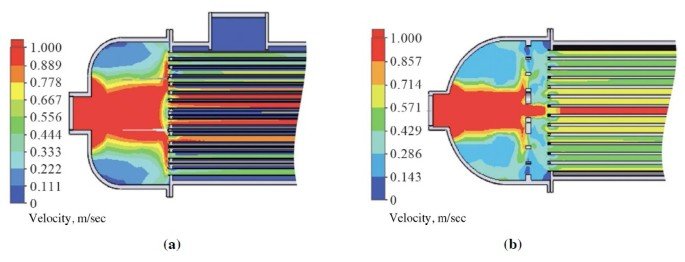
Caused by high-velocity fluids stripping away protective oxides.
Common in steam condensers and aggressive fluid systems.

Symptoms:

  • Thinning at inlet zones or bends
  • Grooved or horseshoe-shaped wear marks

Prevention:

  • Maintain flow within design velocity
  • Use thicker walls or Duplex / Alloy 625 for high turbulence zones
  • Add internal cladding or baffles

3. Stress Corrosion Cracking (SCC)

Cracks form under tensile stress in the presence of specific chemicals (e.g., H₂S, chlorides).
This failure is often sudden and catastrophic.

Typical scenarios:

  • TP304/316 in hot chloride service
  • Undersized tubing under vibration

Prevention:

  • Use SCC-resistant grades like Incoloy 825, Alloy 625, or Duplex
  • Reduce cold working and residual stress
  • Refer to NACE MR0175 for sour service environments

4. Tube Fouling and Scaling

The buildup of minerals, biofilms, or particulates inside the tube reduces heat transfer efficiency.

Typical causes:

  • Hard water (CaCO₃ scaling)
  • Poor cleaning schedules
  • Inadequate filtration

Prevention:

  • Use electropolished or BA finishes
  • Maintain good flow turbulence to avoid dead zones
  • Schedule CIP (clean-in-place) and backflushing

5. Thermal Fatigue and Vibration

Repeated temperature cycling or fluid-induced vibration can lead to tube cracking or failure at support points.

Signs:

  • Cracks near baffles
  • Leak at expansion joints
  • Audible resonance during operation

Prevention:

  • Follow TEMA guidelines for tube spacing and support
  • Use expansion bellows and proper anchor design
  • Minimize abrupt thermal shocks during startup

Frequently Asked Questions (FAQ)

Q1: What’s the most common failure in stainless steel heat exchanger tubes?
Pitting corrosion—especially in chloride-rich systems using TP304.

Q2: Can tube failures be detected before leakage?
Yes. Through eddy current testing (ECT), ultrasonic (UT), and visual inspection during shutdowns.

Q3: Is seamless tubing better for failure prevention?
Yes. Seamless tubes have no weld seam, reducing weak points in high-pressure or cyclic systems.

Q4: What’s the ideal tube surface finish to prevent fouling?
Electropolished (EP) or bright annealed (BA) finish helps reduce biofilm and mineral scaling.

Q5: Does DLSS offer technical support for tube material selection?
Absolutely. DLSS provides material consultation, standard-compliant seamless tubes, and surface finishing options based on specific exchanger environments.


Conclusion

Most heat exchanger tube failures are preventable with the right material selection, surface finish, flow design, and maintenance schedule.
By addressing pitting, SCC, erosion, scaling, and fatigue early on, you reduce downtime and extend your exchanger’s service life.

DLSS offers engineered stainless and alloy tubes designed to withstand corrosion, vibration, and thermal cycling—with full inspection and documentation.


Contact DLSS
Email: info@dlsspipe.com
Website: www.dlsspipeline.com

Wonderful! Share This Case:

Austenitic Stainless Steel

Duplex Stainless Steel

Nickel Alloys

▪ Incoloy Family

▪ Inconel Family

▪ Monel Family

▪ Hastelloy Family

▪ Other Special Alloys

Cobalt Alloys

Related Posts

Understanding Electropolished (EP) Tubes – Surface Roughness, Applications, and Manufacturing

Understanding Electropolished (EP) Tubes –

Meta Description:Explore what electropolished (EP) stainless steel tubes are, how they are manufactured, and why they are essential for ultra-clean applications such as pharmaceuticals, biotechnology, and semiconductors. Introduction In ultra-clean environments like pharmaceutical plants, biotech labs, and semiconductor fabs, the surface of a stainless steel tube must be as smooth and contamination-free as possible. This […]

Read More
Stainless Steel Seamless Pipes for Mining and Metallurgy Projects in South America

Stainless Steel Seamless Pipes for

Meta Description:Discover how stainless steel seamless tubes support high-performance mining and metallurgy operations across Chile, Peru, and Brazil. Learn about corrosion resistance, mechanical strength, and industry standards. Introduction South America is home to some of the world’s most significant mining and metallurgical hubs, particularly in Chile, Peru, and Brazil. With growing global demand for copper, […]

Read More
Stainless steel seamless bright tube

5 Key Factors to Choose

Introduction Choosing the right stainless steel heat exchanger tube is critical to ensuring long-term performance, safety, and efficiency—especially in industries like petrochemical, power generation, and marine engineering. At DLSS, we’ve supported projects in over 35 countries and understand what matters most when it comes to tube selection. In this article, we’ll share 5 key factors every engineer, […]

Read More
Top Surface Finishes for Stainless Steel Tubes – BA, EP, Polished, and More

Top Surface Finishes for Stainless

Meta Description:Discover the most common surface finishes for stainless steel tubes—BA, EP, polished, pickled—and how each impacts corrosion resistance, cleanliness, and application suitability. Introduction Surface finish plays a critical role in determining the performance and aesthetics of stainless steel tubes, especially in industries like pharmaceuticals, food processing, heat exchangers, and instrumentation systems. Whether your project […]

Read More
TP904L Stainless Pipes for Seawater Desalination in Japan – 日本海水淡水化向けTP904Lステンレス管

TP904L Stainless Pipes for Seawater

Introduction Japan’s seawater desalination plants operate in highly corrosive environments due to the presence of chlorides and high salinity. TP904L stainless pipes from DLSS offer superior resistance to pitting and crevice corrosion, making them an ideal choice for JIS G3459 – Stainless Steel Pipes for Corrosion Resistance compliance in marine applications. 1. Why TP904L for […]

Read More
Seamless vs. Welded Pipes: Which Is Right for Your Industrial Pipeline?

Seamless vs. Welded Pipes: Which

Meta Description:Compare seamless and welded pipes in terms of cost, pressure capacity, corrosion resistance, and industrial use. Learn how to choose the right pipe for your project. Introduction In pipeline engineering, one of the most common questions from project engineers and procurement teams is:“Should we use seamless pipes or welded pipes?” Each option has distinct […]

Read More
Green Energy and ESG: How Sustainability Is Reshaping the Stainless Steel Seamless Tube Market

Green Energy and ESG: How

The stainless steel seamless tube industry is undergoing a quiet but profound transformation—not just driven by technical demands, but by Environmental, Social, and Governance (ESG) goals and the global energy transition. As governments, investors, and end-users demand cleaner, longer-lasting, and traceable materials, tube manufacturers are under growing pressure to reduce carbon footprint, improve transparency, and […]

Read More
Comparing ASTM A213, A269, and A312 – Selecting the Right Stainless Steel Tube Standard

Comparing ASTM A213, A269, and

Meta Description:Confused by ASTM A213, A269, and A312 standards? Learn the key differences in scope, testing, and application for these stainless steel tube specifications to choose the right product for your project. Introduction When sourcing stainless steel tubes, choosing the correct ASTM standard is critical for compliance, safety, and performance. Among the most commonly used […]

Read More

Request A Quote

*We respect your confidentiality and all information are protected.