Top 5 Questions Buyers Ask About Duplex Stainless Steel Tubes

DLSS - Pipe&Tube - Top 5 Questions Buyers Ask About Duplex Stainless Steel Tubes

Meta Description:
Explore the top five questions procurement teams and engineers ask when sourcing duplex stainless steel tubes, including corrosion resistance, welding, standards, and pricing.


Introduction

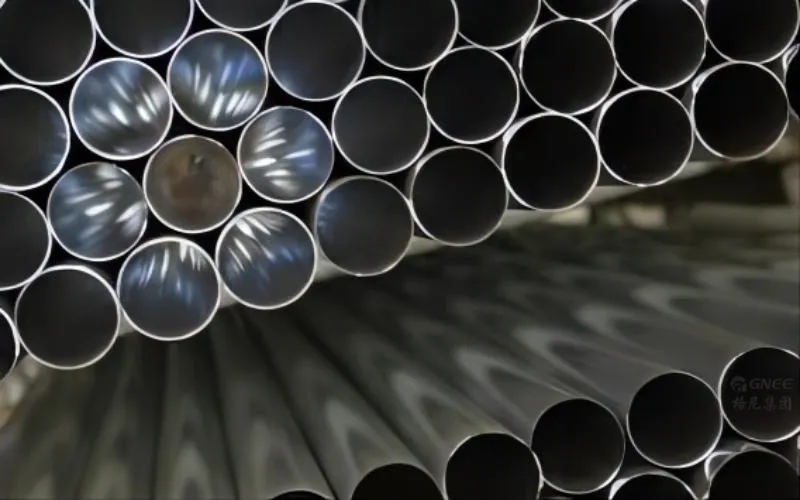
Duplex stainless steel tubes are widely used in offshore platforms, chemical processing, desalination plants, and heat exchanger systems, thanks to their excellent combination of mechanical strength and corrosion resistance.

However, many buyers—especially those transitioning from austenitic stainless—have specific concerns before placing an order. Here, we answer the top 5 questions DLSS regularly receives from project managers, EPCs, and purchasing teams worldwide.


1. What’s the Real Difference Between Duplex and 316L Stainless Tubes?

The key difference lies in microstructure and performance:

FeatureDuplex Stainless Steel (e.g., S31803)316L Austenitic Stainless Steel
Structure50% Ferrite / 50% AusteniteFully Austenitic
Yield Strength2× higher than 316L (~450 MPa)Lower (~200 MPa)
Pitting Resistance (PREN)~35~25
Chloride ResistanceExcellentModerate
Cost~10–20% higherLower upfront cost

Duplex is ideal for high-pressure and chloride-rich environments where 316L may pit or crack.

Learn more: Outokumpu Duplex Stainless Grades

Key Keywords: S31803 tube, 2205 vs 316L, duplex pipe advantages


2. What Are the Common Standards for Duplex Tubes?

Buyers often ask which global standards duplex stainless tubes conform to. At DLSS, our duplex tubes typically meet:

  • ASTM A789 / A790 – Seamless & welded duplex tubes
  • EN 10216-5 / 10217-7 – Pressure use tubes in Europe
  • NACE MR0175 / ISO 15156 – Sour service compliance
  • ASME B36.19M – Dimensional reference
  • PED 2014/68/EU – Pressure Equipment Directive for CE markets

Material Designations:

  • UNS S31803 (Standard Duplex)
  • UNS S32205 (High-performance Duplex)
  • UNS S32750 / S32760 (Super Duplex)

Key Keywords: ASTM A789 duplex, EN 10216-5 tube, S32205 supplier


3. Can Duplex Tubes Be Welded Onsite Without Cracking?

Yes—but it requires controlled procedures.

  • Duplex tubes have different thermal conductivity and coefficient of expansion compared to 316L, so welding procedures must be adjusted.
  • Use low heat input, interpass temp control, and post-weld cleaning to prevent intermetallic phase formation.
  • Filler metals: ER2209, ER2553 depending on grade
  • PWHT is not usually needed but may be required for thick-walled or critical-service jobs

Reference: Avesta Welding Guidelines for Duplex Stainless

Key Keywords: duplex tube welding, ER2209 filler, duplex pipe WPS


4. Is Duplex Stainless More Difficult to Machine or Fabricate?

Generally yes, compared to 304/316L:

  • Higher strength means more tool wear
  • Cutting speed must be reduced (25–35% lower than 316L)
  • Bending radius should be >2× OD
  • Requires special tooling and coolant systems for drilling or threading

However, modern CNC equipment easily handles duplex tubes with the correct parameters.

Key Keywords: duplex stainless machinability, duplex tube bending, S32750 fabrication


5. Why Is the Price of Duplex Tubes Higher—and Is It Worth It?

While the unit price is 10–25% higher than 316L, duplex often reduces total lifecycle cost:

  • Fewer failures due to chloride pitting
  • Higher mechanical strength = reduced wall thickness = lower weight
  • Longer service life in aggressive media
  • Better performance in seawater, acid, and oilfield applications

If your project involves corrosive brine, sour gas, or marine humidity, duplex is likely the better investment.

See: Nickel Institute – Duplex Economics

Key Keywords: duplex tube price, duplex vs austenitic lifecycle, S32750 ROI


Conclusion

Duplex stainless steel tubes may be slightly more complex to specify and work with—but they offer superior performance, especially in harsh operating environments.

At DLSS, we provide:

  • ASTM A789 / EN 10216-5 duplex seamless tubes
  • 100% ET/UT tested with 3.1 / 3.2 MTC
  • Heat treatment, PMI, hardness, and grain size testing
  • Customized U-bending and export packaging
  • Pre-qualified welding & fabrication support

Contact DLSS
Email: info@dlsspipe.com
Website: www.dlsspipeline.com

Have a question about duplex tube sourcing? Send us your inquiry and we’ll respond with a tech-backed solution in 24 hours.

Wonderful! Share This Case:

Austenitic Stainless Steel

Duplex Stainless Steel

Nickel Alloys

▪ Incoloy Family

▪ Inconel Family

▪ Monel Family

▪ Hastelloy Family

▪ Other Special Alloys

Cobalt Alloys

Related Posts

Weldability and Fabrication Challenges of Titanium and Nickel Alloy Tubes

Weldability and Fabrication Challenges of

1. Introduction Welding and fabrication are critical stages in the production and installation of titanium tubes and nickel alloy pipes. Both materials offer superior corrosion resistance and mechanical properties, but they require specialized welding techniques, strict process control, and skilled workmanship to ensure reliability in demanding applications such as desalination plants, LNG terminals, and chemical […]

Read More
How Long Do Stainless Steel Seamless Pipes Last? Lifespan, Factors, and Best Practices

How Long Do Stainless Steel

Meta Description:How durable are stainless steel seamless pipes? Learn about average service life, key factors that affect corrosion and fatigue, and how to extend performance in industrial systems. Introduction Stainless steel seamless pipes are widely known for their long service life, but just how long can they last? Under ideal conditions, seamless stainless steel pipes […]

Read More
Pickling vs Bright Annealing: Which Surface Treatment Is Best for Stainless Steel Tubes?

Top 5 Stainless Steel Tube

Meta Description:Discover the five most common causes of stainless steel tube failures. Learn how to detect, prevent, and solve issues in high-performance piping systems across industries. Introduction Stainless steel tubes are widely used in high-demand applications due to their corrosion resistance, strength, and cleanliness. However, tube failure—when it occurs—can lead to production shutdowns, safety hazards, […]

Read More

Welded vs. Seamless Tubes: Which

Choosing between welded and seamless tubes can impact your heat exchanger’s performance, durability, and cost. While both have their place, understanding their differences helps engineers and purchasers make informed decisions. In this blog, we compare these two types of stainless steel tubes and highlight where each one excels. 1. Manufacturing Process This difference affects the structural integrity and mechanical […]

Read More
A Guide to Bright Annealed Stainless Steel Tubes – Benefits, Production, Applications

A Guide to Bright Annealed

Meta Description:Discover what bright annealed stainless steel tubes are, how they’re produced, and why they are essential in hygienic and high-purity applications such as pharmaceuticals, food processing, and semiconductors. Introduction In industries where surface finish, corrosion resistance, and cleanliness are critical, Bright Annealed (BA) stainless steel tubes are the preferred solution. With a mirror-like internal […]

Read More
High-Frequency Welded Finned Tubes: Advantages and Ideal Applications

High-Frequency Welded Finned Tubes: Advantages

High-frequency welded finned tubes are one of the most widely used designs in industrial heat exchangers due to their strong metallurgical bonding and excellent heat transfer capabilities. This manufacturing method ensures a durable, efficient, and long-lasting solution for demanding thermal applications. If you are unfamiliar with finned tubes in general, read our guide on What […]

Read More
What is a Finned Tube and How It Improves Heat Exchanger Efficiency

What is a Finned Tube

Finned tubes are a specialized type of heat transfer component designed to increase the surface area available for heat exchange between fluids. By adding extended surfaces or “fins” to the tube’s exterior, these components can significantly improve the efficiency of heat exchangers, making them ideal for applications where space is limited, or higher heat transfer […]

Read More
Heat Exchanger Tube Materials: Pros and Cons of Stainless Steel, Copper, and Titanium

Heat Exchanger Tube Materials: Pros

1. Introduction – Heat Exchanger Tube Materials Selecting the right heat exchanger tube material is critical for optimizing performance, extending service life, and minimizing maintenance costs. This article compares stainless steel, copper, and titanium—three of the most common materials used in shell and tube as well as plate heat exchanger designs. For related topics, see […]

Read More

Request A Quote

*We respect your confidentiality and all information are protected.