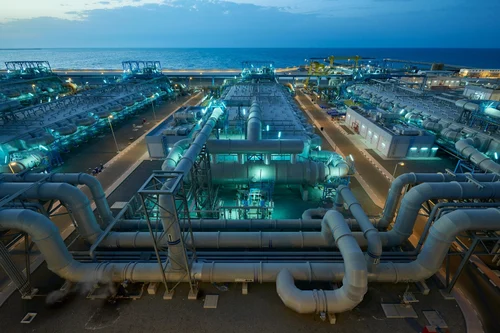
Aluminum Brass C68700 (O61) ASTM B111 Seamless Tube 19 × 1.6mm × 3000mm with 100% Eddy Current Testing for Condenser Applications.

DLSS - Pipe&Tube - Aluminum Brass C68700 (O61) ASTM B111 Seamless Tube 19 × 1.6mm × 3000mm with 100% Eddy Current Testing for Condenser Applications.

Product Overview: ASTM B111 C68700 Aluminum Brass Seamless Tube (19×1.6mm, 3000mm)

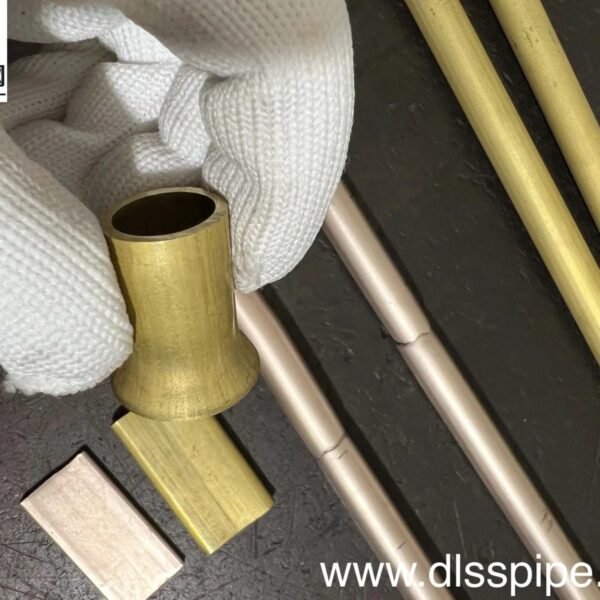
C68700 Aluminum Brass, also known as Al-Brass, is a copper-zinc alloy enhanced with a small amount of aluminum. It is widely recognized for its exceptional resistance to dezincification, corrosion, and biofouling, especially in seawater and brackish water environments. This makes it one of the most trusted materials for condenser tubes, heat exchangers, and marine applications.

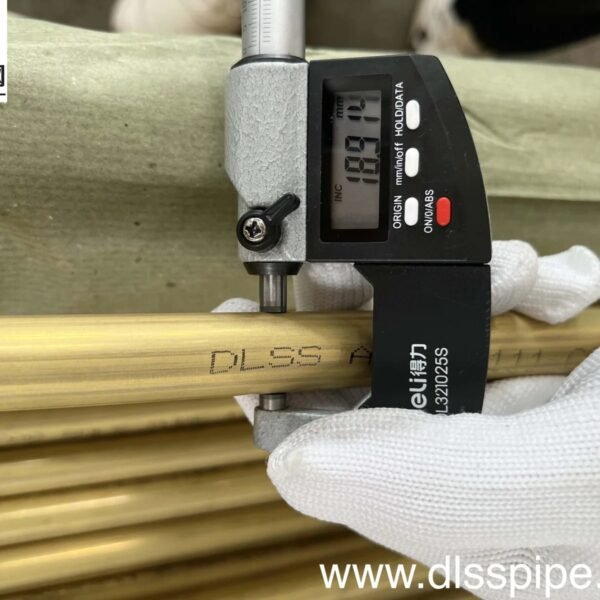
The featured tube, with an outer diameter of 19mm, wall thickness of 1.6mm, and length of 3000mm, is manufactured in accordance with ASTM B111, fully tested using 100% Eddy Current Testing (ECT) to ensure non-destructive integrity verification.
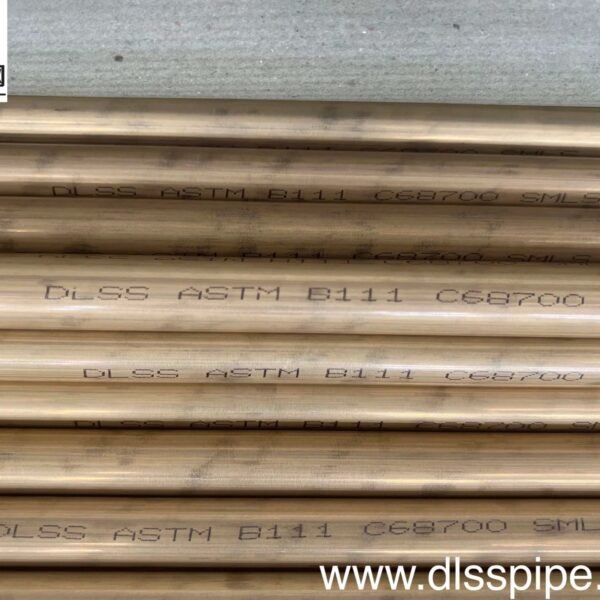
Aluminum Brass C68700 (O61) ASTM B111 Seamless Tube 19 × 1.6mm × 3000mm with 100% Eddy Current Testing for Condenser Applications.

Product Specifications

  • Standard: ASTM B111 / ASME SB111
  • Material Grade: C68700 (Aluminum Brass), annealed temper (O61)
  • Outside Diameter (OD): 19.0 mm
  • Wall Thickness (WT): 1.6 mm
  • Length: 3000 mm
  • Tube Type: Seamless
  • Surface Condition: Smooth, clean, and oxide-free
  • Testing: 100% Eddy Current Testing for flaw detection
  • End Options: Plain or beveled, capped and protected for export
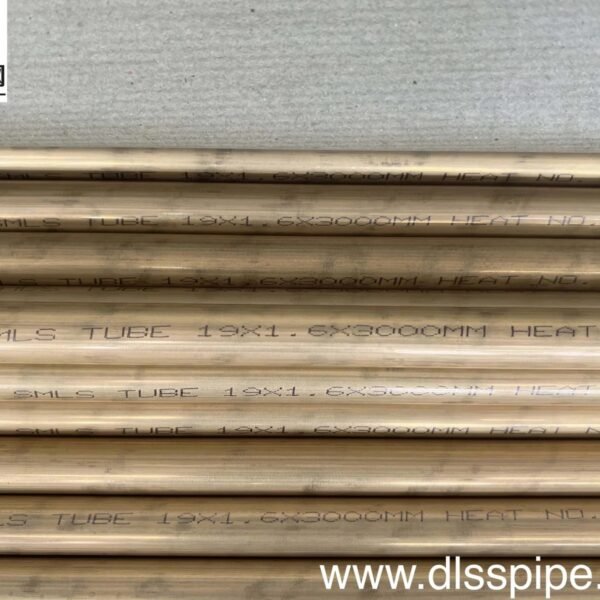
Aluminum Brass C68700 (O61) ASTM B111 Seamless Tube 19 × 1.6mm × 3000mm with 100% Eddy Current Testing for Condenser Applications.

Chemical Composition of C68700 (Typical)

ElementContent (%)
Copper (Cu)76.0 – 79.0
Zinc (Zn)Remainder
Aluminum (Al)1.8 – 2.5
Iron (Fe)≤ 0.06
Tin (Sn)≤ 0.07
Arsenic (As)0.02 – 0.06
Lead (Pb)≤ 0.05

Aluminum improves the alloy’s resistance to impingement and erosion-corrosion. Arsenic inhibits dezincification — a common issue in traditional brass under marine conditions.
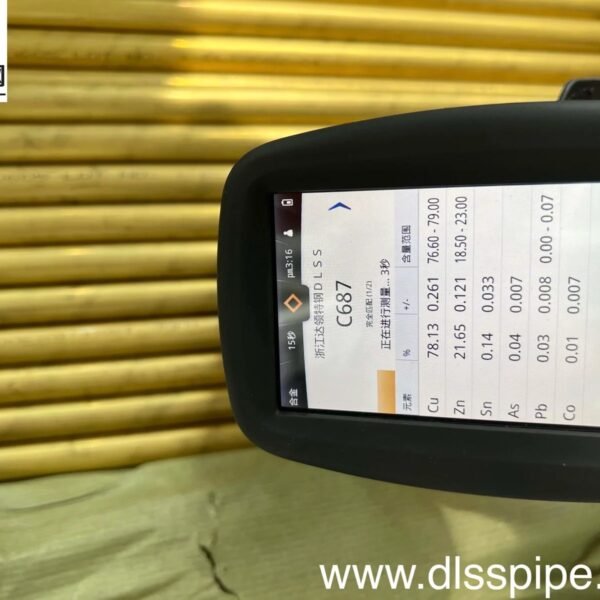
Aluminum Brass C68700 (O61) ASTM B111 Seamless Tube 19 × 1.6mm × 3000mm with 100% Eddy Current Testing for Condenser Applications.

Mechanical Properties (Annealed O61 Temper)

PropertyValue
Tensile Strength≥ 310 MPa
Yield Strength≥ 105 MPa
Elongation (in 5D)≥ 30%
Hardness (HRB)≤ 65
Thermal Conductivity~121 W/m·K
Max Working Temp~400°C (752°F)

These properties make C68700 tubes an excellent fit for thermal exchange and pressure-resisting systems.

Applications of C68700 Aluminum Brass Tubes

1. Condenser Tubes

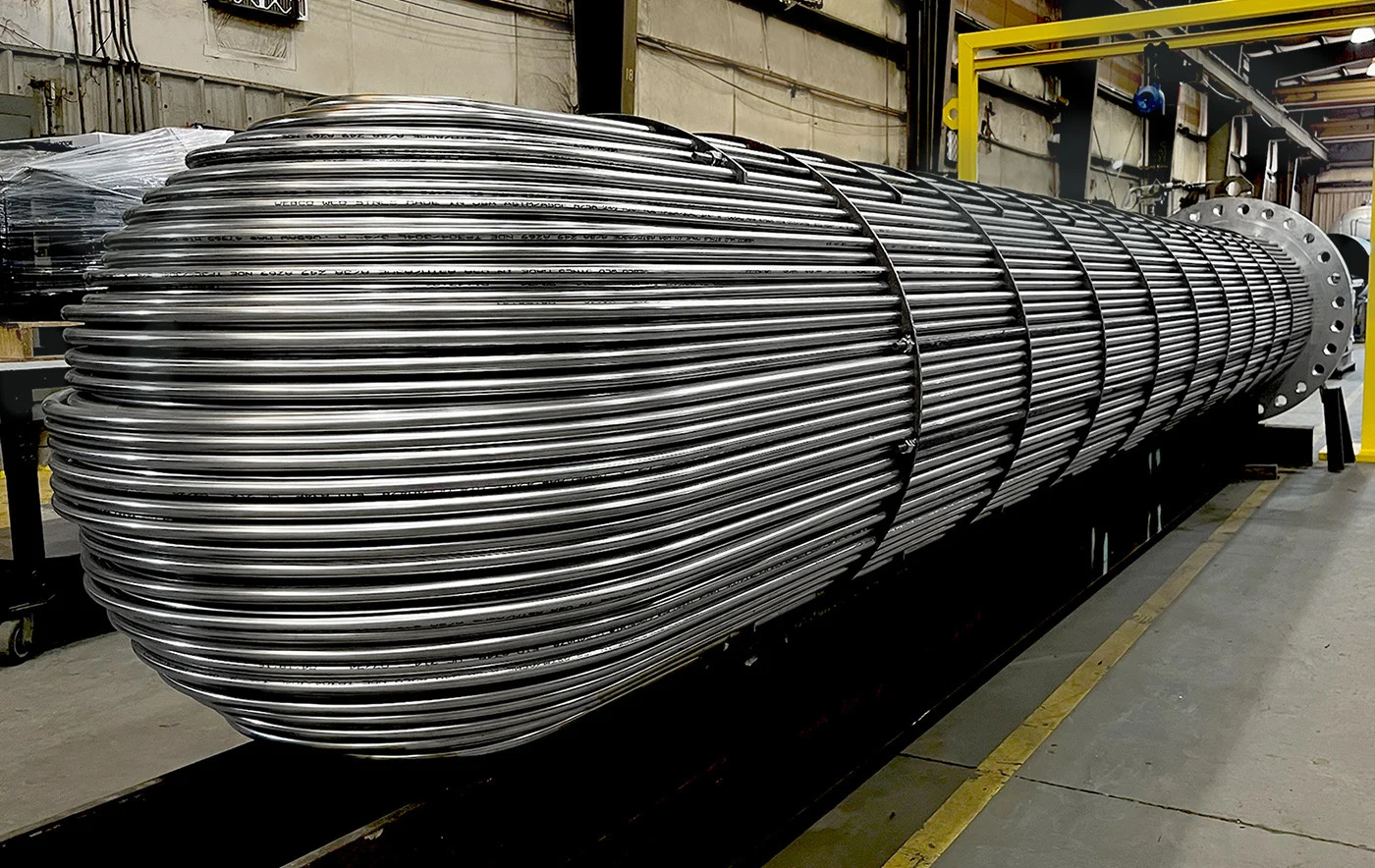
The most common application. C68700 tubes are ideal for steam condenser systems in power plants, thanks to their heat transfer efficiency and resistance to corrosion from cooling water (including seawater and polluted river water).

2. Seawater Desalination Plants

With high biofouling and impingement resistance, these tubes are used in multi-stage flash (MSF) and reverse osmosis (RO) systems.

3. Heat Exchangers and Coolers

Used in oil refineries, HVAC systems, and shipbuilding for transferring heat between fluids without degradation over time.

4. Marine Engineering

Perfect for marine hardware and piping exposed to salty, aggressive environments.
Aluminum Brass C68700 (O61) ASTM B111 Seamless Tube 19 × 1.6mm × 3000mm with 100% Eddy Current Testing for Condenser Applications.

Eddy Current Testing (ECT): 100% Non-Destructive Assurance

Every tube undergoes 100% eddy current testing, a non-destructive inspection method that detects:

  • Internal or external cracks
  • Pinhole leaks
  • Wall thickness inconsistencies
  • Structural discontinuities

This ensures each tube is flaw-free before reaching the client — particularly critical for condenser and pressure systems where performance and safety are paramount.

Why Choose ASTM B111 C68700 Aluminum Brass Tubes?

FeatureBenefit
High Corrosion ResistanceIdeal for seawater, industrial water, and polluted water systems
Excellent Thermal ConductivityMaximizes heat transfer efficiency in condensers
Non-Sparking & Non-MagneticSuitable for specialized industrial environments
Proven ReliabilityUsed in thousands of power plants and marine systems globally
Tested to the Core100% Eddy Current Testing ensures structural integrity
Aluminum Brass C68700 (O61) ASTM B111 Seamless Tube 19 × 1.6mm × 3000mm with 100% Eddy Current Testing for Condenser Applications.

Packaging & Logistics

  • Packing Method: Tubes are sealed with plastic end caps, bundled with moisture-proof wrapping, and packed in export-grade wooden cases.
  • Marking: Size, grade, standard, heat number, and inspection code are clearly marked on each tube and bundle.
  • Delivery: Worldwide shipping options available (sea/air freight), with flexible minimum order quantities.

Call to Action

Need Condenser Tubes That Last?

DLSS offers Aluminum Brass C68700 seamless tubes with full ASTM B111 compliance and 100% eddy current testing — ensuring quality, performance, and peace of mind.

 Request a quote today or speak with our sales engineer:
Visit: www.dlsspipeline.com
Email: info@dlsspipe.com

Let us help you build systems that last — with material that performs.

Wonderful! Share This Case:

Austenitic Stainless Steel

Duplex Stainless Steel

Nickel Alloys

▪ Incoloy Family

▪ Inconel Family

▪ Monel Family

▪ Hastelloy Family

▪ Other Special Alloys

Cobalt Alloys

Related Posts

Understanding Electropolished (EP) Tubes – Surface Roughness, Applications, and Manufacturing

EP Tube Surface

Electropolished stainless steel tubes are often called EP tubes. They are used in clean and high-purity systems. These systems need a smooth inner surface, low particle risk, and good corrosion resistance. EP tubes are common in: The most important point for many buyers is surface roughness. Surface roughness is usually...

Read More

TP304 vs TP316L:

Introduction TP304 and TP316L are the two most widely used austenitic stainless steel grades in industrial piping, particularly in heat exchangers, boiler systems, and chemical plants. While both belong to the same stainless steel family, they differ in corrosion resistance, mechanical properties, and application suitability. In this article, we compare TP304 and TP316L across 5 key aspects to help...

Read More
Material Selection for Seawater-Cooled Heat Exchangers: What Engineers Must Consider

Material Selection for

Seawater is one of the most aggressive environments for heat exchanger systems. High levels of chlorides, biofouling, and oxygenated saline water create ideal conditions for pitting, crevice corrosion, and stress corrosion cracking (SCC). Choosing the wrong material for tubes in seawater-cooled heat exchangers can lead to early failure, frequent maintenance,...

Read More
Stainless Steel Tubes for Hydrogen Production and Electrolysis Systems

Stainless Steel Tubes

Hydrogen production systems need reliable tubing and piping materials. In electrolysis plants, hydrogen generators, balance-of-plant systems, cooling loops, gas-water separation units, purification systems, compressors, and hydrogen skids, tubes may be exposed to high-purity water, oxygen, hydrogen, alkaline electrolyte, acidic environments, pressure, temperature changes, and strict cleanliness requirements. Stainless steel tubes...

Read More

Top 10 Common

Meta Description:Explore the most frequent defects found in stainless steel heat exchanger tubes, including pitting, thinning, and cracking. Learn how to detect and prevent these issues to extend tube service life. Introduction Stainless steel heat exchanger tubes play a critical role in transferring heat efficiently under corrosive and high-pressure conditions....

Read More
ccus-carbon-capture-stainless-steel-pipe-requirements

Stainless Steel Tube

As countries ramp up efforts to reach net-zero emissions, Carbon Capture, Utilization, and Storage (CCUS) technologies are being deployed at scale. These systems capture CO₂ from industrial processes or power generation and inject it deep underground—or repurpose it for industrial use. But behind every CCUS facility lies a network of...

Read More
How to Interpret a Stainless Steel Mill Test Certificate (MTC)

How to Interpret

Introduction A Mill Test Certificate (MTC), also known as a Material Test Report (MTR), is a quality assurance document provided by the manufacturer. It ensures the delivered stainless steel material—such as tubes, pipes, plates, or fittings—complies with the specified standards and purchase order. Understanding how to read an MTC is...

Read More
desalination-projects-stainless-steel-heat-exchanger-tubes

How Global Desalination

With water scarcity on the rise, seawater desalination has become a critical infrastructure priority—especially in the Middle East, North Africa, Asia-Pacific, and parts of Latin America. These plants rely heavily on heat exchanger systems for energy-efficient freshwater production. And at the core of those systems? Stainless steel tubes that can...

Read More

Request A Quote

*We respect your confidentiality and all information are protected.