Hydrogen production systems need reliable tubing and piping materials. In electrolysis plants, hydrogen generators, balance-of-plant systems, cooling loops, gas-water separation units, purification systems, compressors, and hydrogen skids, tubes may be exposed to high-purity water, oxygen, hydrogen, alkaline electrolyte, acidic environments, pressure, temperature changes, and strict cleanliness requirements.
Stainless steel tubes are widely used in hydrogen production systems because they offer corrosion resistance, good fabrication performance, clean internal surfaces, and strong documentation support. However, not every stainless steel grade is suitable for every part of a hydrogen system.
For buyers and engineers, the key question is not simply:
“Can stainless steel be used for hydrogen?”
The better question is:
“Which material, standard, surface condition, testing scope, and documentation package are suitable for this part of the hydrogen production system?”
This guide explains how stainless steel and alloy tubes are used in hydrogen production and electrolysis systems, what buyers should check before ordering, and what information should be included in the RFQ.
Quick Answer
Stainless steel tubes can be used in many hydrogen production and electrolysis system areas, especially for balance-of-plant tubing, cooling water lines, deionized water lines, gas handling lines, instrumentation tubing, heat exchangers, purification units, and process skids.
Common material choices include TP316L, TP316Ti, TP321, TP347, 904L, Alloy 625, Alloy 825, and other corrosion-resistant alloys depending on the medium and service condition.
For hydrogen service, material selection should consider:
- Hydrogen pressure
- Operating temperature
- Water purity
- Electrolyte type
- Oxygen or hydrogen side
- Corrosion environment
- Surface cleanliness
- Tube size and wall thickness
- Weldability
- Heat treatment
- Hydrogen embrittlement risk
- ASME B31.12 or project specification
- MTC and inspection requirements
No material should be selected only by grade name. The actual service condition must be reviewed first.
Where Tubes Are Used in Hydrogen Production Systems
Hydrogen production systems include more than the electrolyzer stack. Tubes and pipes may be used in different areas of the complete system.
Common applications include:
- Deionized water supply lines
- Cooling water loops
- Electrolyte circulation lines
- Hydrogen outlet lines
- Oxygen outlet lines
- Gas-water separation systems
- Purification units
- Drying systems
- Compressor connections
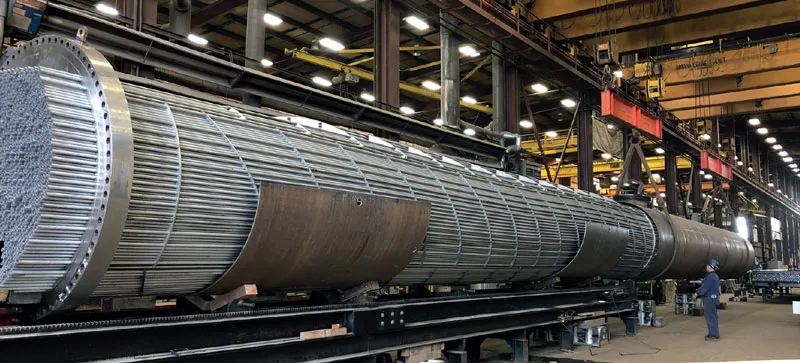
- Heat exchangers
- Instrumentation tubing
- Balance-of-plant skids
- Hydrogen refueling station auxiliary systems
- Utility and process piping around hydrogen generators
The material requirement may be different for each position. For example, a cooling water line, a KOH electrolyte line, a hydrogen gas line, and a PEM stack-related component may all need different materials or surface conditions.
That is why the RFQ should clearly describe the application and medium instead of only saying “hydrogen tube.”
Hydrogen Production by Electrolysis: Why Material Selection Matters
Electrolysis uses electricity to split water into hydrogen and oxygen. The main electrolyzer technologies include alkaline electrolysis, PEM electrolysis, and AEM electrolysis.
Each system may create different material challenges.
Alkaline Electrolysis
Alkaline electrolyzers usually use an alkaline electrolyte, commonly based on potassium hydroxide solution. Materials used in contact with alkaline solutions must be reviewed for corrosion resistance, temperature, concentration, and cleaning condition.
For alkaline systems, stainless steel may be used in many balance-of-plant areas, but the exact grade must match the electrolyte concentration, temperature, and pressure.
PEM Electrolysis
PEM electrolyzers use a proton exchange membrane and often involve acidic and oxidizing conditions inside the stack. Some internal stack components may require titanium or specially coated materials.
Stainless steel tubes may still be used in many surrounding systems, such as cooling loops, water handling, gas lines, and balance-of-plant tubing, but stack-contact materials should follow the electrolyzer OEM specification.
AEM Electrolysis
AEM systems use anion exchange membranes and may involve alkaline conditions. Material selection should be reviewed based on electrolyte chemistry, operating temperature, system design, and OEM requirements.
For all electrolyzer types, buyers should not assume one material fits the whole system. The medium and location should be checked before selecting the tube grade.
Common Tube Materials for Hydrogen and Electrolysis Systems
Material selection depends on whether the tube is used for water, electrolyte, oxygen, hydrogen, cooling, gas purification, or high-pressure service.
| Material | Typical Use Direction | Notes |
|---|---|---|
| TP304L | General clean water or utility lines | Suitable only when corrosion risk is low |
| TP316L | Common choice for many water, cooling, gas, and clean process lines | Better corrosion resistance than 304L in many environments |
| TP316Ti | Systems requiring improved stability under heat | Use only when project specification requires it |
| TP321 / TP347 | Higher-temperature stainless steel service | Often reviewed for heat-affected or high-temperature applications |
| 904L | More corrosive acid or chloride-containing environments | Review based on actual medium |
| Duplex 2205 | High strength and chloride resistance in non-critical hydrogen areas | Not a default choice for high-pressure hydrogen gas unless qualified |
| Super Duplex 2507 | Severe chloride environments | Must be reviewed carefully for hydrogen service |
| Alloy 625 | Severe corrosion or high-strength alloy applications | Often used when stainless steel is not enough |
| Alloy 825 | Acidic or mixed corrosion environments | Review for electrolyte and chemical compatibility |
| Titanium Grade 2 | Selected PEM, seawater, or highly corrosion-resistant applications | Often considered where stainless steel is not suitable |
This table is only a starting point. Final material selection should follow the project specification, code requirement, pressure rating, temperature, medium, and inspection plan.
TP316L Stainless Steel Tubes in Hydrogen Systems
TP316L is one of the most commonly reviewed stainless steel grades for hydrogen production systems. It has good corrosion resistance, good weldability, low carbon content, and wide availability in seamless and welded tubing.
TP316L may be suitable for:
- Deionized water lines
- Cooling water loops
- Balance-of-plant tubing
- Instrumentation tubing
- Low to moderate pressure gas handling
- Heat exchanger tubes
- General clean process tubing
- Some hydrogen system piping when allowed by code and project specification
However, TP316L should not be selected automatically for every hydrogen service. For high-pressure hydrogen gas, low temperature service, cyclic loading, welded tubing, or critical safety-related lines, the material should be reviewed according to ASME B31.12, project specifications, and engineering requirements.
The key is not just the grade. Buyers should also check wall thickness, strength level, surface condition, heat treatment, welding quality, inspection, and traceability.
Hydrogen Embrittlement: What Buyers Should Know
Hydrogen embrittlement is a material degradation risk caused by hydrogen interacting with metals. It can reduce ductility, fracture toughness, and fatigue resistance depending on the material and operating condition.
For hydrogen systems, risk depends on:
- Material grade
- Microstructure
- Strength level
- Hydrogen pressure
- Temperature
- Stress level
- Cyclic loading
- Welding condition
- Surface condition
- Defects or inclusions
- Test and inspection requirements
Austenitic stainless steels such as 316L are often used in hydrogen systems, but this does not mean all stainless steel tubes are automatically safe for every hydrogen application.
For critical hydrogen gas service, buyers should ask:
- Is the material permitted by the project specification?
- Does ASME B31.12 or another hydrogen code apply?
- Is seamless or welded tubing required?
- What pressure and temperature apply?
- Is cyclic pressure loading involved?
- Is hydrogen compatibility review required?
- Are welding procedures and inspection records required?
- Is additional testing required by the end user?
Material selection for hydrogen service should be treated as an engineering review, not a simple catalog choice.
Surface Cleanliness and Passivation
Hydrogen production systems often require clean internal surfaces, especially in deionized water, high-purity gas, oxygen, and PEM-related balance-of-plant systems.
Depending on the application, buyers may request:
- Pickled surface
- Bright annealed surface
- Passivation
- Electropolished surface
- Oil-free cleaning
- Clean packing
- End caps
- Controlled roughness
- Particle control
- Moisture protection
Surface condition matters because contamination, residual oil, loose particles, rust, or poor cleaning can affect system cleanliness and final acceptance.
For stainless steel parts, chemical passivation may be specified according to ASTM A967 or project requirements. If oxygen service cleaning or ultra-high-purity cleaning is required, it should be clearly stated in the RFQ.
Buyers should not assume standard industrial tube cleaning is enough for hydrogen or electrolysis systems. Cleanliness requirements must be confirmed before production.
Standards and Documents Buyers Should Check
Hydrogen and electrolysis projects may involve several standards and documentation requirements. The exact standard depends on the application, country, pressure level, end user, and equipment design.
Common references may include:
- ASME B31.12 for hydrogen piping and pipelines
- ISO 22734 for hydrogen generators using water electrolysis
- ASTM A269 for seamless and welded austenitic stainless steel tubing for general service
- ASTM A213 for seamless boiler, superheater, and heat-exchanger tubes
- ASTM A312 for seamless and welded stainless steel pipes
- ASTM A967 for chemical passivation of stainless steel parts
- EN 10204 3.1 or 3.2 for material certificates
- PED or other pressure equipment rules when required by project
- Customer or electrolyzer OEM specifications
A common mistake is using a standard tube specification without checking whether hydrogen service, oxygen service, pressure equipment rules, or electrolyzer OEM requirements add extra conditions.
Before placing an order, buyers should confirm whether the project needs pipe, tube, instrumentation tubing, heat exchanger tube, U-tube, or special cleaned tubing.
What to Check on the MTC
For hydrogen and electrolysis projects, the MTC is important for traceability and final acceptance.
Buyers should check:
- Material grade
- UNS number
- Product standard
- Heat number
- Chemical composition
- Mechanical properties
- Heat treatment condition
- Tube size and quantity
- Seamless or welded type
- NDT results
- Hydrostatic or pneumatic test result, if required
- PMI result, if required
- Surface finish or passivation record, if required
- Third-party inspection stamp, if required
- EN 10204 3.1 or 3.2 certificate type, if required
For critical hydrogen systems, the MTC alone may not be enough. The project may also require inspection reports, cleaning records, pressure test reports, welding documents, or third-party inspection documents.
What to Include in the RFQ
A clear RFQ helps the supplier recommend the correct tube material and avoid delays.
Buyers should provide:
- Application position in the hydrogen system
- Medium: hydrogen, oxygen, deionized water, cooling water, electrolyte, steam, or process fluid
- Electrolyzer type: alkaline, PEM, AEM, or other
- Material grade or request supplier recommendation
- Standard: ASTM A269, ASTM A213, ASTM A312, EN standard, ASME B31.12, or project specification
- Seamless or welded requirement
- OD, wall thickness, and length
- Quantity
- Operating pressure
- Operating temperature
- Pressure cycling condition
- Corrosion condition
- Surface finish requirement
- Cleaning or passivation requirement
- Roughness requirement, if any
- NDT requirement
- Hydrostatic or pneumatic test requirement
- PMI requirement
- MTC requirement
- Third-party inspection requirement
- Packing and end protection requirement
- Delivery schedule
- Drawing or technical specification, if available
If the buyer is not sure which material is suitable, the RFQ can state:
“Please review the attached hydrogen production system application, medium, pressure, temperature, electrolysis type, surface cleanliness requirement, inspection requirement, and project specification. Please recommend suitable stainless steel or alloy tubes and advise any hydrogen service material risks before quotation.”
How DLSS Supports Hydrogen Production and Electrolysis Projects
DLSS supplies stainless steel and alloy tubes for hydrogen production systems, electrolysis balance-of-plant equipment, process skids, heat exchangers, cooling systems, purification units, gas handling systems, and industrial energy projects.
Our support includes:
- TP304L / TP316L stainless steel tubes
- Seamless and welded stainless steel tubes
- Bright annealed tubes
- Pickled and passivated tubes
- Electropolished tubes when required
- TP321 / TP347 high-temperature stainless steel tubes
- 904L tubes
- Alloy 625 and Alloy 825 tubes
- Titanium tubes
- Heat exchanger tubes
- Instrumentation and process tubing
- MTC and heat number traceability
- PMI, ET, UT, hydrostatic test coordination
- Third-party inspection support
- Export packing with end protection
Before production, DLSS can help buyers review the medium, pressure, temperature, tube material, surface finish, inspection scope, MTC requirement, and packing method.
For hydrogen-related applications, DLSS recommends confirming all hydrogen service, oxygen service, cleanliness, pressure equipment, and OEM requirements before production.
Common Mistakes Buyers Should Avoid
Mistake 1: Writing Only “Hydrogen Tube” in the RFQ
This is too vague. The supplier needs to know whether the tube is for hydrogen gas, oxygen, deionized water, cooling water, electrolyte, heat exchanger, or instrumentation service.
Mistake 2: Assuming One Material Fits the Whole System
A hydrogen production system may need different materials for water lines, electrolyte lines, oxygen lines, hydrogen gas lines, cooling loops, and stack-related components.
Mistake 3: Ignoring Hydrogen Embrittlement Risk
Hydrogen compatibility should be reviewed for critical hydrogen gas service, especially when pressure, cyclic loading, welding, or low temperature service is involved.
Mistake 4: Treating Surface Cleaning as Optional
For hydrogen, oxygen, PEM, and high-purity water systems, surface cleanliness can affect final acceptance. Cleaning, passivation, roughness, and packing requirements should be confirmed before production.
Mistake 5: Confirming Inspection Too Late
MTC, PMI, NDT, pressure testing, third-party inspection, passivation records, or cleaning records should be confirmed before production, not after the goods are ready.
FAQ
Can stainless steel tubes be used for hydrogen production systems?
Yes. Stainless steel tubes are widely used in many hydrogen production system areas, especially balance-of-plant tubing, water lines, cooling loops, gas handling, heat exchangers, and instrumentation. The final grade and standard must match the service condition.
Is 316L suitable for hydrogen service?
316L is commonly reviewed for hydrogen systems because of its corrosion resistance, weldability, and austenitic structure. However, suitability depends on pressure, temperature, stress, cyclic loading, product form, welding condition, and project specification.
What tube material is used for PEM electrolyzers?
PEM systems may require different materials in different locations. Some stack-contact parts may require titanium or special materials, while stainless steel may be used in selected balance-of-plant systems. Buyers should follow the electrolyzer OEM specification.
What is the difference between tubing for alkaline and PEM electrolysis?
Alkaline systems involve alkaline electrolyte conditions, while PEM systems involve acidic membrane chemistry and oxidizing conditions. The material must be selected based on the exact medium, temperature, pressure, and location in the system.
Which standards are important for hydrogen tubing?
Common references may include ASME B31.12, ISO 22734, ASTM A269, ASTM A213, ASTM A312, ASTM A967, EN 10204, PED, and project-specific requirements.
What information should I send to DLSS for hydrogen tubing quotation?
Please send the application position, medium, electrolysis type, material grade, standard, OD, wall thickness, length, pressure, temperature, surface finish, cleaning requirement, inspection requirement, MTC requirement, and drawings if available.
Conclusion
Stainless steel and alloy tubes play an important role in hydrogen production and electrolysis systems, especially in balance-of-plant tubing, water systems, cooling loops, gas handling, purification units, heat exchangers, and process skids.
However, material selection for hydrogen systems should not be based on grade name alone. Buyers should review the medium, pressure, temperature, electrolysis type, hydrogen compatibility, corrosion risk, surface cleanliness, testing requirement, and documentation requirement before production.
DLSS supplies stainless steel and alloy tubes with material traceability, inspection support, MTC documentation, surface finish options, third-party inspection coordination, and export packing. If your project requires tubes for hydrogen production, PEM or alkaline electrolysis, cooling loops, gas lines, or clean process skids, our team can help review your specification and recommend a practical material solution.