Heat Exchanger Maintenance Checklist: How to Extend Equipment Life and Improve Performance

DLSS - Heat Exchanger Knowledge Hub - Heat Exchanger Maintenance Checklist: How to Extend Equipment Life and Improve Performance

1. Introduction – Heat Exchanger Maintenance Checklist

Following a structured heat exchanger maintenance checklist is the most effective way to keep your equipment running efficiently, avoid costly breakdowns, and extend service life.

Whether you operate a shell and tube heat exchanger, a plate heat exchanger, or an air-cooled model, regular preventive maintenance ensures consistent heat transfer performance and minimizes unplanned downtime.

For related optimization strategies, see 5 Proven Ways to Improve Heat Exchanger Efficiency, 7 Effective Ways to Prevent Fouling in Heat Exchangers, and Best Material for Seawater Heat Exchanger.


2. Why Maintenance Is Critical for Heat Exchangers

Neglecting maintenance can lead to:

  • Reduced thermal efficiency due to fouling or scaling
  • Higher energy consumption
  • Increased risk of leaks or tube failures
  • Shortened equipment lifespan
  • Expensive emergency repairs

According to ASME guidelines, implementing a preventive maintenance program can extend the life of a heat exchanger by up to 30%.


3. Heat Exchanger Maintenance Checklist

1. Visual Inspection

  • Check for leaks, corrosion spots, or unusual vibrations.
  • Inspect gaskets, seals, and bolts for wear or damage.

2. Monitor Operating Parameters

  • Record inlet/outlet temperatures and pressure drops.
  • Compare current data with baseline performance to detect early issues.

3. Clean Heat Transfer Surfaces

4. Water Quality Management

  • Test for pH, hardness, and chloride content regularly.
  • Install filtration systems to reduce particulate contamination.

5. Lubrication and Moving Parts Maintenance

  • Lubricate any rotating or sliding components, such as expansion joints or valve linkages.

6. Non-Destructive Testing (NDT)

  • Perform ultrasonic thickness testing or eddy current inspections to detect hidden tube wall loss.

7. Documentation

  • Keep detailed maintenance logs, inspection reports, and cleaning records.
  • Use historical data to optimize maintenance intervals.

4. Maintenance Frequency Recommendations

  • Monthly: Visual inspections and parameter checks
  • Quarterly: Water quality testing and minor cleaning if required
  • Annually: Full inspection, complete cleaning, and NDT testing

The actual schedule should be adapted to your operating environment, fluid type, and production demands.


5. Real-World Example

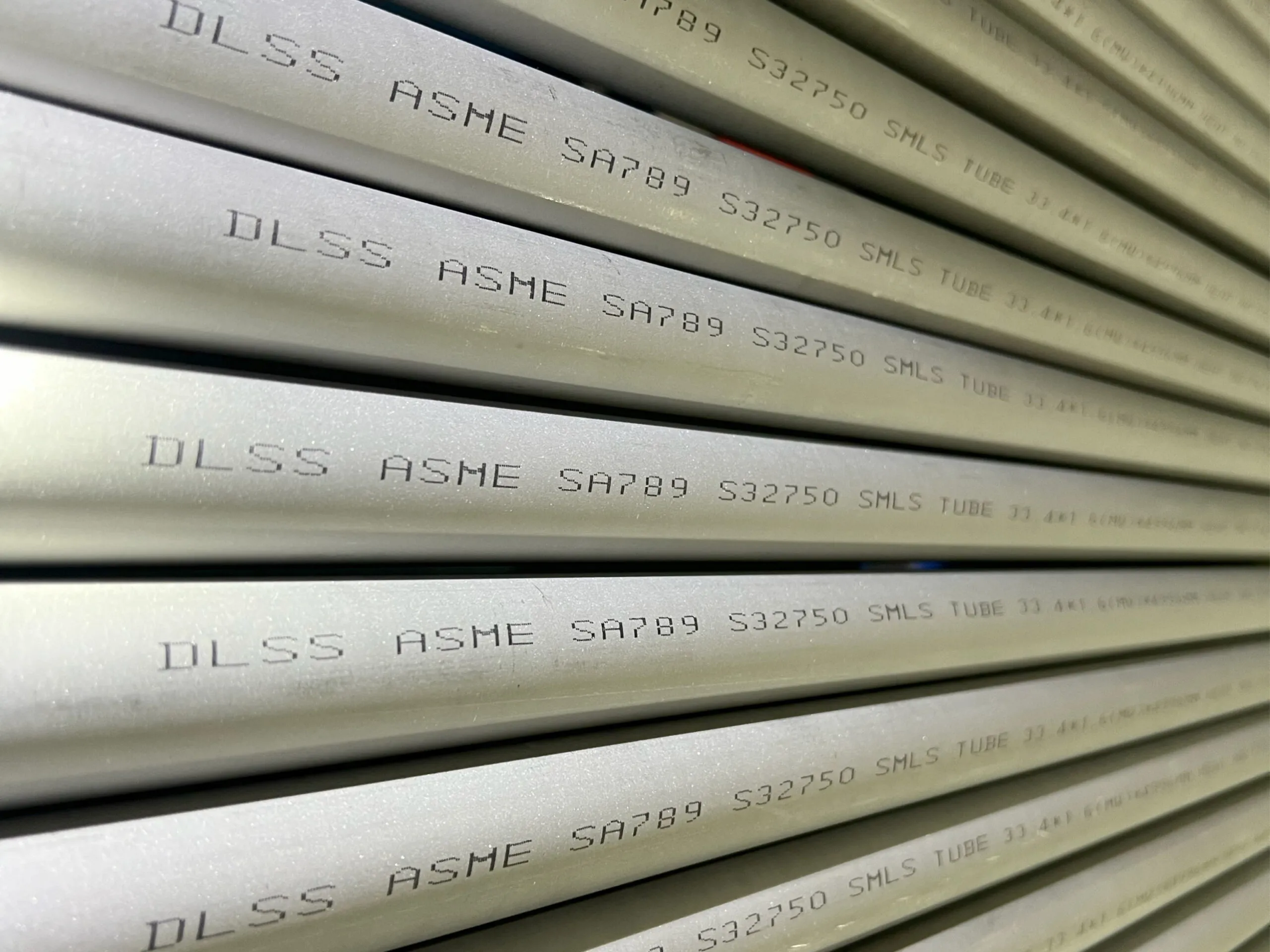
A power plant implemented this checklist and switched to duplex stainless steel tubes for their seawater-cooled exchangers. As a result, fouling was reduced by 40%, cleaning frequency was cut in half, and tube life expectancy increased from 8 years to 12 years.


6. Conclusion

A consistent heat exchanger maintenance checklist improves thermal performance, extends service life, and lowers overall operating costs. By combining regular inspections, proactive cleaning, and high-quality materials, you can ensure optimal performance for years to come.

For more insights, read 5 Proven Ways to Improve Heat Exchanger Efficiency and Best Material for Seawater Heat Exchanger.

Contact DLSS
At DLSS, we manufacture high-quality stainless steel tubes for heat exchanger applications, ensuring optimal heat transfer, corrosion resistance, and long service life.
Email: info@dlsspipe.com
Website: www.dlsspipeline.com

Related Reading

Wonderful! Share This Case:

Austenitic Stainless Steel

Duplex Stainless Steel

Nickel Alloys

▪ Incoloy Family

▪ Inconel Family

▪ Monel Family

▪ Hastelloy Family

▪ Other Special Alloys

Cobalt Alloys

Related Posts

electropolished-tube-id-ra-035

Sanitary Stainless Steel

Introduction As the food and beverage sector in South America expands rapidly—with leading producers in Brazil, Chile, and Argentina—hygiene and quality control are more critical than ever. From dairy lines in São Paulo to wineries in Mendoza, processing systems depend on stainless steel sanitary tubes to ensure cleanliness, durability, and...

Read More
Integrated Stainless Steel Piping Solutions for Industrial Projects

Integrated Stainless Steel

Introduction In large-scale industrial projects—such as oil refineries, power plants, food processing lines, and chemical facilities—procurement teams often face a key challenge: how to consolidate material supply while ensuring technical compliance and on-time delivery. DLSS offers a complete stainless steel piping solution, including seamless pipes, fittings, flanges, and documentation services...

Read More
Finned Tube Heat Transfer Coefficient: Key Factors and Optimization Strategies

Finned Tube Heat

The heat transfer coefficient is one of the most important performance indicators of a finned tube. It determines how efficiently heat can be transferred between the tube-side and the air-side or shell-side medium. By understanding and optimizing the key factors that influence this coefficient, engineers can significantly improve overall heat...

Read More
steel demand Global Market Outlook for Stainless Steel Seamless Pipes (2025–2030)

Global Market Outlook

Introduction The stainless steel seamless pipe industry is entering a new growth phase driven by infrastructure investments, energy transition, and decarbonization.From oil & gas to clean energy, seamless pipes play a vital role in delivering strength, corrosion resistance, and reliability across mission-critical systems. In this article, we provide an up-to-date...

Read More
EN vs ASTM Standards for Stainless Steel Tubes – What’s the Difference and How to Choose?

EN vs ASTM

Introduction Global industrial projects often involve suppliers and clients from different regions—especially Europe, America, and Asia. As a result, you may encounter both ASTM and EN standards when sourcing stainless steel seamless tubes. Understanding how these standards differ helps ensure proper specification alignment, regulatory compliance, and performance reliability. 1. Overview:...

Read More
Europe’s Stainless Steel Tube Market: Compliance-Driven Demand and Strategic Opportunities

Europe’s Stainless Steel

Europe is one of the most regulated and compliance-focused markets in the world for stainless steel seamless tubes—especially for heat exchangers, pharma-grade piping, and energy infrastructure. With stringent requirements for traceability, environmental certification, and dual material standards, suppliers must demonstrate not only high product quality but also full alignment with...

Read More
In‑Depth Guide to Finned Tubes: Why They’re Trending in 2025

In‑Depth Guide to

Overview & Industry Outlook Finned tubes are rapidly gaining attention in 2025 due to their unmatched ability to enhance thermal transfer efficiency in compact spaces. According to MarketWatch, the finned tube heat exchanger market is projected to reach USD 20+ billion globally, driven by the expanding needs of HVAC systems,...

Read More
Weldability and Fabrication Challenges of Titanium and Nickel Alloy Tubes

Weldability and Fabrication

1. Introduction Welding and fabrication are critical stages in the production and installation of titanium tubes and nickel alloy pipes. Both materials offer superior corrosion resistance and mechanical properties, but they require specialized welding techniques, strict process control, and skilled workmanship to ensure reliability in demanding applications such as desalination...

Read More

Request A Quote

*We respect your confidentiality and all information are protected.