Top 10 Factors That Affect Stainless Steel Tube Quality – A Manufacturer’s Checklist

DLSS - Pipe&Tube - Top 10 Factors That Affect Stainless Steel Tube Quality – A Manufacturer’s Checklist

Meta Description:
Discover the top 10 factors that determine the quality of stainless steel tubes, from raw material selection to surface finish and final inspection. Use this guide to evaluate your suppliers and avoid quality risks.


Introduction

When it comes to stainless steel tubing, not all products are created equal. Even if two tubes share the same material grade and size, their performance, durability, and safety can differ drastically due to variations in manufacturing practices and quality control.

This article outlines the top 10 factors that affect tube quality—helping procurement professionals, engineers, and project managers make informed decisions and avoid costly failures.


1. Raw Material Purity and Certification

  • Use of verified billets or mother tubes with consistent chemical composition
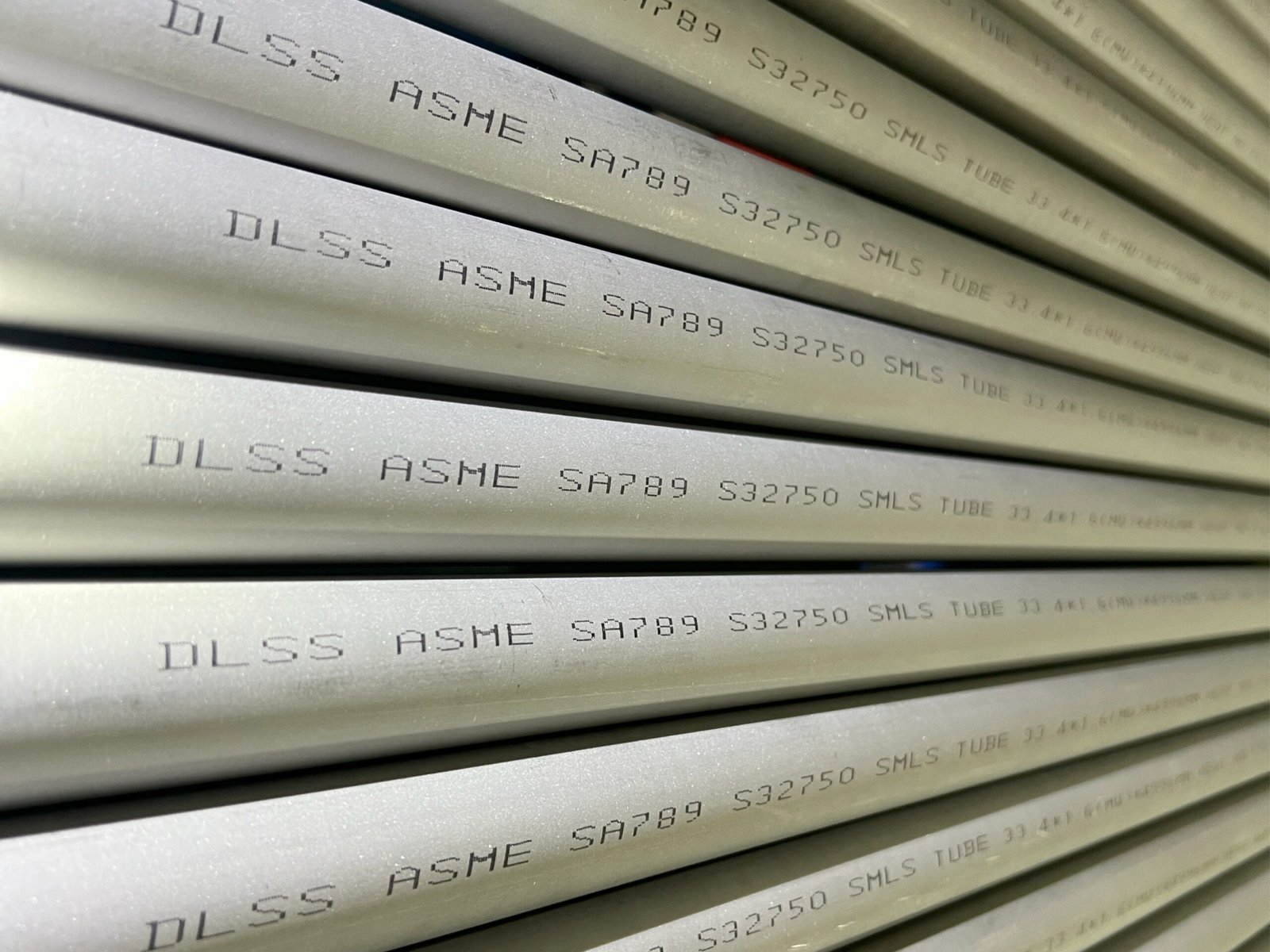
  • Compliance with ASTM, EN, and NACE MR0175 standards
  • Full traceability with EN 10204 3.1 or 3.2 certificates

Learn more: ASTM A213 – Seamless Heat Exchanger Tubes


2. Chemical Composition Accuracy

  • Elements like Cr, Ni, Mo, N must meet precise tolerances
  • Impact corrosion resistance, mechanical strength, and weldability
  • Verified using Positive Material Identification (PMI) and spectrometer analysis

3. Tube Forming Process

  • Whether cold drawn, pilgered, or extruded impacts grain structure and surface quality
  • Cold drawing provides better dimensional control and surface finish
  • Improper process leads to laminations or cracking

4. Heat Treatment and Annealing

  • Annealing restores ductility and removes internal stresses
  • Must follow strict temperature/time curves per material grade
  • Poor annealing causes hardness variation and brittle zones

5. Surface Finish Control

  • Critical for sanitary, food-grade, and instrumentation tubing
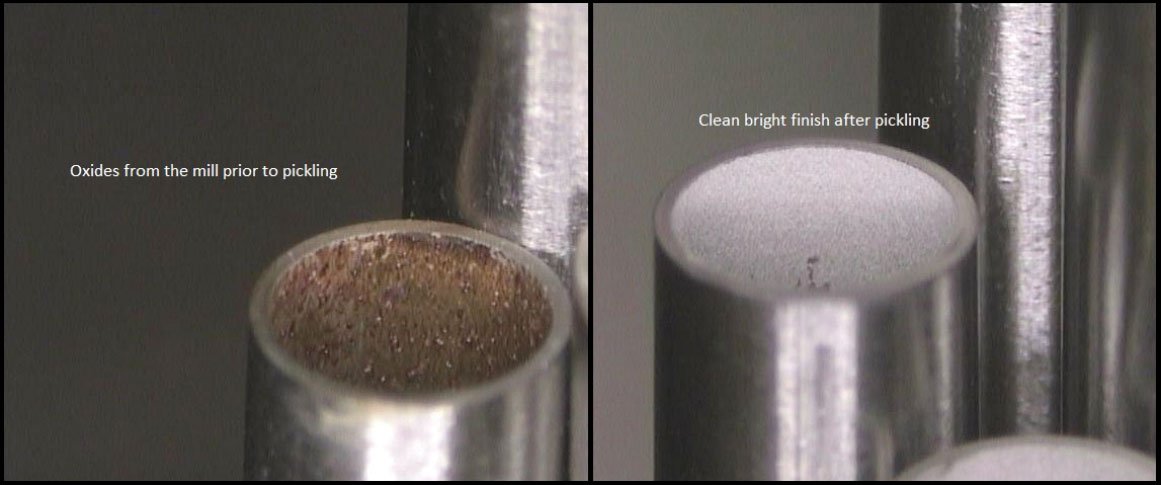
  • DLSS offers Bright Annealed (BA), Pickled, and Electropolished (EP) finishes
  • Smooth surfaces reduce contaminant adhesion and corrosion risks

6. Dimensional Accuracy

  • Outer diameter, wall thickness, and roundness must conform to ASTM A269 or EN 10216-5
  • DLSS uses laser OD gauges and eddy current systems for precision
  • Tolerances: ±0.05 mm OD, ±10% WT standard (or per customer spec)

7. Non-Destructive Testing (NDT)

  • Eddy Current (ET) and Ultrasonic Testing (UT) detect internal cracks and inclusions
  • Hydrostatic Testing ensures pressure resistance (100% on request)
  • Tests comply with ASTM E213, ISO 10893

8. Mechanical Properties

  • Tensile strength, yield strength, elongation, hardness must be within spec
  • DLSS conducts testing in accordance with ASTM A370 and EN ISO 6892-1
  • Some applications require impact testing (Charpy V-notch) for low temp service

9. Cleanliness and Packaging

  • Tubes should be oil-free, dust-free, and dry internally and externally
  • Cleanroom packaging or end caps + PVC wrap used for high-purity tubing
  • Seaworthy export packaging: plywood boxes with separators

10. Final Inspection and Documentation

  • Visual inspection for scratches, dents, welding flaws
  • Delivery with complete MTCs, including mechanical, chemical, and NDT results
  • Third-party witness (SGS, BV, TÜV) available

DLSS Quality Control Snapshot

  • ISO 9001-certified system
  • 100% dimensional + visual inspection
  • Full testing traceability for every batch
  • Customized QA/QC reports available on request
  • Internal quality audits every production cycle

FAQs

Q1: Can I request tighter tolerance than ASTM standard?
Yes. DLSS supports precision manufacturing with tighter OD/WT controls on request.

Q2: How is Ra (roughness) verified for electropolished tubes?
DLSS uses Ra testers per ISO 4287 and provides Ra graphs in QA documentation.

Q3: Do you support material testing in third-party labs?
Yes. We cooperate with SGS, BV, TÜV for mechanical, corrosion, and metallography tests.

Q4: Are test records archived?
All production and test records are archived for at least 5 years and traceable by heat number.


Conclusion

Quality in stainless steel tubing is never accidental—it results from precision processes, thorough inspections, and strict documentation. By understanding the key quality factors, you can better assess supplier capabilities and ensure reliability in your critical applications.


Contact DLSS
Email: info@dlsspipe.com
Website: www.dlsspipeline.com

Need high-precision tubes for demanding applications? DLSS is your trusted partner for certified quality and zero-defect delivery.

Wonderful! Share This Case:

Austenitic Stainless Steel

Duplex Stainless Steel

Nickel Alloys

▪ Incoloy Family

▪ Inconel Family

▪ Monel Family

▪ Hastelloy Family

▪ Other Special Alloys

Cobalt Alloys

Related Posts

What is Pickling and Passivation? Surface Treatment for Stainless Steel Tubes Explained

What is Pickling and Passivation?

Meta Description:Learn the difference between pickling and passivation for stainless steel tubes. Understand how these surface treatments improve corrosion resistance and comply with industry standards like ASTM A380 and A967. Introduction Stainless steel may be known for its corrosion resistance, but improper surface conditions can compromise performance. To ensure maximum durability, two essential surface treatments […]

Read More
Stainless Steel Tubing for Food & Beverage Applications – Sanitary Requirements Explained

Stainless Steel Tubing for Food

Meta Description:Discover the sanitary tubing requirements for food and beverage processing. Learn how stainless steel tubes ensure hygiene, corrosion resistance, and compliance with global standards. Introduction In the food and beverage industry, maintaining product purity, hygiene, and corrosion resistance is non-negotiable. Stainless steel tubing plays a critical role in transporting liquids and gases—from dairy to […]

Read More
What is Electropolished Tubing and When Should You Use It?

What is Electropolished Tubing and

Meta Description:Discover what electropolished (EP) stainless steel tubing is, how it’s made, and where it’s used. Ideal for pharmaceutical, semiconductor, and ultra-high-purity industries requiring extreme surface cleanliness and corrosion resistance. Introduction In industries where surface cleanliness, corrosion resistance, and bacterial control are critical, standard stainless steel tubing may not be enough. That’s where Electropolished (EP) […]

Read More
Heat Exchanger Tube Manufacturing for Japan’s Power Industry(日本の発電産業向け熱交換器チューブ製造)

Heat Exchanger Tube Manufacturing for

1. Introduction Japan’s power sector—including 火力発電所 (thermal power plants), 原子力発電所 (nuclear power plants), and 再生可能エネルギー施設 (renewable energy facilities)—demands high-performance heat exchanger tube Japan that can withstand high pressure, high temperature, and corrosive environments. DLSS provides stainless steel and special alloy tubes that meet JIS G3463 and ASTM standards, ensuring long service life and stable performance. […]

Read More
How DLSS Controls Grain Size for Austenitic Stainless Steel Tubes – Why It Matters

How DLSS Controls Grain Size

Meta Description:Discover why grain size matters in stainless steel tubing and how DLSS ensures optimal grain structure through precise heat treatment, testing, and quality control. Introduction Grain size in stainless steel is more than just a microscopic characteristic—it directly affects mechanical strength, corrosion resistance, formability, and creep performance. For critical applications such as heat exchangers, […]

Read More
TP316L Stainless Pipes for Japan’s Chemical Processing Plants – 日本化学プラント向けTP316Lステンレス管

TP316L Stainless Pipes for Japan’s

Introduction Japan’s chemical industry demands high-performance stainless steel pipes capable of withstanding aggressive media and high temperatures. TP316L stainless pipes by DLSS meet JIS G3459 – Stainless Steel Pipes for Corrosion Resistance, ensuring durability, weldability, and excellent resistance to chloride-induced corrosion common in Japanese chemical processing plants. 1. Why TP316L for Japan’s Chemical Industry(日本化学産業でTP316Lが選ばれる理由) 2. […]

Read More
U-Bent Stainless Steel Tubes for Heat Exchangers: Manufacturing, Standards, and Applications

U-Bent Stainless Steel Tubes for

U-bent tubes are critical components in various heat exchanger systems, especially where space-saving or directional flow change is required—such as in shell-and-tube heat exchangers, condensers, boilers, and superheaters. This article explains the manufacturing process, quality standards, and key applications of U-bent stainless steel tubes, along with how DLSS Pipeline ensures precision and reliability in every […]

Read More
Reliable Tubes for the Shipbuilding Industry

Reliable Stainless Steel Tubes for

The shipbuilding industry continues to grow, with China, South Korea, and Japan accounting for nearly 90% of global ship output in 2023. As vessels are exposed to seawater corrosion, high pressure, and strict IMO environmental standards, the demand for corrosion-resistant stainless steel tubes and copper-nickel alloy pipes has never been higher. At DLSS, we specialize […]

Read More

Request A Quote

*We respect your confidentiality and all information are protected.