Improving Heat Exchanger Efficiency: Practical Strategies for Performance Optimization

DLSS - Tubes For Heat Exchanger - Improving Heat Exchanger Efficiency: Practical Strategies for Performance Optimization

Whether in power plants, chemical facilities, HVAC systems, or food processing lines, heat exchanger efficiency directly impacts energy consumption, process reliability, and operating cost. Over time, even well-designed systems can suffer from performance degradation due to fouling, improper flow, or suboptimal configurations.

This article outlines practical and engineering-proven methods to improve the efficiency of shell-and-tube and plate heat exchangers, with recommendations on materials, flow management, surface treatment, and maintenance best practices.


Why Efficiency Declines Over Time

As noted in Wikipedia – Heat Exchanger, performance is governed by the overall heat transfer coefficient (U), which is influenced by:

  • Fouling on heat transfer surfaces
  • Flow regime (laminar vs turbulent)
  • Material thermal conductivity
  • Temperature differential and fluid properties
  • Mechanical design and cleanliness

Efficiency drops can lead to 20–50% more energy usage, increased pressure loss, and reduced throughput.


Top 7 Strategies to Improve Heat Exchanger Efficiency

1. Increase Flow Turbulence

Transitioning from laminar to turbulent flow increases heat transfer by improving mixing at the boundary layer.

How:

  • Use baffles or turbulators in shell-side flow
  • Reduce tube diameters for same flow rate
  • Maintain optimal Reynolds number (>2,300)

2. Upgrade Tube Material

Material matters. The thermal conductivity of the tube wall has a significant effect on exchanger performance.

MaterialThermal Conductivity (W/m·K)
Copper~380
Aluminum~205
Stainless Steel 316L~16
Titanium~21
Incoloy/Hastelloy~11–15

While copper performs best thermally, stainless steel, duplex, and titanium provide superior corrosion resistance and longevity. Choose materials that balance thermal transfer and durability based on your fluid and operating conditions.

Explore materials: DLSS Stainless Tube Solutions


3. Apply Surface Enhancements

Improving surface conditions inside the tubes helps reduce fouling and enhances thermal exchange:

  • Polished or bright-annealed finishes reduce roughness and biofilm attachment
  • Ribbed or corrugated tubes increase internal turbulence
  • Coatings (e.g., Teflon) resist corrosion or biological growth

4. Optimize Flow Arrangement

Choose the right configuration:

  • Counterflow provides the best temperature gradient
  • Crossflow is compact but less efficient
  • Multi-pass increases contact time and turbulence

Ensure even fluid distribution to avoid dead zones and flow maldistribution.


5. Regular Cleaning and Maintenance

Refer to our Heat Exchanger Cleaning Guide for in-depth techniques.

  • CIP (Clean-In-Place) for plate heat exchangers
  • Mechanical brushing for shell-and-tube systems
  • Hydroblasting for heavy deposits
  • Clean every 6–12 months or based on performance data

6. Prevent Scaling and Fouling

Use pretreatment systems such as:

  • Water softeners
  • Filters and strainers
  • Biocide dosing
  • Anti-scaling agents

Monitor fouling factors and fluid chemistry to reduce downtime and cleaning frequency.


7. Use High-Quality Tubes from Trusted Manufacturers

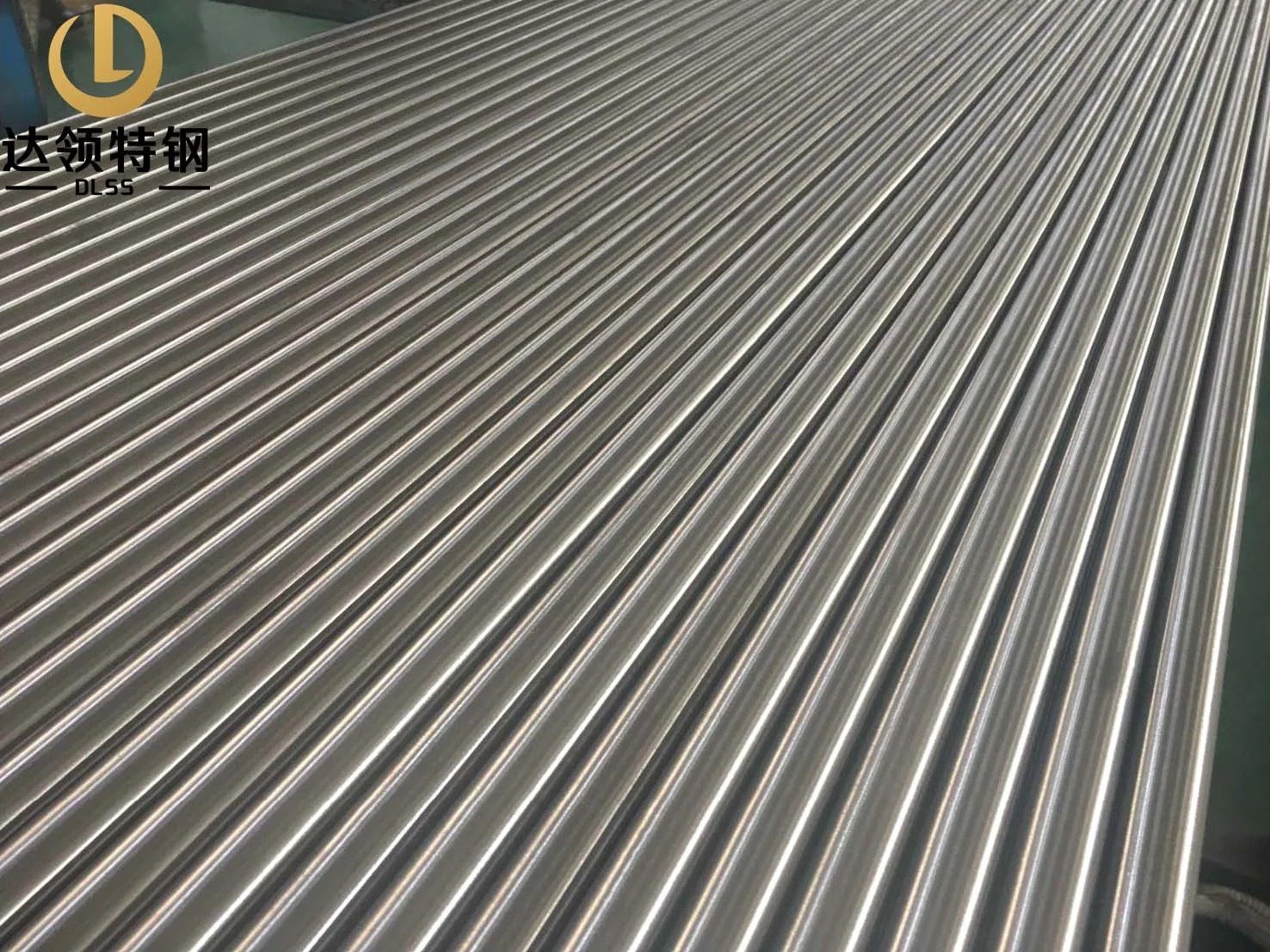
Precision-manufactured seamless tubes ensure:

  • Consistent wall thickness and flow area
  • Leak-proof performance under high pressure
  • Minimal roughness for lower friction losses
  • Compliance with international standards (ASME, ASTM, PED)

DLSS provides:

  • U-bent and straight tubes in stainless, Duplex, and titanium
  • Surface finishes as low as Ra ≤ 0.4 µm
  • Custom cut-to-length, hydro test, eddy current test

Frequently Asked Questions (FAQ)

Q1: How do I calculate if my exchanger is underperforming?
Compare actual outlet temperatures and pressure drops against design specs. A decline signals fouling or flow disruption.

Q2: Will changing the tube material alone improve efficiency?
Not always. It helps with longevity and corrosion but may require flow changes or enhanced surfaces for major impact.

Q3: Can I retrofit my exchanger with better tubes?
Yes. In many cases, tube bundles can be replaced or upgraded while retaining the shell or frame.

Q4: Does fouling affect plate and tubular exchangers equally?
No. Plate units foul faster with dirty fluids but are easier to clean. Shell-and-tube units are more tolerant but harder to access.


Contact Us

DLSS helps industrial clients optimize thermal performance through premium tubing solutions engineered for energy-efficient heat exchange.

  • Expert material guidance
  • High-finish seamless tube production
  • Tubes for steam, corrosive fluids, food-grade, or geothermal systems
  • Over 40 countries served

Email: info@dlsspipe.com
Website: www.dlsspipeline.com

Let DLSS support your next high-efficiency heat exchanger project.

Wonderful! Share This Case:

Austenitic Stainless Steel

Duplex Stainless Steel

Nickel Alloys

▪ Incoloy Family

▪ Inconel Family

▪ Monel Family

▪ Hastelloy Family

▪ Other Special Alloys

Cobalt Alloys

Related Posts

Export Packaging and Protection for Stainless Steel Heat Exchanger Tubes

Export Packaging and Protection for

When exporting stainless steel heat exchanger tubes, quality doesn’t stop at production—it must extend through to delivery. Improper packaging can result in corrosion, deformation, contamination, or mechanical damage during transit, especially over long sea voyages. At DLSS Pipeline, we ensure every shipment arrives in perfect condition with customized export packaging and robust protection tailored to […]

Read More
Pickling vs Bright Annealing: Which Surface Treatment Is Best for Stainless Steel Tubes?

Top 5 Stainless Steel Tube

Meta Description:Discover the five most common causes of stainless steel tube failures. Learn how to detect, prevent, and solve issues in high-performance piping systems across industries. Introduction Stainless steel tubes are widely used in high-demand applications due to their corrosion resistance, strength, and cleanliness. However, tube failure—when it occurs—can lead to production shutdowns, safety hazards, […]

Read More
Pickling vs Bright Annealing: Which Surface Treatment Is Best for Stainless Steel Tubes?

Pickling vs Bright Annealing: Which

Meta Description:Pickled or bright annealed? Learn the pros, cons, and applications of these two surface treatment methods used in stainless steel tube manufacturing. Introduction The performance of stainless steel tubes isn’t just about alloy grade or dimensional accuracy—surface finish plays a crucial role in corrosion resistance, cleanliness, and long-term durability. Two widely used surface treatments […]

Read More
Nickel Alloy 625 vs 825: Choosing the Right Pipe for Chemical and Offshore Projects

Nickel Alloy 625 vs 825:

1. Introduction When it comes to critical piping systems in chemical plants, refineries, and offshore projects, material selection plays a decisive role in long-term reliability. Two of the most widely specified options are Nickel Alloy 625 pipes and Incoloy 825 tubes. Although both are high-performance alloys with excellent corrosion resistance, their properties and cost-performance profiles […]

Read More
Heat Exchanger Maintenance Checklist: How to Extend Equipment Life and Improve Performance

Heat Exchanger Maintenance Checklist: How

1. Introduction – Heat Exchanger Maintenance Checklist Following a structured heat exchanger maintenance checklist is the most effective way to keep your equipment running efficiently, avoid costly breakdowns, and extend service life. Whether you operate a shell and tube heat exchanger, a plate heat exchanger, or an air-cooled model, regular preventive maintenance ensures consistent heat […]

Read More
africa-refinery-power-projects-stainless-steel-demand

Africa’s Refining and Power Surge:

Africa is undergoing a once-in-a-generation infrastructure transformation. New refineries, LNG terminals, combined cycle power plants, and mining developments are emerging across Nigeria, Egypt, Algeria, Angola, Kenya, and beyond. For stainless steel tube and pipe suppliers, this is not just a trend—it’s a new frontier. The continent’s demand for high-quality industrial piping, heat exchanger tubes, and […]

Read More
Hygienic-Grade Stainless Steel Tubes in the Food and Pharmaceutical Industries: Global Trends and Compliance

Hygienic-Grade Stainless Steel Tubes in

The demand for hygienic-grade stainless steel seamless tubes is rapidly expanding, particularly in the food & beverage (F&B) and pharmaceutical industries. These sectors require tubing with ultra-smooth surfaces, precise dimensional control, and strict compliance with international sanitary standards such as 3-A, ASME BPE, and ISO 2037. In this article, we explore the latest market trends, […]

Read More
EN vs ASTM Standards for Stainless Steel Tubes – What’s the Difference and How to Choose?

EN vs ASTM Standards for

Meta Description:Explore the key differences between EN and ASTM standards for stainless steel tubes. Understand specifications, testing requirements, tolerances, and how to choose the right standard for your project. Introduction Global industrial projects often involve suppliers and clients from different regions—especially Europe, America, and Asia. As a result, you may encounter both ASTM and EN […]

Read More

Request A Quote

*We respect your confidentiality and all information are protected.