Introduction
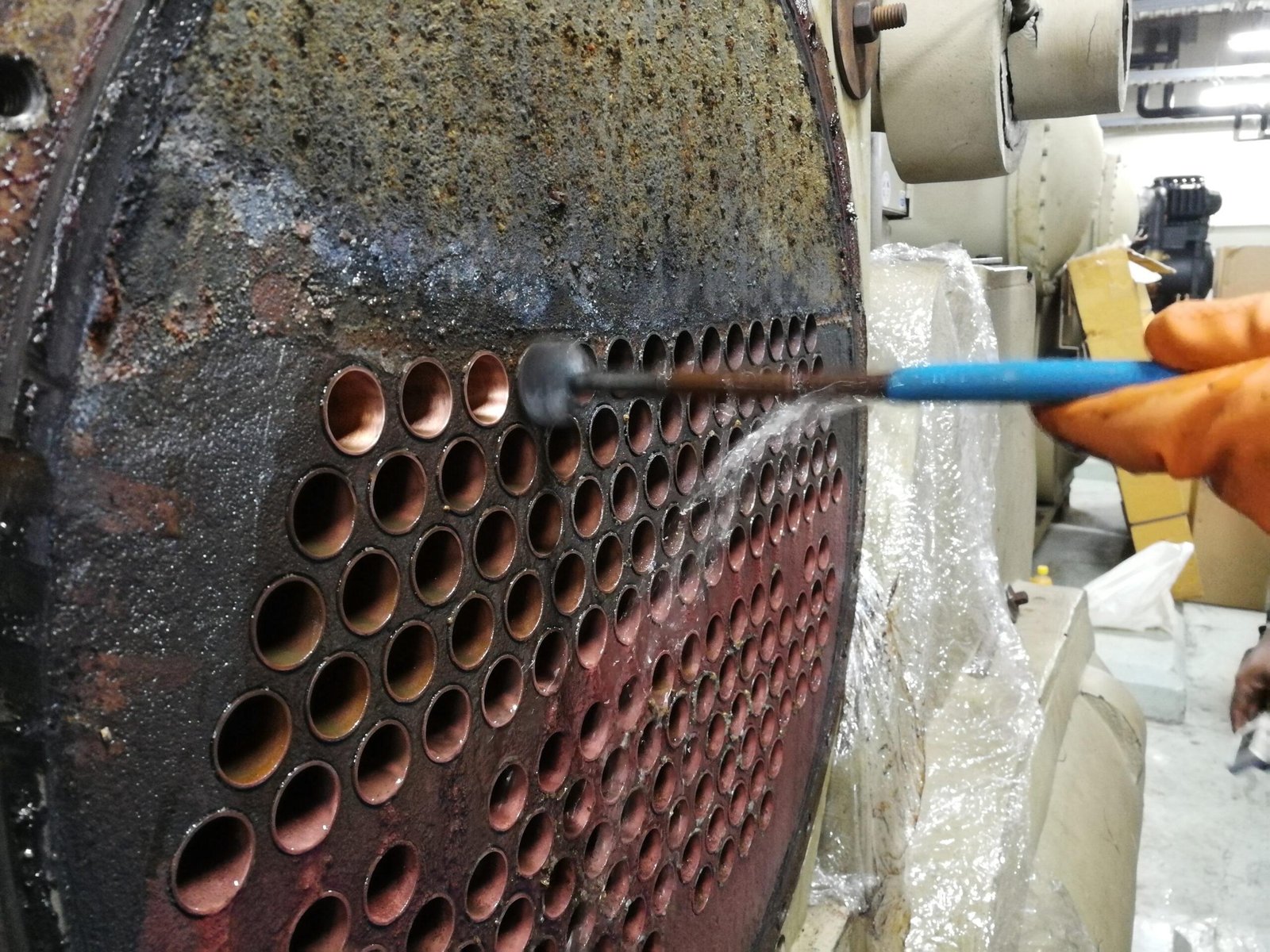
Stainless steel tubes are widely used in high-demand applications due to their corrosion resistance, strength, and cleanliness. However, tube failure—when it occurs—can lead to production shutdowns, safety hazards, and costly repairs.
Understanding the root causes of these failures helps you select better materials, improve installation, and extend equipment life.
DLSS shares the top 5 stainless steel tube failure modes, how to prevent them, and lessons from real-world projects.
1. Pitting Corrosion
What It Is:
Localized, aggressive corrosion caused by chlorides or halides penetrating the passive oxide layer.
Common in:
- Seawater systems
- Clean-in-place (CIP) systems with residual chlorides
- Cooling water in petrochemical plants
Symptoms:
- Small round holes
- Rapid wall thinning
- May not be visible until leakage
Prevention:
- Use higher alloyed steel (TP316L → TP317L / 904L / Duplex 2205)
- Ensure proper flushing after chemical cleaning
- Apply pickling + passivation (ASTM A380/A967)
Reference: NACE International – Pitting Resistance Equivalency Number (PREN)
2. Stress Corrosion Cracking (SCC)
What It Is:
Cracking under tensile stress in the presence of chlorides, especially at elevated temperatures.
Common in:
- Steam condensate lines
- Heat exchangers in chemical processing
- High-pressure food-grade systems
Symptoms:
- Branched, intergranular cracking
- Sudden rupture despite low general corrosion
Prevention:
- Avoid continuous exposure to 60–150 °C + chlorides
- Use Duplex, TP321, or low-S-content 316L
- Post-weld heat treatment (PWHT) where required
3. Erosion-Corrosion
What It Is:
Accelerated wear due to high-velocity fluid flow removing the protective oxide layer.
Common in:
- Boiler tubes
- Feedwater lines
- Hydrocarbon injection systems
Symptoms:
- Grooves or thinning on inner bend surfaces
- Localized leaks at elbows, reducers, or U-bends
Prevention:
- Reduce flow velocity or avoid turbulence
- Use thicker walls or hard-facing alloys (Inconel, Alloy 625)
- Proper pipe support to avoid vibration
4. Intergranular Corrosion (IGC)
What It Is:
Corrosion along grain boundaries, especially after improper welding or heat treatment.
Common in:
- Welded TP304/316 pipes without low-carbon designation
- Heat-exposed zones (HAZ) in poorly fabricated lines
Symptoms:
- Cracking along welds
- Grain boundary discoloration after etching
Prevention:
- Use stabilized grades (TP321, TP347) or L-grades (TP316L)
- Confirm grain size per ASTM E112 and IGC test (ASTM A262 Practice E)
- Apply proper welding procedure with low heat input
5. Hydrogen Embrittlement (HE)
What It Is:
Loss of ductility due to atomic hydrogen diffusion into metal structure under pressure.
Common in:
- Hydrogen fuel systems
- Pickled tubes without proper neutralization
- Electrolyzer hydrogen gas lines
Symptoms:
- Delayed cracking
- Sudden brittle fracture without deformation
Prevention:
- Use hydrogen-compatible materials (Alloy 625, Incoloy 825)
- Ensure pickled tubes are properly rinsed and dried
- Confirm compatibility with ISO 11114-1 hydrogen testing
Real-World Case Studies
✅ Case: Pitting in Food CIP System
Issue: 316L tubing developed leaks after 12 months of operation.
Root Cause: Residual chloride after chemical rinse.
Solution: Switched to 317L with proper post-cleaning. Zero failures after 3 years.
✅ Case: SCC in Heat Exchanger Tubes
Issue: Cracking in TP304 tubes after thermal cycling.
Root Cause: High chlorides + poor weld zones.
Solution: Upgraded to Duplex 2205 and improved welding quality. Full recovery.
✅ Case: IGC in Welded TP304 Water Line
Issue: Leaks detected along weld seam after 2 years.
Root Cause: No post-weld passivation, sensitized HAZ.
Solution: Replaced with TP321 tubes, with MTC + IGC test reports.
FAQs: Stainless Steel Tube Failures
Q1: How do I know if my tube has pitting corrosion?
A: Use ultrasonic thickness gauging or endoscope inspection. Pitting often occurs internally and is not visible from outside.
Q2: Can I perform NDT to prevent SCC failures?
A: Yes. DLSS recommends dye penetrant or radiographic testing at critical joints, especially for older piping systems.
Q3: What testing services does DLSS offer?
A: UT, ET, PT, IGC (ASTM A262), PMI, grain size (ASTM E112), and mechanical tests per EN 10204 3.1/3.2.
Conclusion
Preventing stainless steel tube failure starts with material selection, proper fabrication, and post-processing control. DLSS helps clients design and maintain tube systems that operate reliably even in the harshest industrial environments.
Contact DLSS
Email: info@dlsspipe.com
Website: www.dlsspipeline.com
Want to prevent tube failure before it costs you? Contact DLSS for application-specific alloy advice, QA testing, and long-life tubing solutions.