Weldability and Fabrication Challenges of Titanium and Nickel Alloy Tubes

DLSS - Pipe&Tube - Weldability and Fabrication Challenges of Titanium and Nickel Alloy Tubes

1. Introduction

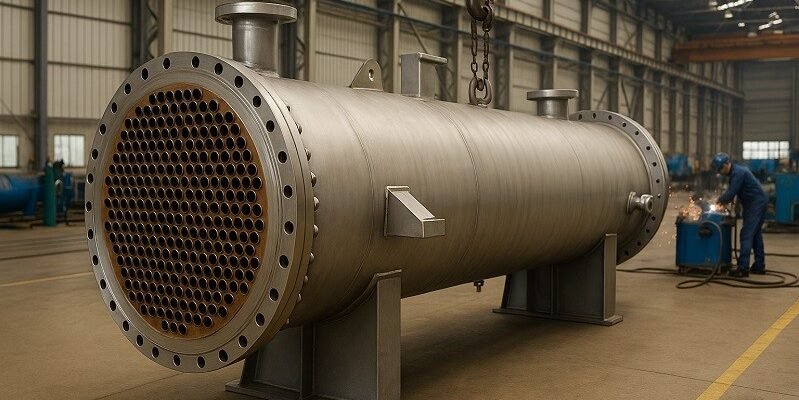
Welding and fabrication are critical stages in the production and installation of titanium tubes and nickel alloy pipes. Both materials offer superior corrosion resistance and mechanical properties, but they require specialized welding techniques, strict process control, and skilled workmanship to ensure reliability in demanding applications such as desalination plants, LNG terminals, and chemical processing facilities.


2. Weldability of Titanium Tubes

  • Challenges:
    • Titanium is highly reactive with oxygen, nitrogen, and hydrogen at elevated temperatures.
    • Poor shielding leads to embrittlement and weld defects.
  • Best Practices:
    • Use of argon or helium inert gas shielding during GTAW (Gas Tungsten Arc Welding).
    • Application of trailing shields and chamber welding for complete protection.
    • Strict surface cleaning to remove oil, grease, and oxides.
  • Standards:
    • AWS D10.6 – Recommended Practices for Welding Titanium.
    • ASTM B338 compliance requires weld integrity tests.

3. Weldability of Nickel Alloy Pipes

  • Challenges:
    • High nickel content increases thermal expansion, leading to distortion and cracking risks.
    • Susceptibility to hot cracking in alloys such as Inconel 625 or Hastelloy C-276.
  • Best Practices:
    • GTAW or GMAW with matching filler metals (e.g., ERNiCrMo-3 for Alloy 625).
    • Preheat generally not required, but controlled heat input is essential.
    • Use low interpass temperature and multiple passes for thick-wall pipes.
  • Standards:
    • ASME Section IX – Welding qualifications for nickel alloys.
    • NACE MR0175 for sour service piping systems.

4. Fabrication Considerations

  • Titanium Tubes:
    • Requires dedicated tools to prevent cross-contamination with steel.
    • Cold forming is possible due to good ductility, but springback must be accounted for.
  • Nickel Alloy Pipes:
    • Work hardening occurs quickly, requiring careful machining with carbide tools.
    • Stress-relief heat treatment may be required for some alloys.

5. DLSS Expertise in Welding & Fabrication

At DLSS, we deliver fabrication-ready titanium and nickel alloy tubes with:

  • Strict welding procedure specifications (WPS) for titanium and nickel alloys.
  • Certified welders qualified to ASME Section IX.
  • Ultrasonic Testing (UT), Radiographic Testing (RT), and Dye Penetrant Testing (PT) for weld quality.
  • Fabricated products including U-bend tubes, tube sheets, and spool assemblies.
  • Full documentation package with ASTM, ASME, and EN standards compliance.

6. Conclusion & Call to Action

The weldability and fabrication of titanium and nickel alloy tubes require advanced expertise and precision. When performed correctly, these materials deliver unmatched durability in aggressive environments such as seawater cooling, LNG pipelines, and acid processing plants.

For EPC contractors and OEMs seeking fabricated titanium or nickel alloy piping systems, DLSS provides certified solutions with guaranteed quality.

Contact us to discuss your fabrication needs.
info@dlsspipe.com | www.dlsspipeline.com

Wonderful! Share This Case:

Austenitic Stainless Steel

Duplex Stainless Steel

Nickel Alloys

▪ Incoloy Family

▪ Inconel Family

▪ Monel Family

▪ Hastelloy Family

▪ Other Special Alloys

Cobalt Alloys

Related Posts

ASME, EN, and JIS Standards

In global heat exchanger projects, engineers and procurement teams often face a critical question: Which material standard should we follow—ASME, EN, or JIS? Each of these standards governs stainless steel tube production but comes from different regions and technical philosophies. Understanding their differences helps avoid miscommunication, ensure regulatory compliance, and make smart sourcing decisions. In […]

Read More
Pickling vs Bright Annealing: Which Surface Treatment Is Best for Stainless Steel Tubes?

Top 5 Stainless Steel Tube

Meta Description:Discover the five most common causes of stainless steel tube failures. Learn how to detect, prevent, and solve issues in high-performance piping systems across industries. Introduction Stainless steel tubes are widely used in high-demand applications due to their corrosion resistance, strength, and cleanliness. However, tube failure—when it occurs—can lead to production shutdowns, safety hazards, […]

Read More
Extruded Finned Tubes: Corrosion Resistance and Marine Applications

Extruded Finned Tubes: Corrosion Resistance

In environments where moisture, saltwater, or harsh chemicals are present, corrosion resistance is one of the most critical factors in heat exchanger performance. Extruded finned tubes are specially designed to meet these challenges, making them the go-to choice for marine and offshore industries. If you want to understand the full range of finned tube options, […]

Read More
Understanding ASTM A213 – Seamless Tubes for Heat Exchangers and Boilers

How to Choose Stainless Steel

Meta Description:Not all stainless steel pipes are suitable for heat exchangers. Learn how to select the right grade, surface finish, and compliance standard for maximum thermal efficiency and corrosion resistance. Introduction Heat exchangers are the heart of many industrial systems—refineries, petrochemicals, power plants, and HVAC units. And at the core of any heat exchanger is […]

Read More
Choosing Between Seamless and Welded Stainless Steel Tubes: Which One Fits Your Project?

Choosing Between Seamless and Welded

Meta Description:Understand the pros and cons of seamless vs welded stainless steel tubes. Learn when to choose each type based on pressure, corrosion, cost, and application requirements. Introduction When specifying stainless steel tubes for your project—whether it’s a heat exchanger, fluid transport system, or structural framework—one of the most important decisions is choosing between seamless […]

Read More

Top 10 Common Defects in

Meta Description:Explore the most frequent defects found in stainless steel heat exchanger tubes, including pitting, thinning, and cracking. Learn how to detect and prevent these issues to extend tube service life. Introduction Stainless steel heat exchanger tubes play a critical role in transferring heat efficiently under corrosive and high-pressure conditions. However, defects in these tubes […]

Read More
steel demand Global Market Outlook for Stainless Steel Seamless Pipes (2025–2030)

Global Market Outlook for Stainless

Meta Description:Explore global market trends, key drivers, and regional opportunities shaping the future of stainless steel seamless pipe demand between 2025 and 2030. Introduction The stainless steel seamless pipe industry is entering a new growth phase driven by infrastructure investments, energy transition, and decarbonization.From oil & gas to clean energy, seamless pipes play a vital […]

Read More
Geothermal Heat Exchangers: How They Work and Why Stainless Steel Tubes Matter

Geothermal Heat Exchangers: How They

As global interest in renewable energy grows, geothermal systems are increasingly being adopted for heating, cooling, and even power generation. At the heart of these systems are geothermal heat exchangers, responsible for transferring thermal energy between the ground and the working fluid. This article explains how geothermal heat exchangers work, compares types, discusses key challenges […]

Read More

Request A Quote

*We respect your confidentiality and all information are protected.