
Titanium Heat Exchanger Tubes
Corrosion-resistant titanium tubes for heat exchangers, condensers, evaporators and cooling equipment exposed to seawater, chlorides and demanding process media.
DLSS supplies ASTM B338 / ASME SB338 titanium tubes in Grade 2, Grade 7 and Grade 12, with straight, U-bend and customized long-length configurations according to project drawings and purchase specifications.
- Titanium Material Range — Grade 2 · Grade 7 · Grade 12
- Tube Configurations — Straight · U-Bend · Long Length
- Testing & Documentation — ET · UT · PMI · Pressure Testing · EN 10204 3.1 / 3.2
Titanium Grade Options
Grade 2 · Grade 7 · Grade 12
Custom Tube Requirements
OD · WT · Length · Average / Minimum WT
U-Bend Capability
Custom straight-leg length & bend radius
Inspection Support
ET · UT · PMI · Pressure Test · TPI
Titanium Tubes for Corrosion-Critical Heat Exchanger Service
Titanium heat exchanger tubes are selected for applications where corrosion resistance, low weight, dimensional reliability and long service life are important.
Commercially pure titanium Grade 2 is widely used for heat exchangers and coolers exposed to seawater or chlorinated seawater. Its protective oxide film provides strong resistance to general corrosion, pitting, crevice corrosion and erosion corrosion in many chloride-containing environments.
The correct titanium grade and tube specification should be selected according to:
Process fluid composition · Chloride concentration · pH · Operating temperature · Design pressure · Flow velocity · Crevice conditions · Galvanic coupling · Cleaning chemicals · Applicable product standard · Inspection requirements
DLSS supports titanium heat exchanger tube projects from specification and material review through tube supply, U-bending, inspection, documentation, packing and delivery.
Titanium is not suitable for every process medium. Applications involving strong reducing acids, fluoride-containing solutions, pure oxygen or anhydrous chlorine require careful material and process review.
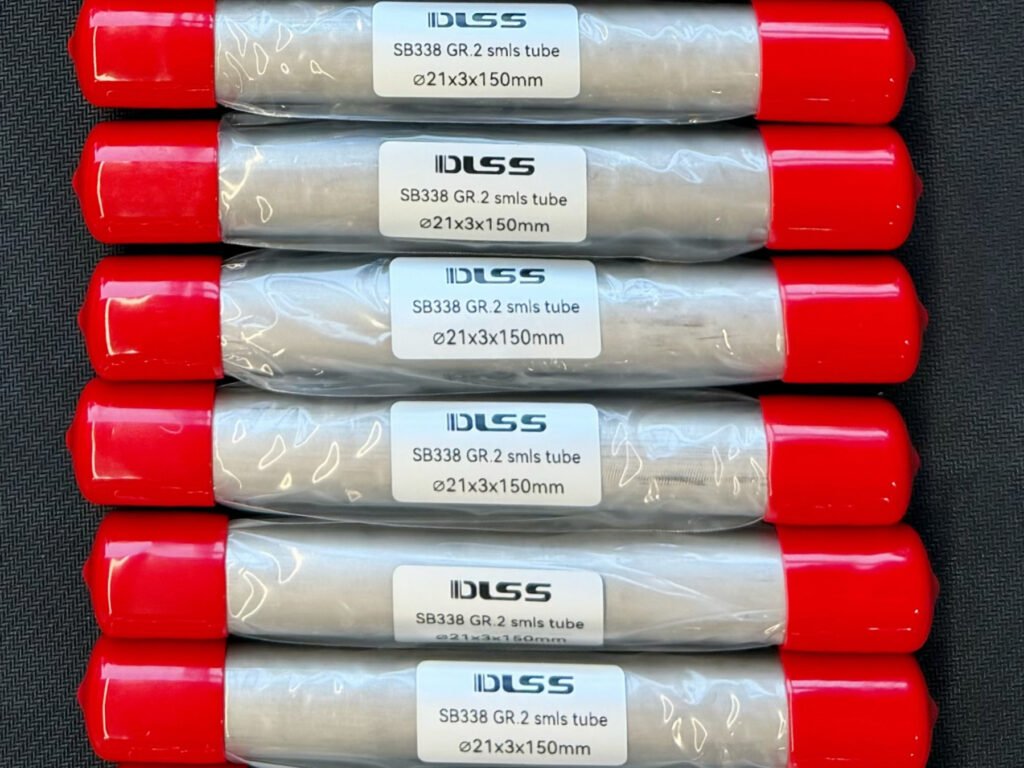
Seawater Corrosion Resistance
Material options for seawater and chloride-containing service.
Heat Transfer Performance
Thin-wall titanium tubes can support efficient heat-transfer designs.
Low Material Density
Titanium has significantly lower density than ferrous alloys.
Project Specification Control
Grade, manufacturing route, tube form and testing reviewed before production.
Titanium Grades We Supply
Select the grade according to process chemistry, corrosion conditions, temperature and project specification.
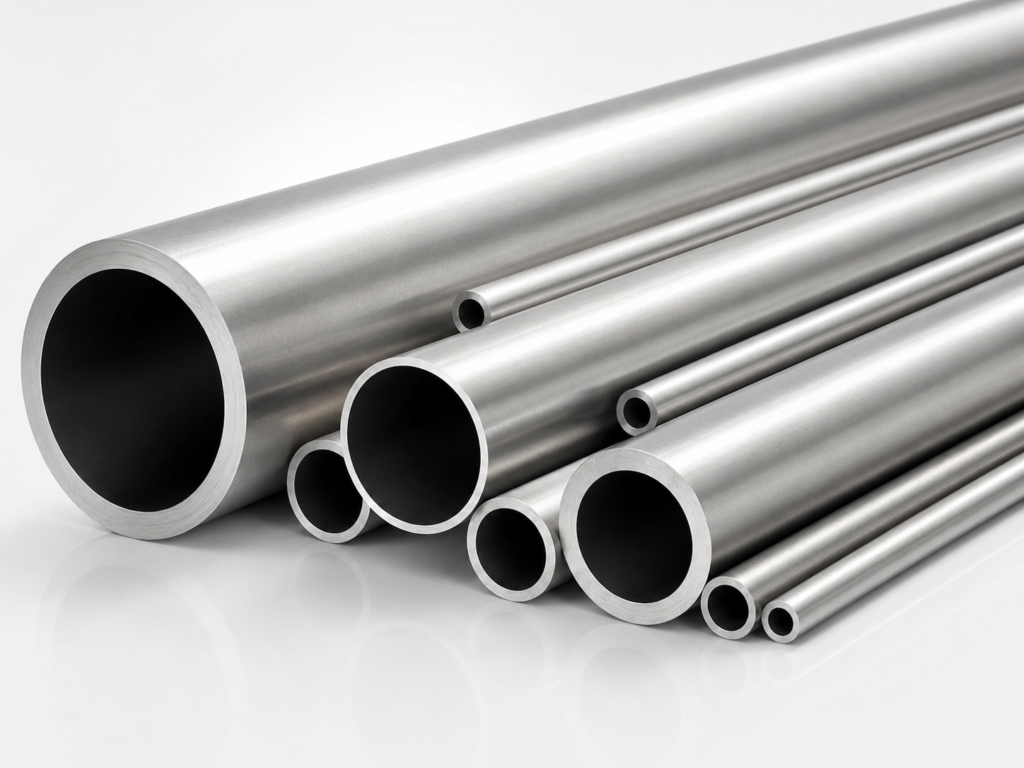
Titanium Grade 2 / UNS R50400
Commercially pure titanium offering a practical balance of corrosion resistance, formability, weldability and moderate strength for heat exchanger and condenser service.
Typical Applications
Seawater Cooling · Condensers · Desalination · Process Heat Exchangers
Key Selection Points
- Commercially pure titanium
- Good formability and weldability
- Strong seawater corrosion resistance
- Widely used for chloride-containing cooling media
Titanium Grade 7 / UNS R52400
Palladium-alloyed commercially pure titanium for selected applications requiring enhanced corrosion performance.
Typical Applications
Chemical Processing · Corrosion-Critical Heat Exchangers · Aggressive Process Media
Key Selection Points
- Commercially pure titanium with palladium addition
- Suitable for more demanding corrosion conditions
- Good ductility and fabrication performance
- Project selection should follow actual process chemistry
Titanium Grade 12 / UNS R53400
Titanium alloy containing nickel and molybdenum for applications requiring a project-specific combination of strength, corrosion resistance and improved heat resistance.
Typical Applications
Chemical Heat Exchangers · Industrial Process Equipment · Hot Brine Service
Key Selection Points
- Titanium–nickel–molybdenum alloy
- Higher strength than commercially pure Grade 2
- Improved heat resistance
- Suitable for selected shell & tube heat exchangers
Which Titanium Grade Fits Your Project?
| Grade | Material Type | Main Selection Consideration |
|---|---|---|
| Grade 2 | Commercially Pure Titanium | General seawater, condenser and chloride cooling service |
| Grade 7 | Palladium-Alloyed CP Titanium | Enhanced corrosion performance for selected chemical media |
| Grade 12 | Ti-Ni-Mo Alloy | Project-specific strength, heat and corrosion requirements |
Material Selection Requires Service Data
Final material selection should follow the project specification and corrosion assessment.
Fluid composition
Chloride concentration
pH
Operating temperature
Design pressure
Flow velocity
Cleaning method
Expected service life
Available Titanium Tube Forms
Different heat exchanger and condenser designs require different tube configurations.
Straight Titanium Heat Exchanger Tubes
Seamless · Welded & Cold-Worked · Fixed Length · Custom Length
Enhanced-Surface Titanium Tubes
Enhanced-surface titanium tube requirements can be evaluated according to:
Base tube specification · Fin or surface geometry · Residual wall requirement · Manufacturing route · Inspection requirement · Approved project drawing
Titanium U-Bend Tubes
U-bent titanium tubes can be supplied according to the exchanger drawing or tube sheet.
Long Length Titanium Tubes
Available length depends on grade, OD, wall thickness, manufacturing route and transportation requirements.
Titanium Heat Exchanger Tube Specifications
| Specification | Available Options |
|---|---|
| Material Grades | Grade 2 / Grade 7 / Grade 12 |
| Main Standard | ASTM B338 / ASME SB338 |
| Construction | Seamless / Welded & Cold-Worked where applicable |
| Outside Diameter | Standard & Customized |
| Wall Thickness | Standard / Average WT / Minimum WT where applicable |
| Length | Fixed / Cut / Customized Long Length |
| Tube Form | Straight / U-Bend / Enhanced where applicable |
| Surface Condition | Annealed / Pickled / Project-Specified Clean Surface |
| Heat Treatment | According to grade, manufacturing route and specification |
| Inspection | ET / UT / PMI / Pressure Test / Dimensional / TPI |
| Documentation | MTC / EN 10204 3.1 / 3.2 / Inspection Reports |
| Packing | Protected Tube Ends / Wooden Cases / Project Packing |
Titanium Tube Standards
ASTM B338 / ASME SB338
Seamless and welded titanium and titanium-alloy tubes for surface condensers, evaporators and heat exchangers.
ASTM B861
Related Seamless Pipe StandardTitanium and titanium-alloy seamless pipe for general corrosion-resistant and elevated-temperature service.
ASTM B862
Related Welded Pipe StandardTitanium and titanium-alloy welded pipe for general corrosion-resistant and elevated-temperature service.
Testing, Inspection & Documentation
Titanium tube requirements are reviewed according to the manufacturing route, material grade, applicable standard and project inspection plan.
1. Specification and drawing review before production
2. Raw material heat and batch traceability
3. Outside diameter, wall thickness and length inspection
4. Visual and surface condition inspection
5. Mechanical and corrosion-related tests as specified
6. ET, UT, hydrostatic or pneumatic testing as applicable
7. Third-party inspection support when required
8. Pre-shipment photographs, reports and packing verification
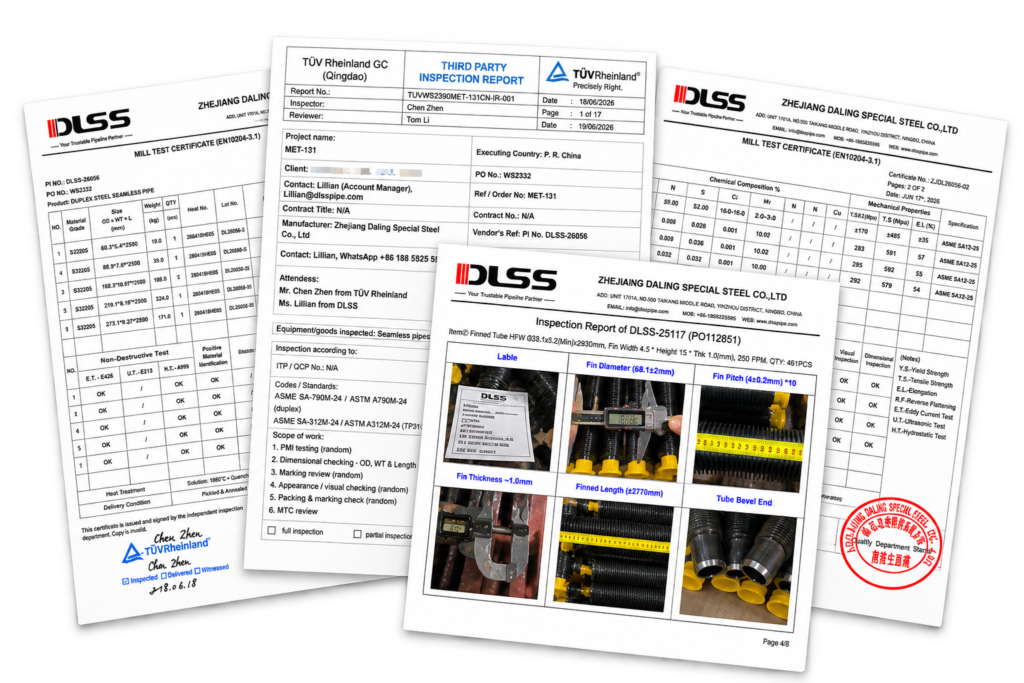
Project Documentation Support
- EN 10204 3.1 / 3.2 Certificates
- MTC (Mill Test Certificate)
- PMI Report
- ET / UT Reports
- Dimensional Reports
- Packing List & More
Complete documentation for seamless approvals and traceability.
Why DLSS for Titanium Heat Exchanger Tubes?
Titanium Specification Review
Grade, standard, manufacturing route, dimensions and inspection requirements are reviewed before production.
Custom Tube Requirements
Special OD, wall thickness, project length and surface requirements can be evaluated.
U-Bending Capability
Custom developed length, straight-leg length, bend radius and inspection requirements.
Inspection & Traceability
Material identification, dimensional control, NDE and project documentation from production through shipment.
Packing & Project Delivery
Protected tube ends, clean handling, seaworthy packing and international delivery coordination.
FAQ
What titanium grades can DLSS supply for heat exchanger tubes?
What is the main standard for titanium condenser and heat-exchanger tubes?
What is the difference between Titanium Grade 2 and Grade 7?
Can titanium tubes be supplied as U-bend tubes?
Can long-length titanium tubes be supplied?
What testing can be arranged?
Can EN 10204 3.2 documentation be arranged?
Titanium Heat Exchanger Tube Technical Resources
Titanium Grade 2 Material Guide
Properties, corrosion resistance and heat exchanger applications.
Titanium Grade 7 Material Guide
Palladium-alloyed titanium characteristics and material selection.
Titanium Grade 12 Material Guide
Ti-Ni-Mo composition, performance and application considerations.
ASTM B338 Tube Standard
Scope, manufacturing routes, grades, testing and documentation.
Titanium vs Super Duplex
Compare material selection considerations for chloride and seawater heat exchangers.
Tubes for Seawater Heat Exchangers
Compare titanium, super duplex and copper nickel tube options.