
316 / 316L Stainless Steel Material Guide
Grade identification, material characteristics and purchasing considerations for heat exchanger tubing.
316 and 316L are molybdenum-bearing austenitic stainless steels used in heat exchangers, condensers and process equipment. The lower carbon content of 316L helps reduce susceptibility to sensitization-related intergranular corrosion following welding heat exposure.
316
UNS S31600
316L
UNS S31603
Material Family
Austenitic Stainless Steel
1. Grade Designations
| Designation | 316 | 316L |
|---|---|---|
| UNS | S31600 | S31603 |
| Common ASTM Tube Grade | TP316 | TP316L |
| Common EN Reference | 1.4401 | 1.4404 |
| Material Family | Austenitic stainless steel | Austenitic stainless steel |
| Main Distinction | Conventional carbon limit | Lower carbon limit |
A grade-name cross-reference is not proof of complete equivalence between product specifications.Before accepting an alternative, verify the required chemical composition, mechanical properties, construction, dimensions, delivery condition and inspection requirements.
316L has a lower specified carbon limit, helping reduce sensitization during welding. EN designations are common cross-references; confirm compliance with the ordered product standard.
2. Chemical Composition
Basis: ASTM A213/A213M-23, Table 2. Values are mass percentages; single values are maximums.
| Grade | C | Cr | Ni | Mo | Mn | Si | P | S |
|---|---|---|---|---|---|---|---|---|
| TP316 | 0.080 | 16.0–18.0 | 10.0–14.0 | 2.00–3.00 | 2.00 | 1.00 | 0.045 | 0.030 |
| TP316L | 0.035* | 16.0–18.0 | 10.0–14.0 | 2.00–3.00 | 2.00 | 1.00 | 0.045 | 0.030 |
Carbon Content and Grade Acceptance
Table 2, Note D permits 0.040% carbon for certain small-diameter or thin-wall tubes requiring many drawing passes. Specify any stricter project limit, such as C ≤0.030%, in the purchase order.
3. Mechanical & Physical Properties
Mechanical acceptance limits must be taken from the relevant product specification and delivered condition.
Mechanical Requirements — ASTM A213/A213M-23
| Property | TP316 | TP316L |
|---|---|---|
| Tensile Strength, Minimum | 515 MPa | 485 MPa |
| Yield Strength, Minimum | 205 MPa | 170 MPa |
| Elongation in 50 mm, Minimum | 35% | 35% |
| Rockwell Hardness, Maximum | 90 HRB | 90 HRB |
These requirements apply to the specified heat-treated tube condition. Section 9.5 excludes tubing below 3.2 mm ID or 0.4 mm wall thickness from mechanical-property requirements. Room-temperature values do not establish a design pressure rating.
Physical Reference — Alleima 3R65
| Property | Published Reference | Temperature Basis |
|---|---|---|
| Density | 8.0 g/cm³ | Not specified in the source |
| Thermal Conductivity | 14 W/(m·K) | 20°C |
| Specific Heat Capacity | 485 J/(kg·K) | 20°C |
| Elastic Modulus | 200 GPa | 20°C |
| Mean Thermal Expansion Coefficient | 16.5 × 10⁻⁶/K | Average over 30–100°C |
4. Corrosion & Fabrication Considerations
Material selection should consider the process fluid, temperature, contaminants, fabrication condition and cleaning requirements.
Chloride Service
Both grades remain susceptible to pitting, crevice corrosion and chloride-induced stress corrosion cracking. Assess the fluid chemistry, temperature, deposits, crevices and stress conditions before selecting either grade for seawater or hot chloride service.
Welding
Use a qualified procedure and suitable filler material. Control heat input and remove heat tint and contamination as required by the project. The low-carbon designation does not replace welding and inspection controls.
U-Bending
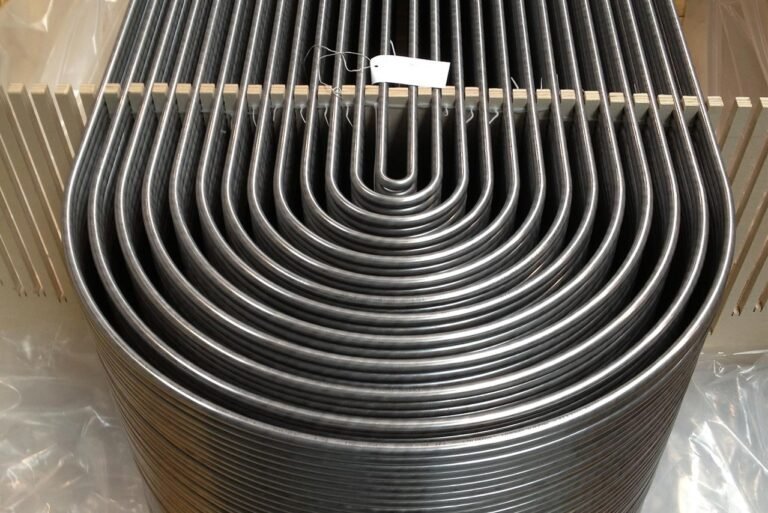
Define the bend radius, straight-leg length, wall thinning, ovality and alignment limits. Confirm any required post-bend heat treatment and inspection before production.
Surface Condition
Specify AP — Annealed and Pickled, BA — Bright Annealed or EP — Electropolished, together with the internal/external treatment scope, roughness and cleanliness requirements.
Project Review Point
Before confirming the material, review:Process Media · Chlorides · Temperature · Deposits & Crevices · Cleaning Conditions · Startup & Shutdown Conditions · Fabrication HistoryConfirm material suitability for the actual exchanger service conditions.
5. Applicable Tube Standards
ASTM A213/A213M
Seamless tubes for heat exchangers, boilers and superheaters
ASTM A249/A249M
Welded and heavily cold-worked welded tubes for heat exchangers, condensers, boilers and superheaters
ASTM A269/A269M
Seamless and welded stainless steel tubing for general service
EN 10216-5
Seamless stainless steel tubes for pressure purposes
ASTM A312/A312M
Seamless, welded and heavily cold-worked welded stainless steel pipe for corrosive and high-temperature service
Wall Thickness Basis
State whether the specified wall is minimum, average or nominal, and apply the tolerances in the ordered standard. ASTM A213/A213M-23 uses minimum wall thickness unless average wall thickness is specified in the order.
The chemical and mechanical tables above use A213/A213M-23 as their reference edition. For another standard or edition, use its applicable requirements.
6. Material Verification & Inspection
Review the delivered tubes and supporting records against the approved purchase specification.
Material traceability
Match the material certificate and heat identification to the supplied tubes.
Testing
Confirm dimensional checks, applicable mechanical tests and the required ET, UT or hydrostatic testing in the inspection plan.
Documentation
Specify EN 10204 3.1 or 3.2 documentation and any third-party inspection arrangements before production.
What Does 316/316L Dual Certification Mean?
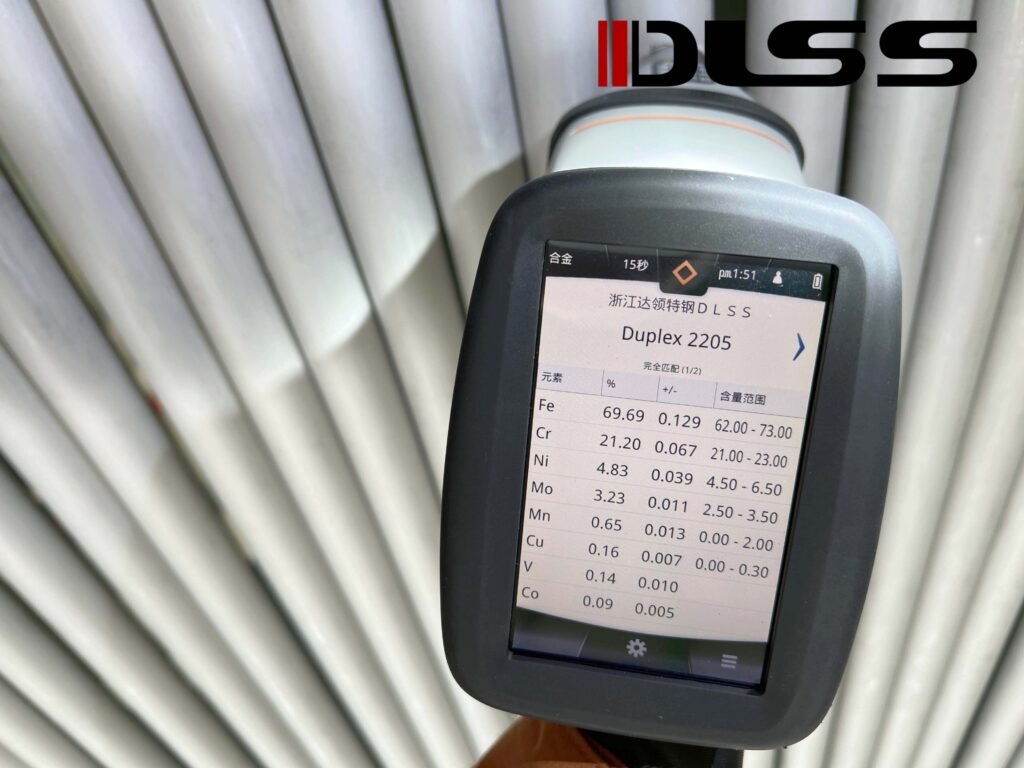
The material must meet the applicable requirements of both grades under the specified product standard. Confirm this on the material certificate; a slash in the product description alone is insufficient.
7. Related Products & Technical Resources
Need 316 / 316L Tubes for Your Project?
Send your tube specification or approved drawing for supply review and quotation.