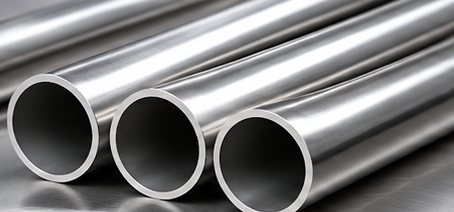
304L vs 316L Stainless Steel Tubes

Compare corrosion resistance. Understand the service conditions. Make the right material choice.

Understand the differences between 304L and 316L stainless steel tubes in corrosion resistance, thermal properties, fabrication and lifecycle cost before selecting materials for your heat exchanger.

Material Basics

Tube Selection Guides

Corrosion Resistance

Temperature and exposure — thermometer icon

Thermal Properties

NDE and Pressure Testing

Service Conditions

Engineering Guides

Material Selection

Understanding 304L and 316L

Austenitic stainless steel tubes
304L
UNS S30403

Low-carbon chromium-nickel austenitic stainless steel.

✓ Good formability and weldability
✓ General corrosion resistance
✓ Economical for compatible service conditions
Austenitic stainless steel tubes
316L
UNS S31603

Low-carbon molybdenum-alloyed austenitic stainless steel.

✓ Improved localized corrosion resistance
✓ Good formability and weldability
✓ Considered for more demanding corrosive service
Key Point: The main alloying difference is the addition of molybdenum (Mo) in 316L, which improves resistance to pitting and crevice corrosion.

Which Testing Method Should You Specify?

Property304L316L
Material FamilyAusteniticAustenitic
UNSS30403S31603
MolybdenumNo specified additionMo-alloyed
Pitting ResistanceGeneralImproved
WeldabilityGoodGood
Material CostGenerally lowerGenerally higher
WarningYellow warning triangle with a black exclamation mark on a transparent background.

316L offers improved resistance to localized corrosion, but it is not automatically the best choice for every service condition.

Molybdenum & Pitting Resistance

The addition of molybdenum improves the resistance of 316L to pitting and crevice corrosion, particularly in chloride-containing environments.

PREN Formula
PREN = %Cr + 3.3 × %Mo + 16 × %N
Published PRE Reference Values
304L 18
316L 24

Source: Outokumpu Core 304L/4307 and Supra 316L/4404. Published material reference values, not universal tube acceptance limits.

Pitting Corrosion

316L generally offers improved resistance to chloride-related pitting.

Crevice Corrosion

Review deposits, stagnant areas and tube-to-tubesheet joints.

Stress Corrosion Cracking

Both grades can be susceptible under certain chloride, temperature and stress conditions.

WarningYellow warning triangle with a black exclamation mark on a transparent background.

A higher PREN does not guarantee resistance to every corrosion mechanism or suitability for seawater service.

Thermal Properties & Heat Transfer

Both grades have similar thermal characteristics. Material selection should consider corrosion resistance and long-term operating performance alongside thermal conductivity.

304L — ALLEIMA 3R12
15 W/(m·K)

Thermal conductivity at 20°C

316L — ALLEIMA 3R65
14 W/(m·K)

Thermal conductivity at 20°C

Additional Physical Properties
Property304L Reference316L Reference
Density7.9 g/cm38.0 g/cm3
Specific Heat at 20°C475 J/(kg·K)485 J/(kg·K)
Thermal Expansion, 30–100°C16.5 × 10−6/K16.5 × 10−6/K

Source: Alleima 3R12 and 3R65 seamless tube datasheets. Published material reference values.

A small difference in material thermal conductivity does not determine the overall efficiency of a heat exchanger.

When Should You Choose 304L or 316L?

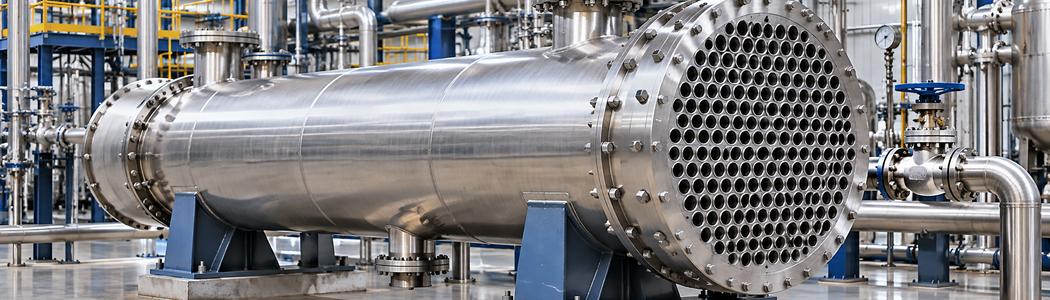
Shell and tube heat exchanger for general industrial service
General Industrial Service
Consider 304L

General heating and cooling applications where the process media and corrosion conditions are compatible.
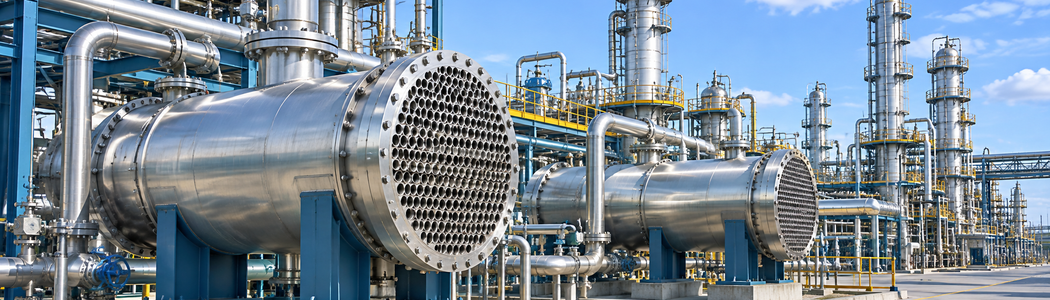
Heat exchangers in chemical processing plants
Chemical Processing
Evaluate 304L or 316L

Review chemical composition, concentration, temperature and contamination before selecting the grade.
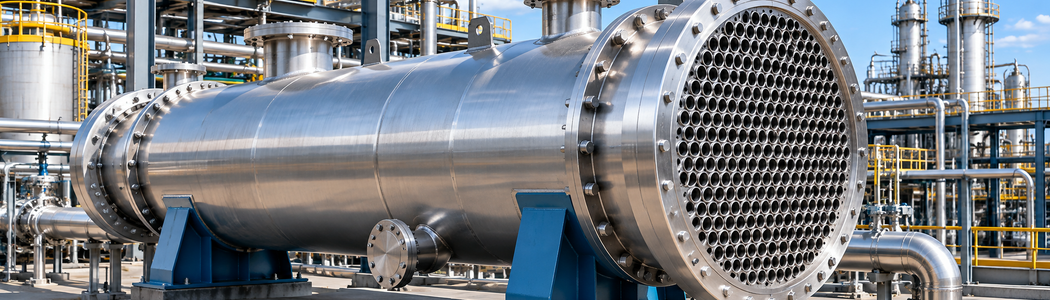
Heat exchanger for chloride-containing service
Chloride-Containing Service
Consider 316L

Evaluate improved localized corrosion resistance where chloride-related attack is a concern.
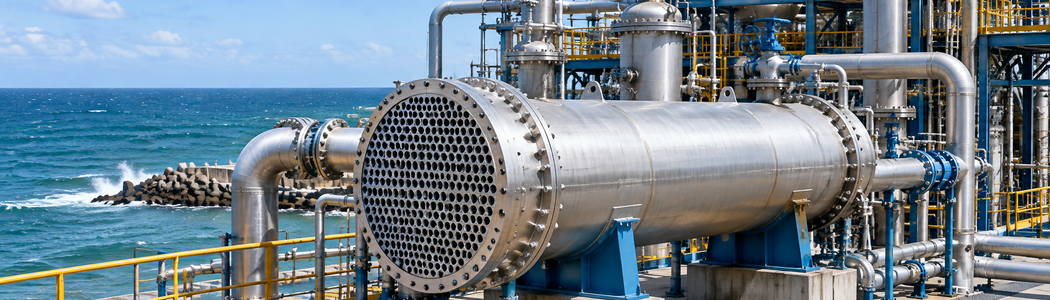
Heat exchanger for seawater and severe corrosive service
Seawater & Severe Corrosion
Evaluate Higher-Alloy Materials

Consider suitable duplex, super duplex, titanium or other corrosion-resistant alloys according to actual service conditions.

WarningYellow warning triangle with a black exclamation mark on a transparent background.

Do not select 316L solely because chlorides are present. Review chloride concentration, temperature, pH, flow conditions and crevice risks together.

Fabrication & Inspection Considerations

U-Bending & Forming

Define bend radius, wall thinning, ovality and finished dimensions.

Welding & Heat Treatment

Confirm welding procedures and the required material condition.

Surface & Cleanliness

Specify AP, BA or EP finish, Ra and cleanliness requirements.

Applicable Tube Specifications
StandardApplication
ASTM A213Seamless heat exchanger tubes
ASTM A249Welded heat exchanger tubes
ASTM A269General-service tubing
EN 10216-5Seamless stainless steel pressure tubes
EN 10217-7Welded stainless steel pressure tubes
Material Verification

Confirm material identity through traceable material certificates and the specified PMI method.

WarningYellow warning triangle with a black exclamation mark on a transparent background.

Conventional handheld XRF can help distinguish 304-type from 316-type alloys through molybdenum analysis, but it cannot independently verify their low-carbon requirements.

Initial Cost vs Lifecycle Cost

304L
Initial Cost Advantage
✓ Generally lower material cost
✓ Suitable for compatible environments
✓ Avoids unnecessary alloy upgrades
316L
Potential Lifecycle Advantage
✓ Improved localized corrosion resistance
✓ Potentially reduced corrosion-related maintenance
✓ Lower replacement risk in suitable environments

The economic value of upgrading from 304L to 316L depends on the actual corrosion risk, operating conditions, maintenance costs and replacement requirements.

The most economical material is the one that meets the required service conditions at an appropriate lifecycle cost.

Related Guides & Capabilities

316 / 316L Material Guide

Review molybdenum-alloyed stainless steel.

Stainless Steel vs Duplex

Explore higher-strength stainless steel options.

Inspection Guides

PMI Testing

Understand alloy identification and verification.

304 / 304L Material Guide

Review material composition and properties.

Need Help Choosing Between 304L and 316L?

Send your operating conditions, material requirements and tube dimensions for technical supply review.

Request A Quote

*We respect your confidentiality and all information are protected.