
S32205 vs S32750
Duplex 2205 vs Super Duplex 2507 — Strength, Corrosion Resistance & Material Selection.
Compare S32205 and S32750 heat exchanger tubes in corrosion resistance, mechanical strength, thermal properties and fabrication requirements. Evaluate the actual service conditions before selecting duplex or super duplex stainless steel.
Material Basics
Corrosion Resistance
Mechanical Properties
Service Conditions
Material Selection
Understanding S32205 and S32750
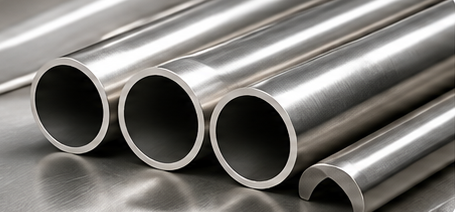
Key Point: Both grades have a duplex microstructure. S32750 contains higher levels of key alloying elements to provide greater resistance to localized corrosion.
S32205 vs S32750: Key Differences
| Property | S32205 (2205) | S32750 (2507) |
|---|---|---|
| Material Family | Duplex | Super Duplex |
| Nominal Alloy System | 22Cr-5Ni-3Mo | 25Cr-7Ni-4Mo |
| Pitting Resistance | High | Higher |
| Chloride SCC Resistance | High | Higher |
| Mechanical Strength | High | Higher |
| Fabrication Control | Strict | More demanding |
| Material Cost | Generally lower | Generally higher |
Corrosion Resistance & PREN
The Pitting Resistance Equivalent Number (PREN) provides a composition-based comparison of resistance to pitting corrosion in chloride-containing environments.
Source: Alleima SAF 2205 and SAF 2507 seamless tube and pipe datasheets. Published product-specific PRE references, not universal grade acceptance limits.
S32750 generally offers greater resistance to localized pitting.
Review stagnant areas, deposits and tube-to-tubesheet joints.
Both grades offer improved chloride SCC resistance compared with austenitic grades.
Mechanical Strength & Thermal Properties
0.2% proof strength at 20°C
0.2% proof strength at 20°C
| Property | SAF 2205 | SAF 2507 |
|---|---|---|
| Tensile Strength | 680–880 MPa | 800–1000 MPa |
| Thermal Conductivity at 20°C | 14 W/(m·K) | 14 W/(m·K) |
| Thermal Expansion, 30–100°C | 13.0 × 10⁻⁶/K | 13.5 × 10⁻⁶/K |
| Elastic Modulus at 20°C | 200 GPa | 200 GPa |
Source: Alleima SAF 2205 and SAF 2507 datasheets. Published material reference values.
When Should You Choose S32205 or S32750?
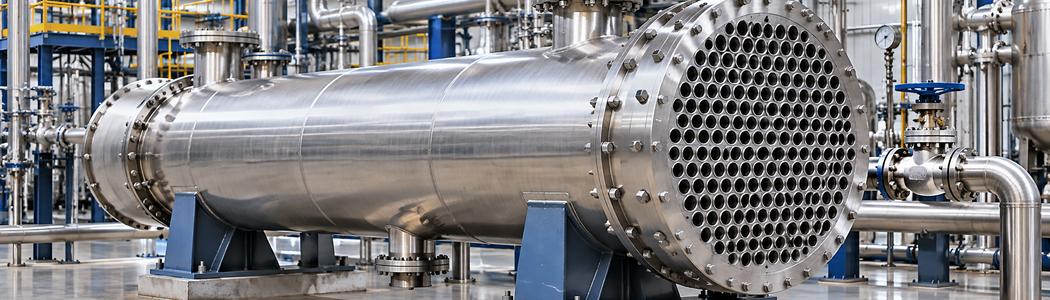
Evaluate duplex stainless steel where improved corrosion resistance and mechanical strength are required.
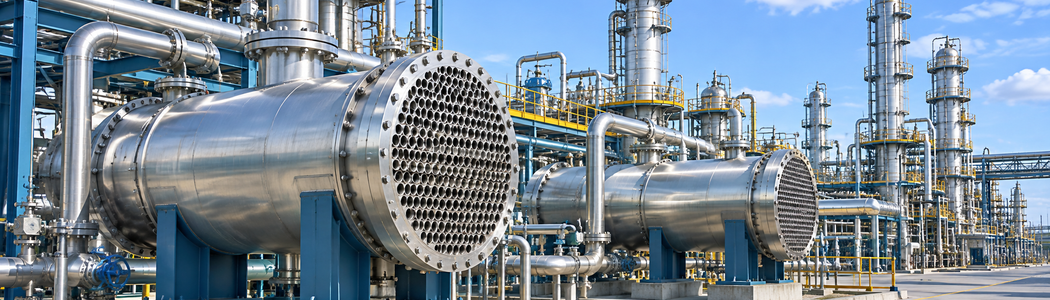
Review fluid composition, concentration, temperature and localized corrosion risks.
Applicable Standards & Inspection Requirements
| Standard | Application |
|---|---|
| ASTM A789 | Seamless and welded duplex tubing |
| EN 10216-5 | Seamless stainless steel pressure tubes |
| ASTM A923 | Detrimental intermetallic phase detection |
| ASTM G48 | Pitting and crevice corrosion testing |
Confirm alloy chemistry and nitrogen content.
Verify ferrite or phase requirements.
Define the applicable ASTM A923 method.
Specify ASTM G48 or other applicable tests.
Fabrication & Heat Treatment Considerations
Review forming forces, bend radius, wall thinning and ovality.
Confirm grade-specific heat-treatment conditions and cooling requirements.
Control welding procedures, heat input, filler selection and phase balance.
Initial Cost vs Lifecycle Cost
Related Guides & Capabilities
Titanium vs Super Duplex
Explore materials for demanding corrosion environments.
Testing & Inspection
Review testing and acceptance requirements.
Heat Treatment & Solution Annealing
Understand material condition and processing controls.
Stainless Steel vs Duplex
Compare austenitic and duplex stainless steel.
Need Help Choosing Between Duplex and Super Duplex?
Send your operating conditions, material requirements, tube dimensions and inspection specifications for technical supply review.