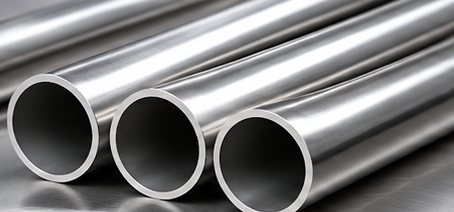
304L vs 316L Stainless Steel Tubes
Compare corrosion resistance. Understand the service conditions. Make the right material choice.
Understand the differences between 304L and 316L stainless steel tubes in corrosion resistance, thermal properties, fabrication and lifecycle cost before selecting materials for your heat exchanger.
Material Basics
Corrosion Resistance
Thermal Properties
Service Conditions
Material Selection
Understanding 304L and 316L

Low-carbon chromium-nickel austenitic stainless steel.

Low-carbon molybdenum-alloyed austenitic stainless steel.
Key Point: The main alloying difference is the addition of molybdenum (Mo) in 316L, which improves resistance to pitting and crevice corrosion.
Which Testing Method Should You Specify?
| Property | 304L | 316L |
|---|---|---|
| Material Family | Austenitic | Austenitic |
| UNS | S30403 | S31603 |
| Molybdenum | No specified addition | Mo-alloyed |
| Pitting Resistance | General | Improved |
| Weldability | Good | Good |
| Material Cost | Generally lower | Generally higher |
316L offers improved resistance to localized corrosion, but it is not automatically the best choice for every service condition.
Molybdenum & Pitting Resistance
The addition of molybdenum improves the resistance of 316L to pitting and crevice corrosion, particularly in chloride-containing environments.
Source: Outokumpu Core 304L/4307 and Supra 316L/4404. Published material reference values, not universal tube acceptance limits.
316L generally offers improved resistance to chloride-related pitting.
Review deposits, stagnant areas and tube-to-tubesheet joints.
Both grades can be susceptible under certain chloride, temperature and stress conditions.
A higher PREN does not guarantee resistance to every corrosion mechanism or suitability for seawater service.
Thermal Properties & Heat Transfer
Both grades have similar thermal characteristics. Material selection should consider corrosion resistance and long-term operating performance alongside thermal conductivity.
Thermal conductivity at 20°C
| Property | 304L Reference | 316L Reference |
|---|---|---|
| Density | 7.9 g/cm3 | 8.0 g/cm3 |
| Specific Heat at 20°C | 475 J/(kg·K) | 485 J/(kg·K) |
| Thermal Expansion, 30–100°C | 16.5 × 10⁻⁶/K | 16.5 × 10⁻⁶/K |
Source: Alleima 3R12 and 3R65 seamless tube datasheets. Published material reference values.
A small difference in material thermal conductivity does not determine the overall efficiency of a heat exchanger.
When Should You Choose 304L or 316L?

General heating and cooling applications where the process media and corrosion conditions are compatible.
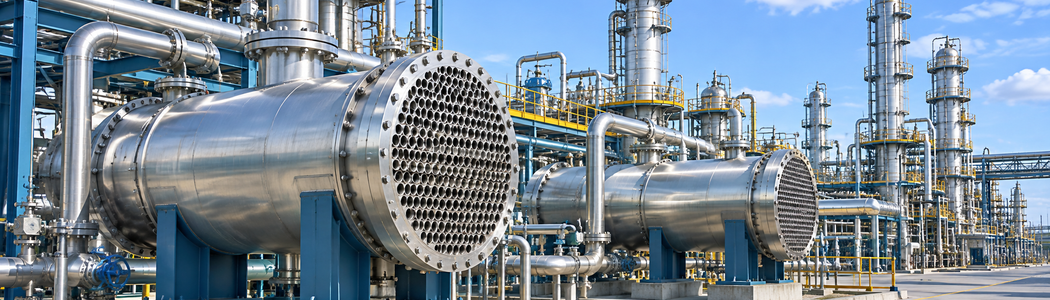
Review chemical composition, concentration, temperature and contamination before selecting the grade.
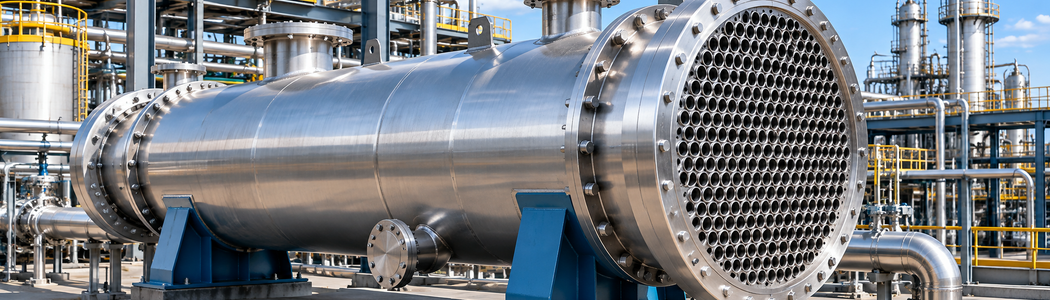
Evaluate improved localized corrosion resistance where chloride-related attack is a concern.
Consider suitable duplex, super duplex, titanium or other corrosion-resistant alloys according to actual service conditions.
Do not select 316L solely because chlorides are present. Review chloride concentration, temperature, pH, flow conditions and crevice risks together.
Fabrication & Inspection Considerations
Define bend radius, wall thinning, ovality and finished dimensions.
Confirm welding procedures and the required material condition.
Specify AP, BA or EP finish, Ra and cleanliness requirements.
| Standard | Application |
|---|---|
| ASTM A213 | Seamless heat exchanger tubes |
| ASTM A249 | Welded heat exchanger tubes |
| ASTM A269 | General-service tubing |
| EN 10216-5 | Seamless stainless steel pressure tubes |
| EN 10217-7 | Welded stainless steel pressure tubes |
Confirm material identity through traceable material certificates and the specified PMI method.
Conventional handheld XRF can help distinguish 304-type from 316-type alloys through molybdenum analysis, but it cannot independently verify their low-carbon requirements.
Initial Cost vs Lifecycle Cost
The economic value of upgrading from 304L to 316L depends on the actual corrosion risk, operating conditions, maintenance costs and replacement requirements.
The most economical material is the one that meets the required service conditions at an appropriate lifecycle cost.
Related Guides & Capabilities
316 / 316L Material Guide
Review molybdenum-alloyed stainless steel.
Stainless Steel vs Duplex
Explore higher-strength stainless steel options.
PMI Testing
Understand alloy identification and verification.
304 / 304L Material Guide
Review material composition and properties.
Need Help Choosing Between 304L and 316L?
Send your operating conditions, material requirements and tube dimensions for technical supply review.