Copper Nickel ASTM B111 C70600(O61) Seamless Low Finned Tube for Oil Cooler Pipe

DLSS - Pipe&Tube - Copper Nickel ASTM B111 C70600(O61) Seamless Low Finned Tube for Oil Cooler Pipe

Product Overview – ASTM B111 C70600 (O61) Copper-Nickel Low Finned Tube

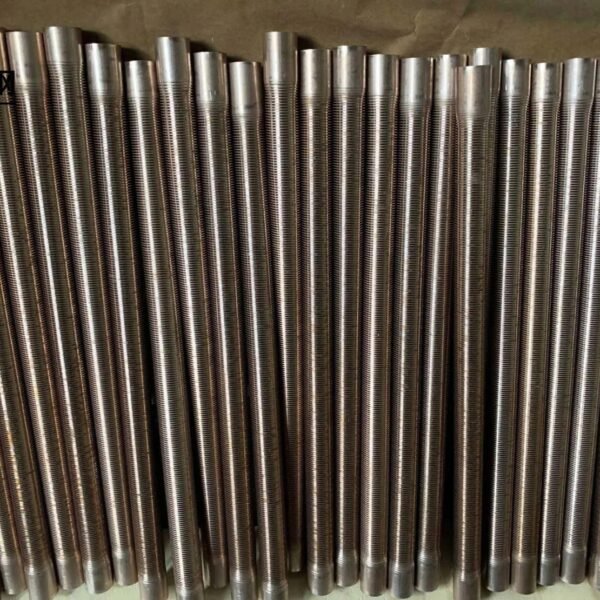
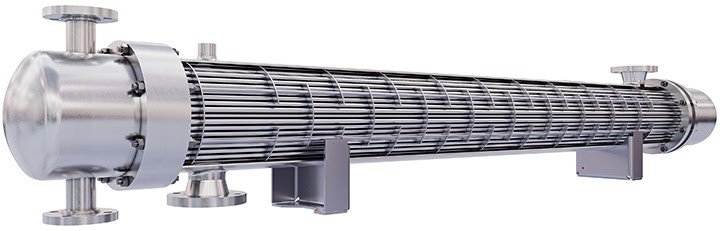
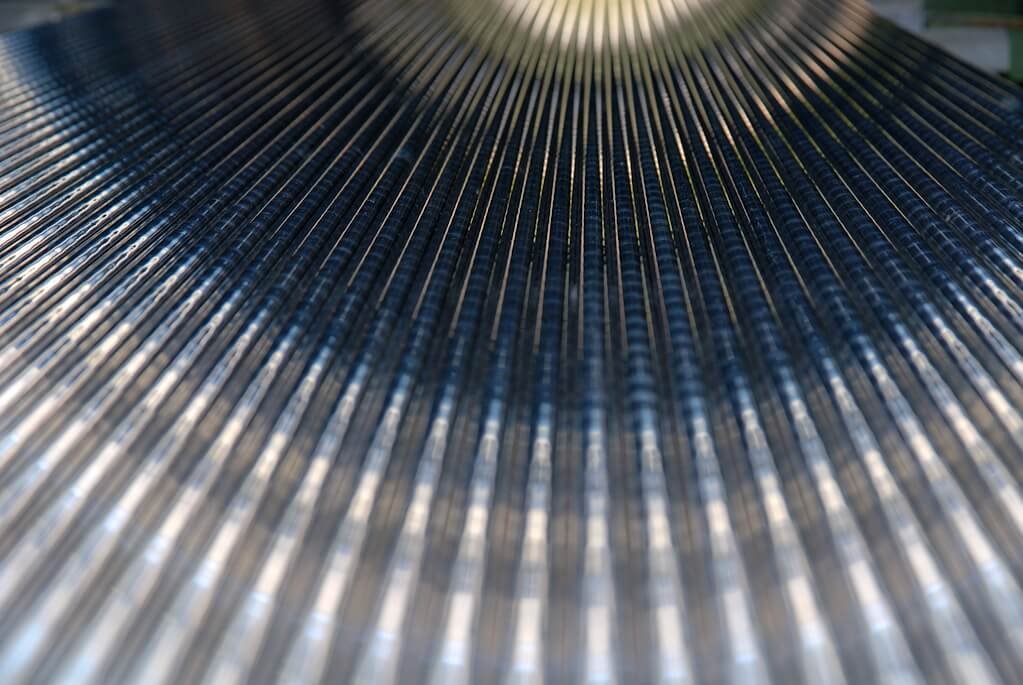
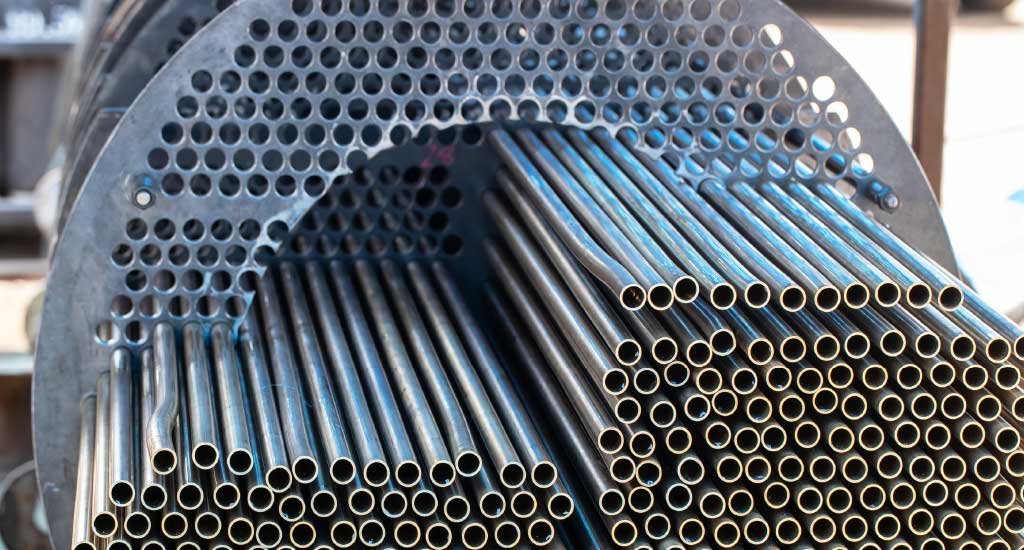
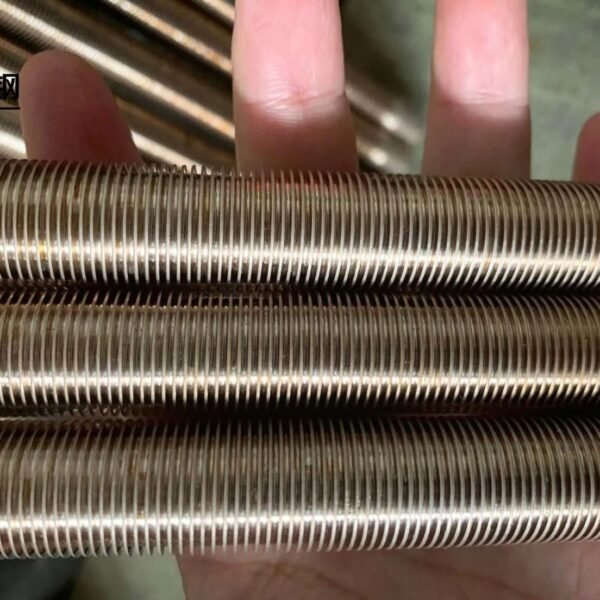
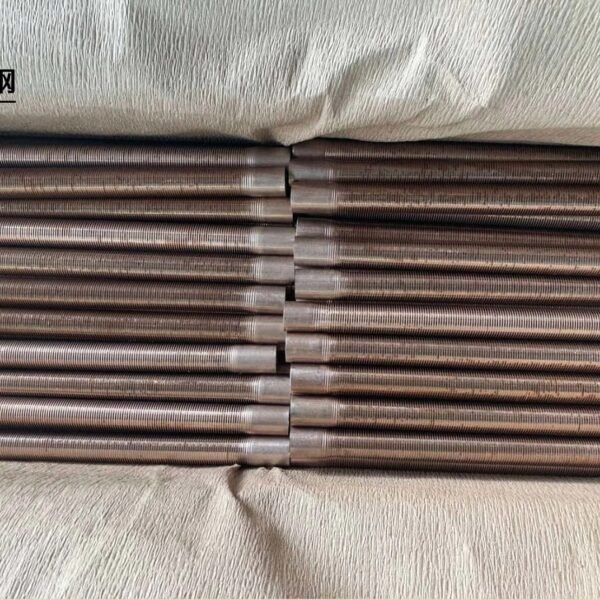
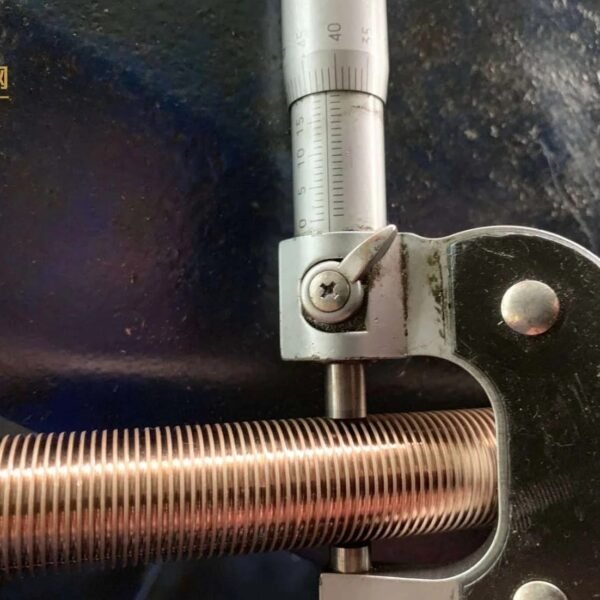
The ASTM B111 C70600 (90/10 Cu-Ni) seamless low-finned tube, in O61 annealed temper, is designed for oil cooler systemsmarine heat exchangers, and condenser units. With integrally formed spiral fins, it increases thermal transfer area—critical for high-performance systems in ship coolingindustrial chillers, and power generation plants.
Copper Nickel ASTM B111 C70600(O61) Seamless Low Finned Tube for Oil Cooler Pipe

Technical Specifications

Chemical & Mechanical Properties

Chemical Composition (C70600) sourced from the Copper Development Association:

  • ≥ 88.6 % Cu, 9–11 % Ni, 1–1.8 % Fe

Mechanical Performance (O61 Temper)

  • Tensile ≥ 275 MPa | Yield ≥ 105 MPa | Elongation ≥ 30% | Hardness ≤ 65 HRB
  • Thermal Conductivity: ~50 W/m·K – ideal for oil cooler tubing
Copper Nickel ASTM B111 C70600(O61) Seamless Low Finned Tube for Oil Cooler Pipe

Typical Applications

This tube is commonly used in:

Its high nickel content enables excellent resistance to seawater corrosionbiofouling, and hydrogen-induced cracking.

Market Insights & Industry Trends

According to ResearchAndMarkets, the global copper-nickel tube market is expected to grow from USD 3.5B in 2024 to USD 5.2B by 2033, driven by:

  • Rising offshore platform projects
  • Demand for desalination heat exchangers
  • Surge in industrial oil cooling infrastructure

Nickel volatility (tracked by London Metal Exchange) makes long-term sourcing stability more valuable than ever.
Copper Nickel ASTM B111 C70600(O61) Seamless Low Finned Tube for Oil Cooler Pipe

Quality Standards & DLSSPIPELINE Capabilities

At DLSSPIPELINE, we specialize in:

  • Seamless low fin production to OEM precision
  • ASTM B111 seamless tube exports with EN 10204 3.1 certificates
  • Optional 3rd-party inspection (SGS, TÜV, BV)
  • Fin customization: fin pitch, depth, length — all tailored

Packaging & Global Logistics

  • End-capped, moisture-proof bundled, and ISPM15-certified wooden crate packed
  • Delivery across 40+ countries with DDP, FOB, or EXW terms
  • Each bundle marked with alloy, OD, WT, heat number, and standard

Summary: Why Choose DLSSPIPELINE?

FeatureValue
Marine-Grade DurabilityTrusted for 30+ years in marine heat exchanger tubing
Thermal PerformanceIdeal for oil cooler tube assemblies
Seamless, Low Finned DesignNo welds, better heat exchange, less risk
Global ExpertiseWe serve industrial clients worldwide with custom tubing solutions

Contact & Quote

Ready to Upgrade Your Oil Cooler System?

Choose ASTM B111 C70600 seamless copper nickel finned tubes from DLSSPIPELINE — engineered for longevity, reliability, and efficiency.

Email: info@dlsspipeline.com
Web: www.dlsspipeline.com

Wonderful! Share This Case:

Austenitic Stainless Steel

Duplex Stainless Steel

Nickel Alloys

▪ Incoloy Family

▪ Inconel Family

▪ Monel Family

▪ Hastelloy Family

▪ Other Special Alloys

Cobalt Alloys

Related Posts

How to Pass 3.2 Certification for Heat Exchanger Tubing Projects

How to Pass 3.2 Certification

Meta Description:EN 10204 3.2 certification is often mandatory for high-spec tubing projects. Learn what it means, how to prepare, and how to ensure your stainless steel heat exchanger tubes pass 3.2 inspection. Introduction For heat exchanger projects in industries like oil & gas, power generation, and refineries, third-party certification is often non-negotiable. One of the […]

Read More
316 vs 316L vs 316Ti stainless steel

316 vs 316L vs 316Ti

1. Overview In demanding industries such as heat exchangers, condensers, boilers, and pressure vessels, stainless steels of the 316 family are among the most widely used materials. However, choosing between 316, 316L, and 316Ti depends on factors like weldability, temperature stability, and corrosion resistance. At DLSS (Zhejiang Daling Special Steel Co., Ltd.), we supply all […]

Read More
Hygienic-Grade Stainless Steel Tubes in the Food and Pharmaceutical Industries: Global Trends and Compliance

Hygienic-Grade Stainless Steel Tubes in

The demand for hygienic-grade stainless steel seamless tubes is rapidly expanding, particularly in the food & beverage (F&B) and pharmaceutical industries. These sectors require tubing with ultra-smooth surfaces, precise dimensional control, and strict compliance with international sanitary standards such as 3-A, ASME BPE, and ISO 2037. In this article, we explore the latest market trends, […]

Read More
Stainless Steel Tubing for Food & Beverage Applications – Sanitary Requirements Explained

Stainless Steel Tubing for Food

Meta Description:Discover the sanitary tubing requirements for food and beverage processing. Learn how stainless steel tubes ensure hygiene, corrosion resistance, and compliance with global standards. Introduction In the food and beverage industry, maintaining product purity, hygiene, and corrosion resistance is non-negotiable. Stainless steel tubing plays a critical role in transporting liquids and gases—from dairy to […]

Read More
Choosing Between Seamless and Welded Stainless Steel Tubes: Which One Fits Your Project?

Choosing Between Seamless and Welded

Meta Description:Understand the pros and cons of seamless vs welded stainless steel tubes. Learn when to choose each type based on pressure, corrosion, cost, and application requirements. Introduction When specifying stainless steel tubes for your project—whether it’s a heat exchanger, fluid transport system, or structural framework—one of the most important decisions is choosing between seamless […]

Read More
Selecting Stainless Steel Tubes for Chemical Processing Equipment (2025 Guide)

Selecting Stainless Steel Tubes for

Why Chemical Processing Requires Advanced Tubing Materials Chemical industries operate under some of the most corrosive and demanding environments. Stainless steel tubes used in reactors, acid circulation lines, scrubbers, and condensers are constantly exposed to aggressive chemicals like sulfuric acid, hydrochloric acid, chlorides, and high-pressure steam. Choosing the wrong material could lead to rapid corrosion, […]

Read More
How to Size a Shell and Tube Heat Exchanger: Key Design Parameters

How to Size a Shell

1. Introduction – Shell and Tube Heat Exchanger Sizing Proper shell and tube heat exchanger sizing ensures optimal performance, energy efficiency, and long service life. Incorrect sizing can lead to excessive pressure drops, fouling, or insufficient heat transfer. This guide outlines the key design parameters to consider when sizing a shell and tube heat exchanger, […]

Read More
global shipbuilding industry trends

Global Shipbuilding Industry: Opportunities and

The shipbuilding industry has long been a foundation of global trade and maritime power. In today’s era of globalization, sustainability challenges, and energy transition, shipbuilding remains one of the world’s most strategic industries. From transporting goods and passengers to supporting defense and offshore energy, shipbuilding shapes the future of international commerce and technology. East Asia’s […]

Read More

Request A Quote

*We respect your confidentiality and all information are protected.