When buying stainless steel tubes, one common question is: should we choose seamless or welded tubes?
There is no single answer for every project. Seamless stainless steel tubes are often preferred for high-pressure, high-temperature, U-bend, or critical corrosion service. Welded stainless steel tubes can also be a practical and cost-effective choice when the pressure, corrosion condition, weld quality, inspection plan, and end-user specification allow it.
The right choice depends on the actual working condition, applicable standard, tube size, bending requirement, inspection scope, delivery time, and total project cost.
This guide helps buyers understand the main differences and write a clearer RFQ before placing an order.
Quick Answer
Choose seamless stainless steel tubes when the project involves:
- High pressure
- High temperature
- Critical corrosion service
- U-bending
- Thermal cycling
- Strict end-user specifications
- High inspection requirements
Choose welded stainless steel tubes when the project allows a qualified weld seam and needs:
- Larger size range
- Better cost control
- Faster delivery for common sizes
- Good dimensional consistency
- Sanitary or general process service
- Condenser or low- to medium-pressure applications
The decision should not be based only on price. It should be based on project specification, service condition, inspection requirement, and final documentation.
What Are Seamless Stainless Steel Tubes?
Seamless stainless steel tubes are produced without a welded seam. The material is processed from a solid billet and then formed by hot working, cold drawing, heat treatment, sizing, and finishing.
Because there is no weld seam, seamless tubes remove one possible weak point in pressure, corrosion, and bending performance. This is why they are often selected for demanding industrial applications.
Typical applications include:
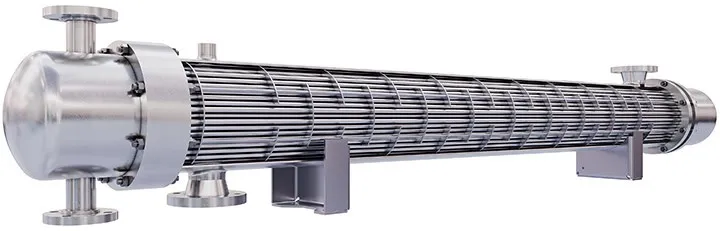
- Shell-and-tube heat exchangers
- Boilers and superheaters
- U-tube bundles
- High-pressure process lines
- Chemical and refinery equipment
- Offshore and marine systems
- High-temperature service
- Critical corrosion service
Common standards include ASTM A213 for seamless boiler, superheater, and heat-exchanger tubes, and ASTM A269 for stainless steel tubing used in general corrosion-resisting and low- or high-temperature service.
What Are Welded Stainless Steel Tubes?
Welded stainless steel tubes are made from stainless steel strip or coil. The strip is formed into a tube shape and welded along the seam. Depending on the application, the weld area may be heat treated, bead removed, polished, pickled, bright annealed, or inspected by nondestructive testing.
A welded tube is not automatically unsuitable for heat exchanger or process service. The key is whether the weld seam, heat treatment, surface condition, and inspection plan meet the project requirement.
Typical applications include:
- Condensers
- General heat exchanger service
- Sanitary and food processing lines
- Pharmaceutical process lines
- Water treatment systems
- Low- to medium-pressure process lines
- Large diameter tubing
- Decorative or structural use
Common standards include ASTM A249 for welded boiler, superheater, heat-exchanger, and condenser tubes, and ASTM A269 for seamless and welded stainless steel tubing for general service.
Seamless vs Welded Stainless Steel Tubes: Key Differences
| Factor | Seamless Tubes | Welded Tubes |
|---|---|---|
| Weld seam | No weld seam | Weld seam present |
| Pressure service | Preferred for high-pressure or critical service | Suitable when pressure and specification allow |
| Corrosion risk | No weld-zone variable | Weld seam quality and surface treatment are important |
| U-bending | Often preferred for critical U-bends | Possible only if design and inspection allow |
| Size range | Good for small OD and thicker wall | Often practical for larger OD |
| Dimensional consistency | Good, depending on process | Often strong for consistent OD and wall |
| Cost | Usually higher | Usually more economical |
| Lead time | May be longer for special sizes | Often faster for common sizes |
| Inspection focus | UT, ET, hydro, PMI, dimensions, surface | Weld seam, ET, hydro, surface, dimensions, heat treatment |
The real question is not “which one is better?”
The better question is: “Which tube type meets the project requirement with acceptable risk, cost, and delivery time?”
When to Choose Seamless Stainless Steel Tubes
Seamless tubes are usually the safer starting point when the application is more demanding.
Buyers should consider seamless tubes for:
- High-pressure heat exchangers
- High-temperature service
- U-tube heat exchangers
- Severe corrosion conditions
- Thick wall requirements
- Small OD precision tubes
- Offshore, chemical, refinery, or power plant projects
- End-user specifications that require seamless construction
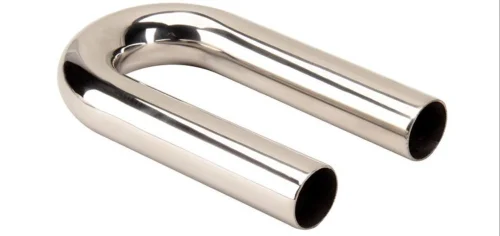
For U-tube projects, seamless tubes are commonly preferred because the tube must be bent. During bending, the outer radius is stretched and the inner radius is compressed. The bend area becomes more sensitive than the straight section.
If the project has strict requirements for wall thinning, bend radius, heat treatment, eddy current test, hydrostatic test, or final dimensional inspection, seamless tubes are often more suitable.
When Welded Stainless Steel Tubes Are Suitable
Welded stainless steel tubes can be a good choice when the application allows a qualified weld seam.
Buyers may consider welded tubes for:
- Condensers
- Low- to medium-pressure heat exchangers
- Sanitary process lines
- Food and pharmaceutical systems
- Water treatment systems
- Large OD tubing
- Cost-sensitive projects
- Projects with tight delivery schedules
For welded tubes, the focus should be on weld seam quality, heat treatment, surface finish, dimensional tolerance, and inspection records.
A welded tube should not be selected only because it is cheaper. It should be selected because it meets the standard, service condition, inspection requirement, and end-user approval.
Standards Buyers Should Check
Before comparing prices, buyers should first confirm the correct standard.
Common standards include:
- ASTM A213: seamless ferritic and austenitic alloy-steel boiler, superheater, and heat-exchanger tubes
- ASTM A249: welded austenitic steel boiler, superheater, heat-exchanger, and condenser tubes
- ASTM A269: seamless and welded stainless steel tubing for general service
- ASTM A312: seamless, welded, and heavily cold-worked austenitic stainless steel pipes
A common mistake is mixing tube and pipe standards. For heat exchanger tubing, ASTM A213 or ASTM A249 may be more relevant. For process piping, ASTM A312 may apply. The final choice should follow the project specification.
What to Include in the RFQ
A clear RFQ helps the supplier recommend the right tube type and avoid later disputes.
Buyers should provide:
- Material grade, such as TP304L, TP316L, TP321, TP347H, 904L, 2205, 2507, or nickel alloy grade
- Tube type: seamless, welded, or supplier to recommend
- Standard: ASTM A213, ASTM A249, ASTM A269, ASTM A312, EN 10216-5, EN 10217-7, or project specification
- OD, wall thickness, and length
- Straight tube or U-tube
- Service medium
- Design pressure and temperature
- Surface finish, such as pickled, BA, polished, or EP
- Heat treatment requirement
- NDT requirement, such as ET, UT, hydrostatic test, PMI, or visual inspection
- MTC requirement, such as EN 10204 3.1 or 3.2
- Third-party inspection requirement
- Packing and delivery requirement
If the buyer is not sure which type is better, the RFQ can say:
“Please recommend seamless or welded stainless steel tubes based on the attached service condition, applicable standard, inspection requirement, and delivery schedule. Please advise the technical risk and cost difference between both options.”
How DLSS Helps Buyers Choose
DLSS supplies both seamless and welded stainless steel tubes for heat exchangers, condensers, boilers, chemical equipment, shipbuilding, oil and gas, food processing, pharmaceutical systems, and other industrial applications.
Instead of simply recommending the more expensive option, DLSS reviews the real project requirement before suggesting seamless or welded tubes.
Our review usually includes:
- Application and service condition
- Applicable standard
- Material grade
- Tube size and tolerance
- Pressure and temperature
- Corrosion medium
- U-bending requirement
- Surface finish requirement
- Inspection and MTC requirement
- Delivery schedule and budget
DLSS can support stainless steel seamless tubes, welded stainless steel tubes, heat exchanger tubes, U-tubes, bright annealed tubes, electropolished tubes, duplex and super duplex tubes, nickel alloy tubes, EN 10204 3.1 / 3.2 documentation, and third-party inspection by SGS, BV, TÜV, LR, ABS, or other agencies when required.
The goal is to help buyers reduce technical risk, avoid unnecessary cost, and prepare complete documentation for final acceptance.
Common Mistakes to Avoid
Mistake 1: Choosing Only by Price
Welded tubes may reduce cost, but they are not suitable for every service condition. If the project involves high pressure, severe corrosion, U-bending, or strict end-user specification, price should not be the only factor.
Mistake 2: Saying Seamless Is Always Better
Seamless tubes are often preferred for critical service, but welded tubes can be suitable and economical when the standard, pressure, corrosion condition, and inspection plan allow them.
Mistake 3: Ignoring the Applicable Standard
The same material grade may appear under different standards. ASTM A213, ASTM A249, ASTM A269, and ASTM A312 do not mean the same thing. Buyers should confirm the correct standard before comparing prices.
Mistake 4: Forgetting Inspection Requirements
For critical projects, inspection requirements can decide whether a tube is acceptable. ET, UT, hydrostatic test, PMI, surface inspection, dimensional inspection, and third-party inspection should be confirmed before production.
FAQ
Are seamless stainless steel tubes stronger than welded tubes?
Seamless tubes remove the weld-seam variable and are often preferred for high-pressure, high-temperature, U-bend, or critical corrosion service. However, welded tubes can also perform well when properly manufactured, heat treated, inspected, and used in suitable applications.
Are welded stainless steel tubes suitable for heat exchangers?
Yes. Welded tubes can be suitable for some heat exchanger and condenser applications when the applicable standard, service condition, weld quality, and inspection plan allow them.
Which standard should I use for heat exchanger tubes?
For seamless heat exchanger tubes, ASTM A213 is commonly used. For welded heat exchanger and condenser tubes, ASTM A249 may apply. ASTM A269 can apply to seamless and welded tubing for general service. The final choice should follow the project specification.
Can welded tubes be used for U-bending?
They may be used only when the design, weld seam position, bending radius, heat treatment, inspection requirement, and end-user specification allow it. For critical U-tube heat exchangers, seamless tubes are often the preferred choice.
What should I send to DLSS for a recommendation?
Please send the material grade, standard, OD, wall thickness, length, application, design pressure, temperature, medium, surface finish, inspection requirement, MTC requirement, and delivery schedule. If drawings or project specifications are available, please also share them.
Conclusion
Choosing between seamless and welded stainless steel tubes should not be based on one simple rule.
Seamless tubes are often preferred for high-pressure, high-temperature, corrosive, U-bend, and critical applications. Welded tubes can be a reliable and cost-effective choice for many moderate-service, large-size, sanitary, condenser, and process applications.
The best decision comes from reviewing the project specification, service condition, applicable standard, inspection requirement, documentation requirement, cost, and delivery schedule together.
DLSS supplies both seamless and welded stainless steel tubes with material traceability, inspection support, MTC documentation, and third-party inspection when required. If you are not sure which tube type is suitable for your project, our team can help review your specification and recommend a practical solution before production.
Contact DLSS to discuss seamless and welded stainless steel tubes for heat exchangers, condensers, process lines, boilers, shipbuilding, and industrial projects.