15-Day Delivery of ASTM A182 F53 (S32750) WNRF Flanges for Dubai High-Pressure Project

DLSS - Oil & Gas Industry - 15-Day Delivery of ASTM A182 F53 (S32750) WNRF Flanges for Dubai High-Pressure Project

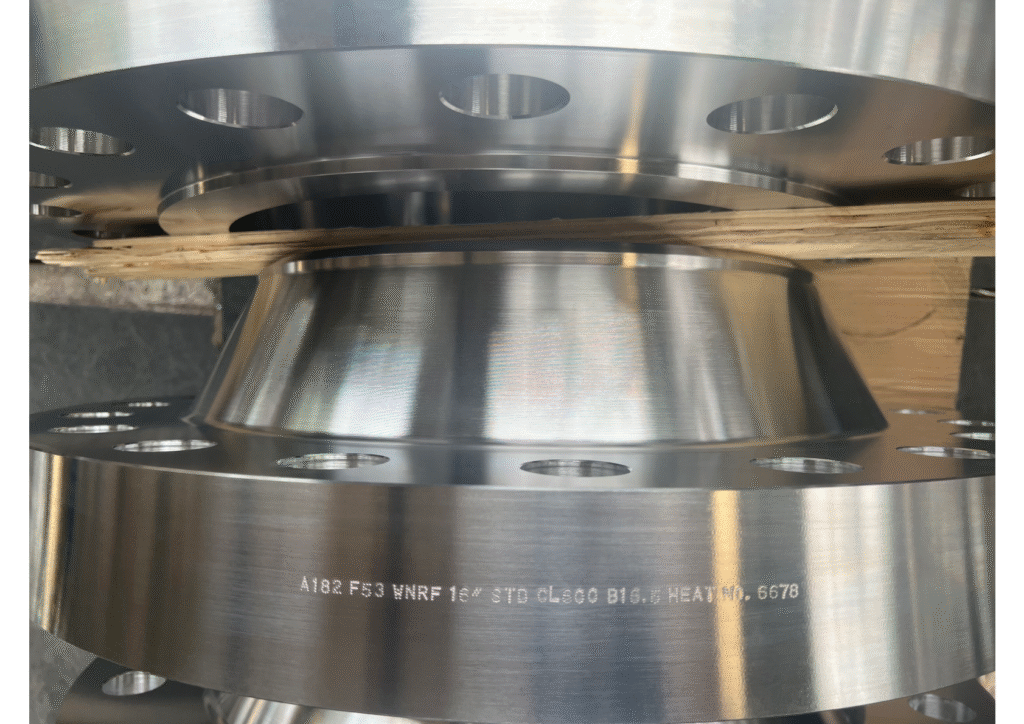
DLSS recently fulfilled an urgent order for a Dubai-based equipment manufacturer, delivering five 16″ STD CL600 Weld Neck Raised Face (WNRF) flanges made from ASTM A182 F53 (UNS S32750) super duplex stainless steel. Operating in a high-chloride, highly corrosive seawater environment, the client required ASME B16.5 compliance with an exceptionally fast 15-day lead time.
Project Background

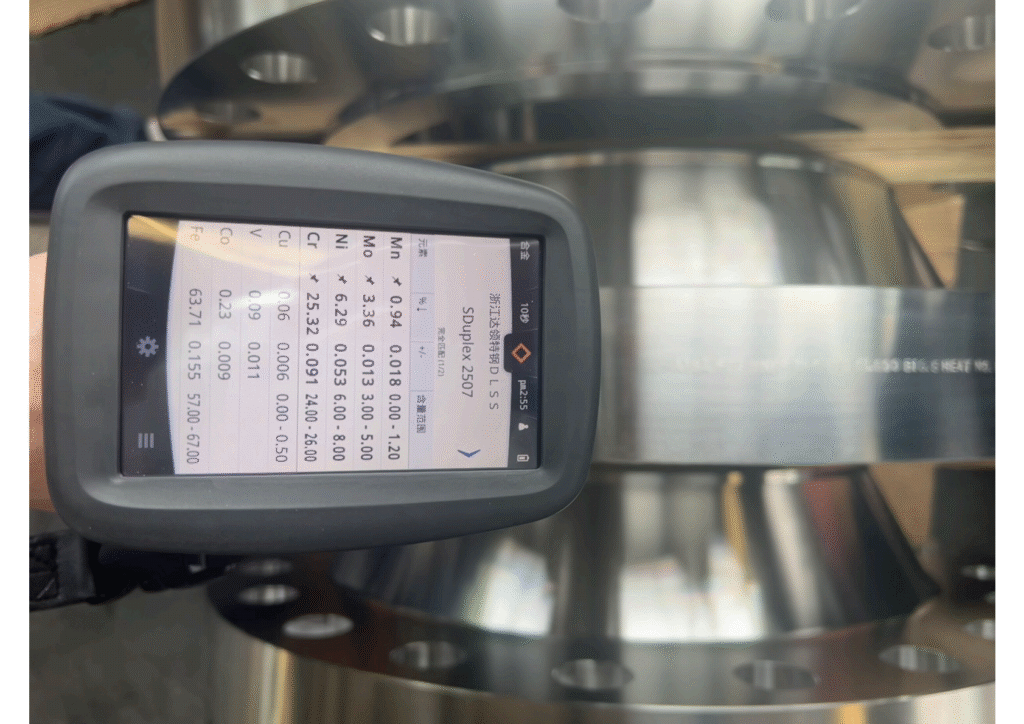
This project required high-strength, corrosion-resistant flanges suitable for high-pressure seawater piping systems. The F53 (S32750) super duplex stainless steel material was chosen for its outstanding resistance to pitting and crevice corrosion, making it ideal for marine, desalination, and offshore oil & gas applications.
Client Challenges

  • Extremely Short Lead Time – Delivery within 15 days from order confirmation to shipment.
  • Challenging Material – F53 super duplex stainless steel requires advanced machining expertise.
  • High-Pressure Rating – Class 600 flanges for long-term reliability in seawater service.

DLSS Solution

1. Material & Standards

  • Forged blanks to ASTM A182 F53 (UNS S32750).
  • Manufactured to ASME B16.5 dimensions and tolerances.
2. Machining Process

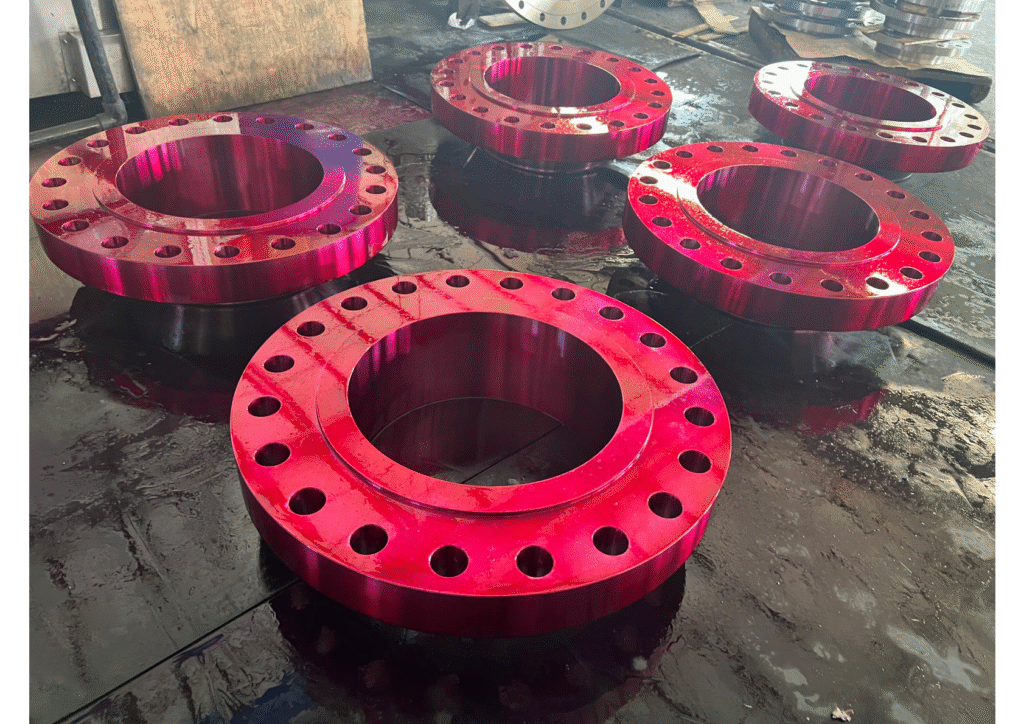
  • Precision 37.5° ±2° bevel neck for perfect weld fit-up.
  • Serrated raised face finish (0.05 mm depth, 0.45–0.55 mm pitch) for superior sealing performance.
  • 20 × Ø41.3 mm bolt holes with accurate positioning.

3. Quality Control

  • 100% dimensional inspection within ±0.5 mm tolerance.
  • Surface pickling and passivation to enhance corrosion resistance.
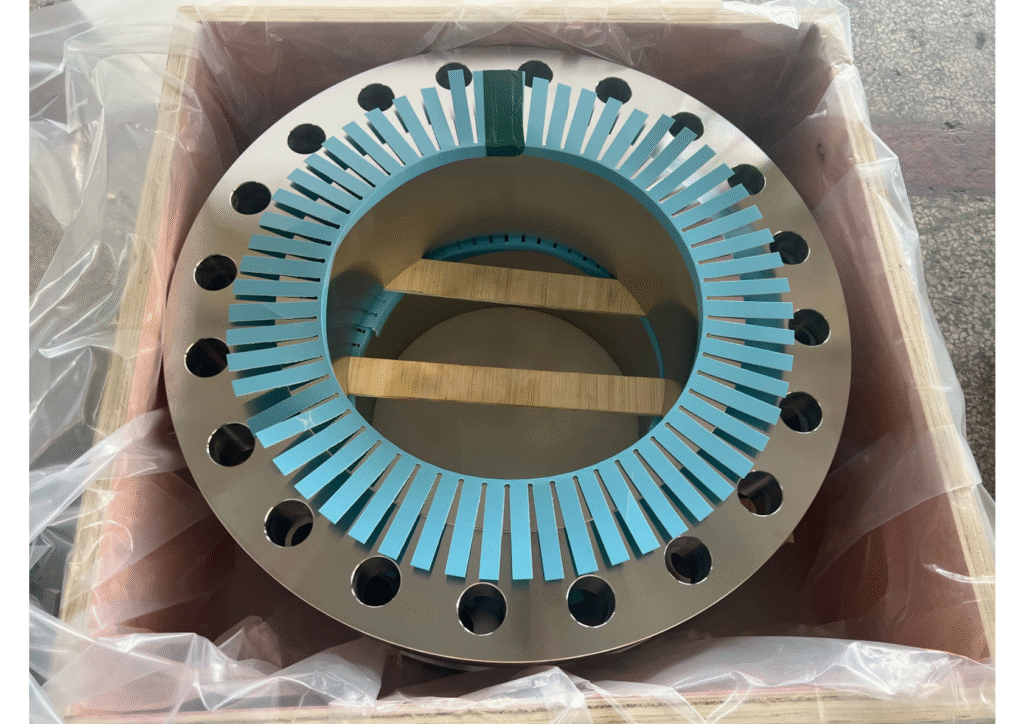
  • Seaworthy packaging with moisture-proof and impact protection.

4. Rapid Delivery

From material preparation to final shipment, the order was completed in just 15 days, meeting the client’s tight installation schedule.
Results & Feedback

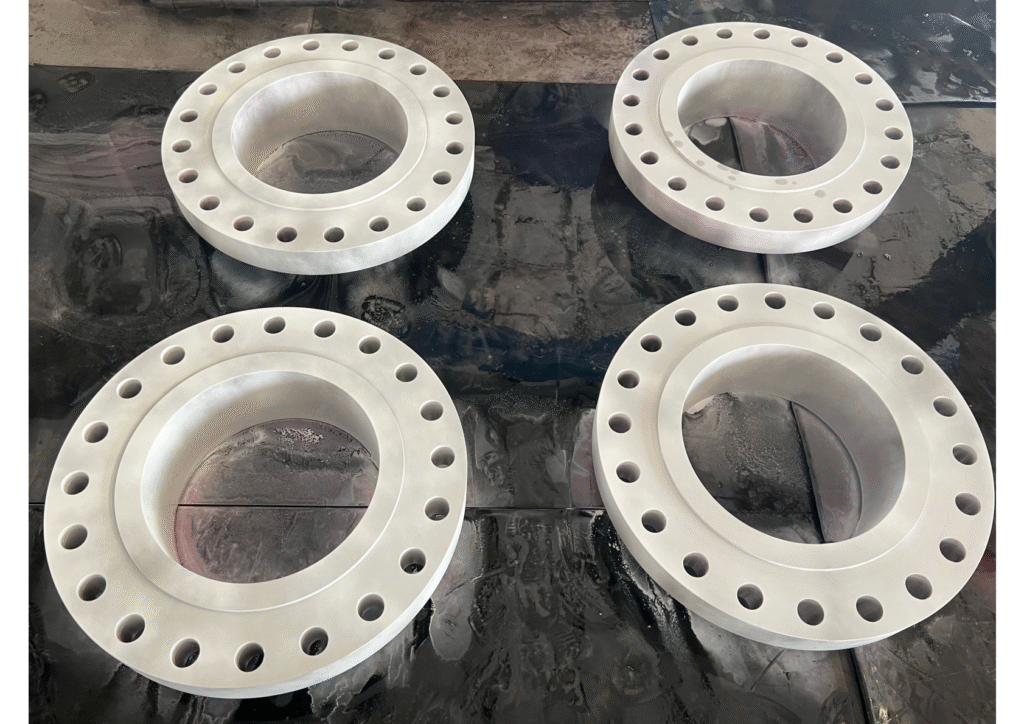
The flanges were shipped immediately after inspection and arrived at Dubai port on time. The client successfully completed installation and praised DLSS for high-end machining capabilities and exceptional delivery speed.
Contact DLSS

If you need super duplex stainless steel flanges or high-standard piping components with rapid delivery, contact DLSS today. We specialize in heat exchanger piping flanges, offshore oil & gas flanges, and marine-grade stainless steel solutions.

Email: info@dlsspipe.com
Website: www.dlsspipeline.com

Wonderful! Share This Case:

Austenitic Stainless Steel

Duplex Stainless Steel

Nickel Alloys

▪ Incoloy Family

▪ Inconel Family

▪ Monel Family

▪ Hastelloy Family

▪ Other Special Alloys

Cobalt Alloys

Related Posts

Understanding Electropolished (EP) Tubes – Surface Roughness, Applications, and Manufacturing

EP Tube Surface

Electropolished stainless steel tubes are often called EP tubes. They are used in clean and high-purity systems. These systems need a smooth inner surface, low particle risk, and good corrosion resistance. EP tubes are common in: The most important point for many buyers is surface roughness. Surface roughness is usually...

Read More

Top 10 Common

Meta Description:Explore the most frequent defects found in stainless steel heat exchanger tubes, including pitting, thinning, and cracking. Learn how to detect and prevent these issues to extend tube service life. Introduction Stainless steel heat exchanger tubes play a critical role in transferring heat efficiently under corrosive and high-pressure conditions....

Read More
nuclear-smr-stainless-tube-market-opportunity

How Nuclear Energy

As the world searches for low-carbon, reliable energy, nuclear power is regaining momentum—this time with smaller, safer, and more modular technology. Small Modular Reactors (SMRs) are expected to play a vital role in off-grid energy, decarbonization of industry, and stable base-load supply. These reactors rely heavily on high-performance stainless steel...

Read More
How to Pass 3.2 Certification for Heat Exchanger Tubing Projects

How to Pass

Introduction For heat exchanger projects in industries like oil & gas, power generation, and refineries, third-party certification is often non-negotiable. One of the highest levels of documentation is the EN 10204 3.2 certificate, which proves that material, testing, and inspection are approved by an independent authority—often required by EPC clients...

Read More
Stainless Steel U-Bend Tubes for Japan’s Condenser Systems – 日本向けコンデンサー用Uベンドステンレス管

Stainless Steel U-Bend

Introduction In Japan’s power generation, chemical processing, and desalination industries, U-bend stainless steel tubes play a critical role in enhancing the efficiency of condenser systems. DLSS Stainless Steel Seamless Pipes are engineered to meet JIS G3463 – Stainless Steel Boiler and Heat Exchanger Tubes, ensuring precise bending, corrosion resistance, and...

Read More
What’s the Difference Between TP304, TP316, TP321, and Other Stainless Steel Tube Grades?

What’s the Difference

Introduction Choosing the correct stainless steel tube grade is crucial for ensuring performance, longevity, and regulatory compliance in industries such as oil & gas, chemical processing, power generation, food and beverage, and marine. This guide compares the most commonly used tube grades—TP304, TP316, TP321, and extends to TP347, 904L, Duplex...

Read More
Material Selection for Seawater-Cooled Heat Exchangers: What Engineers Must Consider

Heat Exchanger Tube

The global heat exchanger market is heating up—literally and economically. With rising demand for energy efficiency, industrial process optimization, and sustainable thermal management, stainless steel heat exchanger tubes are becoming a critical infrastructure material across multiple industries. Recent industry research forecasts a compound annual growth rate (CAGR) of 9.5% through...

Read More
How DLSS Controls Grain Size for Austenitic Stainless Steel Tubes – Why It Matters

How DLSS Controls

Introduction Grain size in stainless steel is more than just a microscopic characteristic—it directly affects mechanical strength, corrosion resistance, formability, and creep performance. For critical applications such as heat exchangers, nuclear power, and chemical processing, maintaining the correct grain size (typically ASTM No. 5 to No. 8) is a specification...

Read More

Request A Quote

*We respect your confidentiality and all information are protected.