Flange Sealing Techniques: How to Ensure a Leak-Proof Pipeline Connection

DLSS - Oil & Gas Industry - Flange Sealing Techniques: How to Ensure a Leak-Proof Pipeline Connection

Meta Description:
Explore how proper flange sealing techniques, gasket selection, and installation methods impact pipeline integrity. Learn how to avoid flange leaks in industrial systems.


Introduction

If you’ve ever walked through an oil refinery or a chemical plant, you’ve probably seen a flange connection wrapped in insulation—maybe even dripping or steaming from a tiny leak.

Flange connections are everywhere in pipeline systems, but when not sealed properly, they’re one of the most common sources of leaks, corrosion, and even shutdowns.

In this article, we’ll walk you through the best practices for sealing flanges, choosing the right gasket, and preventing failures before they happen.


Why Flange Leaks Happen

Let’s start with what usually goes wrong:

  • Wrong gasket material for the temperature or fluid
  • Improper bolt torque (too tight or too loose)
  • Uneven compression during installation
  • Damaged flange surface (corrosion, warping, or pitting)
  • Incorrect flange face type (e.g. using flat gasket on RTJ face)

Fixing leaks after installation can be expensive and risky—so it’s worth getting it right the first time.
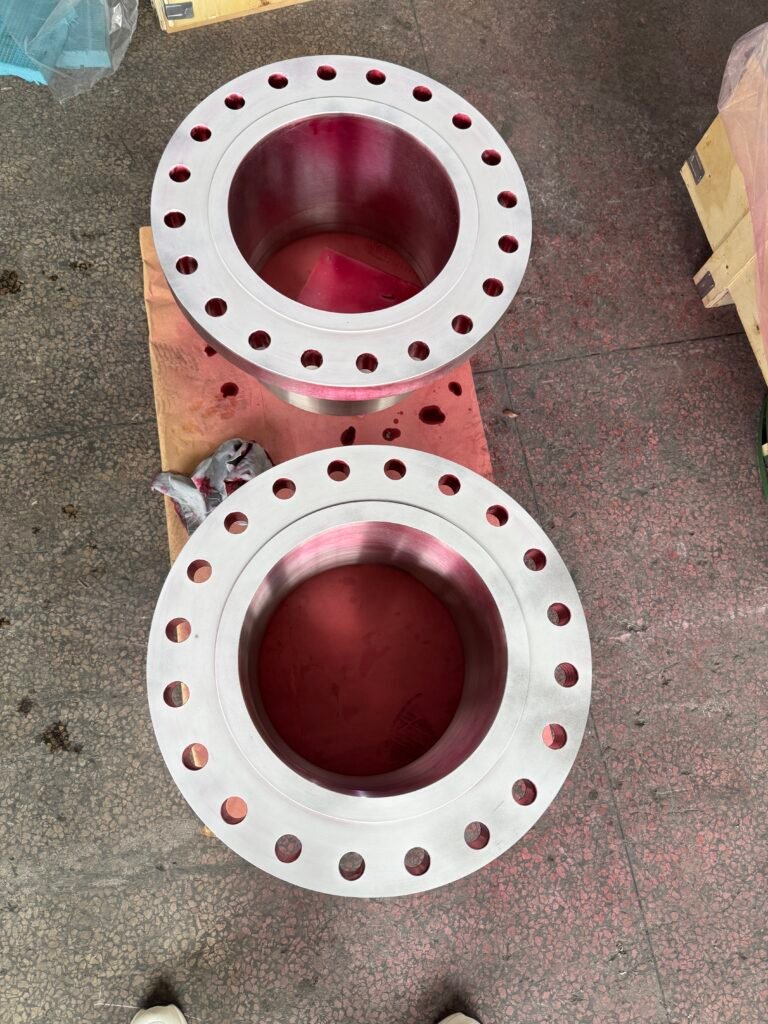

Types of Flange Faces and Their Sealing Styles

The flange face type determines what kind of gasket you should use and how it will seal.

1. Raised Face (RF)

Most common type. Uses spiral wound gaskets or compressed fiber gaskets. Seals by compressing a soft material between the faces.

2. Flat Face (FF)

Used in low-pressure systems. Requires full-face gasket to prevent uneven loading. Often seen in cast iron flanges or waterworks.

3. Ring-Type Joint (RTJ)

High-pressure, high-temperature applications. Uses metal ring gaskets (R-type or RX-type). Seals by metal-to-metal deformation.

Tip: Never mix a flat gasket with an RTJ groove—it won’t seal and can damage the flange.


Gasket Types and Selection

Choosing the right gasket is critical. Here’s a simplified guide:

Gasket TypeUse CaseMaterial Examples
Spiral WoundHigh temp/pressure, raised face flangesSS316 with graphite/PTFE filler
Compressed FiberLow pressure, general serviceNon-asbestos, aramid fiber
PTFE SheetFood, chemical, non-metal pipingVirgin PTFE or filled
Metal Ring (RTJ)API/ANSI high-pressure pipelinesSoft iron, SS, Inconel, Monel
GraphiteHigh heat and aggressive mediaFlexible graphite with SS insert

Rule of thumb: Match gasket to media, temperature, pressure, and flange type. And always double-check material compatibility—especially with acids or hydrocarbons.


Torque and Tightening Best Practices

Even the best gasket won’t seal if bolts are tightened unevenly or over-torqued.

Key Practices:

  • Use a torque wrench, not manual guesswork
  • Apply star-pattern tightening (in sequence)
  • Lubricate bolts for uniform tension
  • Re-check torque after initial thermal cycling (hot bolting)

DLSS supplies flanges with smooth machined faces, ensuring proper gasket seating and seal pressure.


What Happens When You Cut Corners

A customer once installed a spiral wound gasket in an old flange without surface prep. Within two weeks, the flange leaked during startup. Cost: 3 days of downtime and 4 tons of lost fluid.

After replacing the gasket and machining the flange face, the connection held perfectly.

Lesson: Flange sealing is about system thinking—not just throwing in a gasket.

DLSS Flange Supply Range

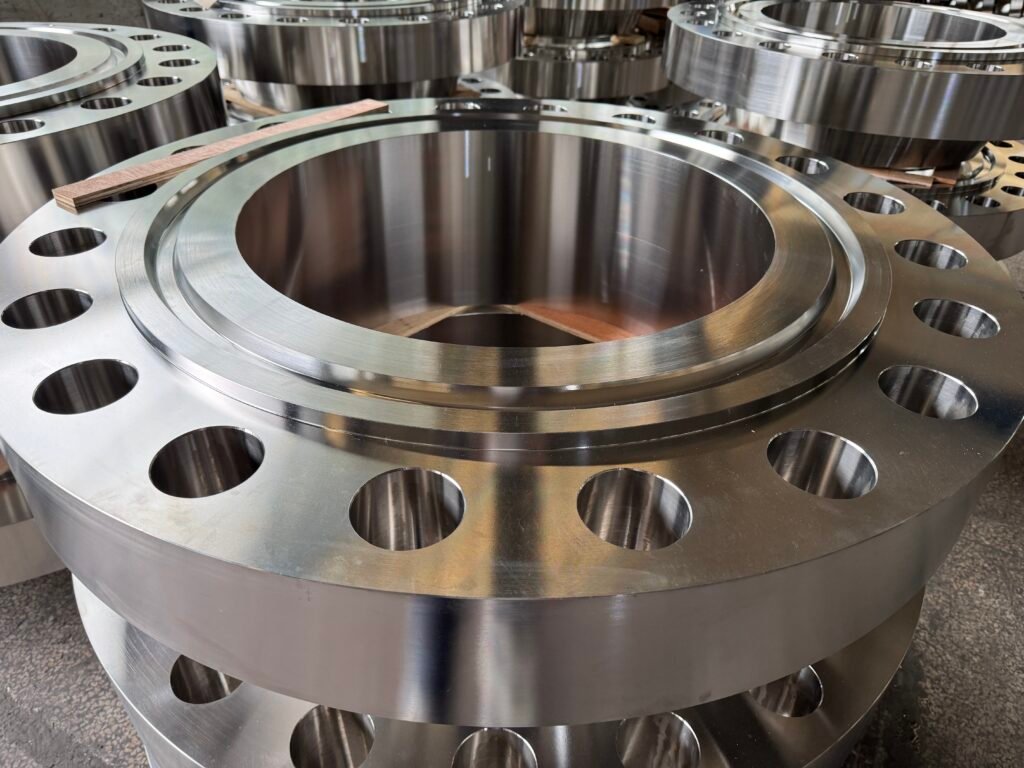
We provide industrial flanges with precise sealing surfaces and full MTC documentation.

  • Standards: ASME B16.5, EN 1092-1, JIS B2220
  • Types: RF, FF, RTJ, Lap Joint, Tongue & Groove
  • Materials: ASTM A182 F304/316, A105, F51, F11, F316Ti
  • Surface Finish: Stock finish (Ra 3.2~6.3 µm), Spiral Serrated, Smooth Finish
  • Sizes: ½” – 48”, Class 150 – 2500

Each flange is inspected for flatness, thickness, sealing groove integrity, and can be delivered with gaskets on request.


Conclusion

Flange sealing might not seem like the most exciting topic—but it’s the difference between a reliable pipeline and a costly leak.

The key is simple:

  • Right gasket for the job
  • Proper flange face
  • Consistent torque

At DLSS, we help clients avoid seal failures before they happen—by getting the details right.


Contact DLSS
Email: info@dlsspipe.com
Website: www.dlsspipeline.com

Wonderful! Share This Case:

Austenitic Stainless Steel

Duplex Stainless Steel

Nickel Alloys

▪ Incoloy Family

▪ Inconel Family

▪ Monel Family

▪ Hastelloy Family

▪ Other Special Alloys

Cobalt Alloys

Related Posts

Welded vs. Seamless Tubes: Which

Choosing between welded and seamless tubes can impact your heat exchanger’s performance, durability, and cost. While both have their place, understanding their differences helps engineers and purchasers make informed decisions. In this blog, we compare these two types of stainless steel tubes and highlight where each one excels. 1. Manufacturing Process This difference affects the structural integrity and mechanical […]

Read More
india-manufacturing-export-impact-stainless-steel-supply

Guía logística: Cómo exportar tubos

Meta descripción:¿Está planeando exportar tubos de acero inoxidable a Sudamérica? Esta guía explica cómo preparar documentación, embalaje e inspección para asegurar una entrega rápida y conforme a puertos de Brasil, Argentina, Chile, Colombia y más. 1. Introducción Sudamérica es una de las regiones de más rápido crecimiento en la demanda de tubos de acero inoxidable, […]

Read More
Applications of Stainless Steel Seamless Pipes in the Oil & Gas Industry

Applications of Stainless Steel Seamless

Meta Description:Explore how stainless steel seamless pipes are critical in oil & gas—covering upstream, midstream, downstream, offshore, pipelines and more—with practical insights and sourcing tips. Introduction In the global steel market, stainless steel seamless pipes are projected to grow from USD 3.88 B in 2025 to USD 5.15 B by 2030, driven largely by demand in the oil and […]

Read More
Asia-Pacific Leads the Global Stainless Steel Seamless Tube Market: Trends and Opportunities Ahead

Asia-Pacific Leads the Global Stainless

Asia-Pacific (APAC) is not just the largest stainless steel seamless tube market—it’s the fastest-growing. Fueled by industrialization, infrastructure investment, and regional manufacturing dominance, APAC accounts for over 40% of global market share and is projected to grow steadily at 7.3%+ CAGR through 2030. For manufacturers, EPC contractors, and material buyers, understanding this region’s growth dynamics […]

Read More
Choosing the Right Pipe Materials for the Oil & Gas Industry

Guía para Seleccionar Tuberías de

Meta descripción:¿Necesita tuberías confiables para calentadores, intercambiadores o calderas en refinerías latinoamericanas? Descubra qué materiales ofrecen la mejor resistencia a la corrosión y al calor para aplicaciones críticas. Introducción En América del Sur, países como Argentina, Brasil, Chile y Perú están modernizando sus refinerías para cumplir con nuevas demandas energéticas y ambientales.Estos proyectos requieren tuberías […]

Read More
hardness testing MTC stainless steel tubes

Hardness Testing in Mill Test

Introduction Mill Test Certificates (MTCs) are essential documents for stainless steel tubes, certifying that products comply with ASTM, ASME, EN, and JIS standards. Among the critical mechanical properties included, hardness values (Brinell, Rockwell, Vickers) are especially important for ensuring suitability in demanding applications like boilers and heat exchangers. 1. Hardness in MTCs 2. Why Hardness […]

Read More
What Is a Double Pipe Heat Exchanger? Design, Benefits, and Industrial Applications

What Is a Double Pipe

A Double Pipe Heat Exchanger, also known as a double tube heat exchanger, is one of the simplest yet most effective types of heat exchangers for small to medium heat transfer needs. It consists of two concentric pipes—one inside the other—allowing two fluids to exchange heat without mixing. This blog will explore the design, working […]

Read More
offshore-oil-gas-corrosion-resistant-heat-exchanger-tubes

Corrosion-Resistant Heat Exchanger Solutions for

Offshore oil and gas platforms operate in some of the harshest environments on earth—intense humidity, salt spray, hydrogen sulfide, and high-pressure processes. These conditions make corrosion the #1 threat to heat exchanger systems and piping reliability. To reduce failures and maintenance costs, operators are turning to advanced stainless steel and duplex alloy tubes as the […]

Read More

Request A Quote

*We respect your confidentiality and all information are protected.