Choosing the Right Pipe Materials for the Oil & Gas Industry

DLSS - Oil & Gas Industry - Choosing the Right Pipe Materials for the Oil & Gas Industry

Meta Description:
The oil & gas industry demands corrosion-resistant, high-pressure-rated piping solutions. Learn how to select the best pipe materials for upstream, midstream, and downstream applications.


Introduction

In the oil and gas sector, pipelines are more than just infrastructure—they are lifelines of the operation. From offshore rigs and sour gas fields to refineries and LNG terminals, the performance of pipe materials directly affects safety, uptime, and profitability.

This article dives into the most trusted pipe materials used across the industry, what standards guide their selection, and how suppliers like DLSS help ensure reliability in even the harshest environments.


What Makes Oil & Gas Applications So Demanding?

Pipeline systems in this industry face some of the toughest operating conditions:

  • High pressure & high temperature environments
  • Corrosive fluids, including hydrogen sulfide (H₂S), CO₂, chlorides
  • Sour service requirements with SSC (Sulfide Stress Cracking) concerns
  • Remote or subsea access, making failure extremely costly

To withstand this, engineers must balance mechanical strength, corrosion resistance, code compliance, and cost.


Key Material Standards in the Oil & Gas Sector

Before selecting materials, it’s important to understand the standards involved. The most common ones include:

  • ASTM A213 / A312 – Seamless stainless tubes and pipes
  • ASTM B111 / B423 – Non-ferrous alloy tubes (e.g. Admiralty Brass, Incoloy 825)
  • API 5L – Line pipes for transportation of oil, gas, water
  • ASME B31.3 – Process piping in refineries and gas plants
  • NACE MR0175 / ISO 15156 – Material requirements for H₂S-containing environments

Top Pipe Materials Used in Oil & Gas

Here’s a breakdown of the most popular and reliable pipe materials across oil & gas operations:

1. TP316L (UNS S31603)

  • Excellent general corrosion resistance
  • Widely used in offshore platforms, separators, process lines
  • Low carbon version reduces risk of weld decay

2. TP321 / TP347H

  • Stabilized grades for high-temperature service
  • Ideal for heater coils, reformer tubes, and thermal systems

3. Incoloy 825 (UNS N08825)

  • Superior resistance to acids and chlorides
  • Used in sour gas service, especially where H₂S and CO₂ are present
  • NACE MR0175 compliant

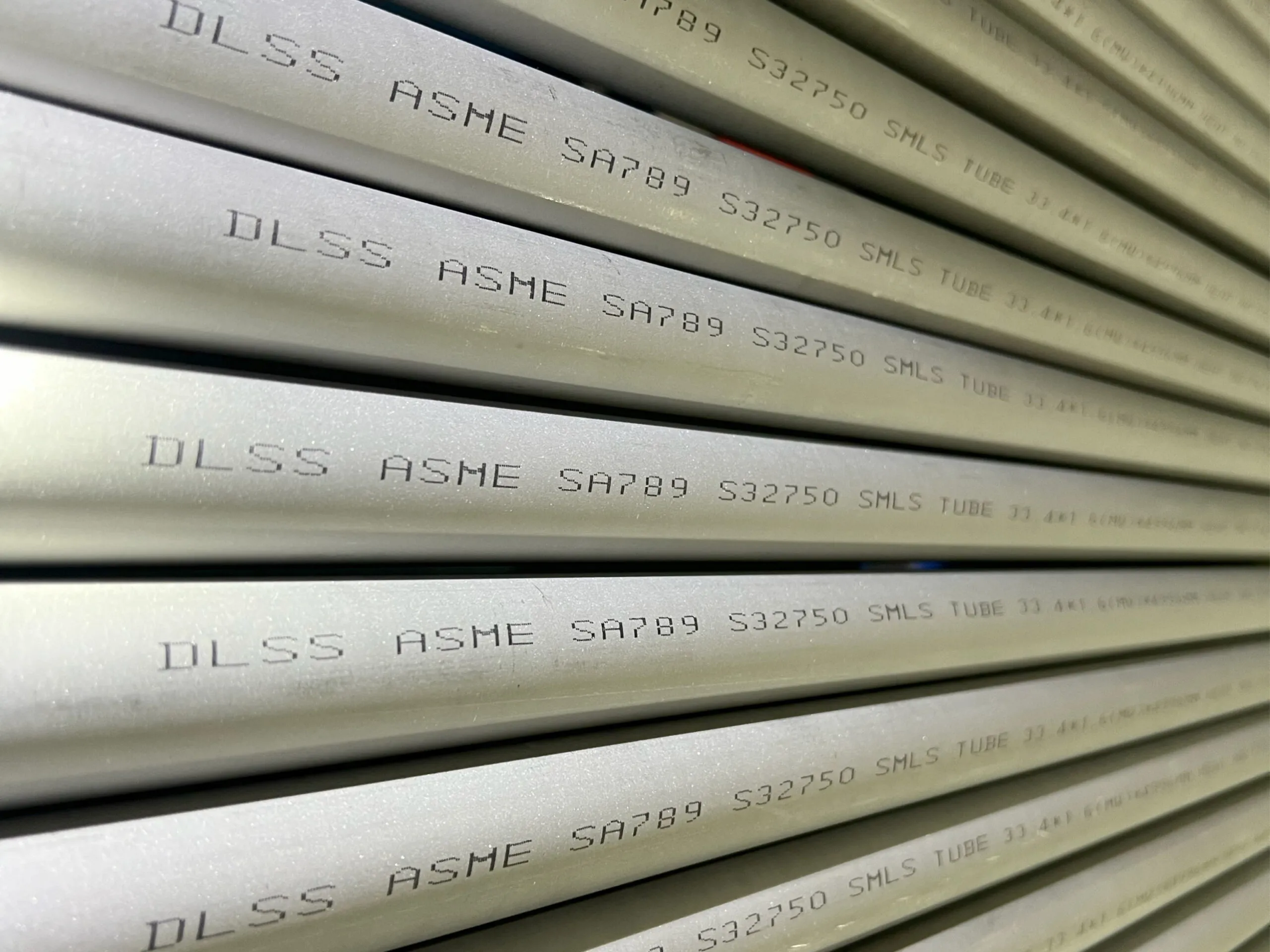
4. Duplex Stainless Steel (S31803 / S32750)

  • Double the yield strength of 316L
  • Resistant to chloride pitting and stress corrosion
  • Ideal for subsea, seawater injection, risers

5. Admiralty Brass (C44300)

  • Used in condensers and oil refinery cooling systems
  • Combines cost-effectiveness with corrosion resistance

Application Examples Across Oil & Gas Segments

SegmentApplicationMaterial Suggestion
UpstreamOffshore risers, separators, wellheadsS32750, Incoloy 825, TP316L
MidstreamGathering lines, compressor stationsAPI 5L X52, Duplex, A106 Gr B
DownstreamRefinery heaters, process pipingTP321, TP347H, Alloy 825
LNG TerminalsLow-temp cryogenic linesTP304L, A333 Gr 6, Inox alloys
Gas FieldsSour service pipelinesNACE-compliant Duplex, 825

How DLSS Supports the Oil & Gas Sector

DLSS provides full-range piping solutions that meet the exacting requirements of oil and gas projects:

  • Seamless stainless pipes from OD 6mm to 219mm
  • Grades include TP304L, TP316L, TP321, Duplex 2205, Incoloy 825
  • Pickled, BA, EP, and passivated surfaces
  • Third-party inspection available (SGS, BV, TUV)
  • Documentation: EN 10204 3.1 / 3.2, NACE certification, PMI test reports

Our project experience includes refinery upgrades in Turkey, offshore gas lines in Southeast Asia, and petrochemical plants in the Middle East.


Conclusion

The right pipe material isn’t just a technical choice—it’s a business-critical decision.

By choosing certified, tested, and appropriate piping materials, oil & gas operators can ensure system reliability, protect human safety, and extend the lifespan of critical infrastructure.

DLSS helps you meet these goals with global supply capability, strict quality standards, and a deep understanding of pipeline engineering.


Contact DLSS
Email: info@dlsspipe.com
Website: www.dlsspipeline.com

Wonderful! Share This Case:

Austenitic Stainless Steel

Duplex Stainless Steel

Nickel Alloys

▪ Incoloy Family

▪ Inconel Family

▪ Monel Family

▪ Hastelloy Family

▪ Other Special Alloys

Cobalt Alloys

Related Posts

Understanding Pickling and Passivation in Stainless Steel Tube Production

Understanding Pickling and Passivation in

Meta Description:Learn how pickling and passivation improve corrosion resistance in stainless steel tubes. Explore DLSS’s cleaning methods, ASTM standards, and industry-specific applications. Introduction Even the highest-grade stainless steel can suffer from surface contamination during tube forming, welding, or heat treatment. To restore the full corrosion resistance of stainless steel tubes, manufacturers must apply pickling and […]

Read More
Stainless Steel Tubing for Food & Beverage Applications – Sanitary Requirements Explained

Stainless Steel Tubing for Food

Meta Description:Discover the sanitary tubing requirements for food and beverage processing. Learn how stainless steel tubes ensure hygiene, corrosion resistance, and compliance with global standards. Introduction In the food and beverage industry, maintaining product purity, hygiene, and corrosion resistance is non-negotiable. Stainless steel tubing plays a critical role in transporting liquids and gases—from dairy to […]

Read More
U-Bend Stainless Steel Tubes: Design, Manufacturing and Application in Heat Exchangers

U-Bend Stainless Steel Tubes: Design,

Meta Description:Learn how U-bend stainless steel tubes are designed, fabricated, and applied in heat exchangers. Understand the standards, tolerances, heat treatment, and testing required for high-performance U-tube bundles. Introduction U-bend stainless steel tubes are a core component in shell-and-tube heat exchangers, used in power plants, refineries, LNG terminals, and petrochemical plants. Their precise bending, dimensional […]

Read More
heat exchanger tubes

Heat Exchanger Tubes: Standards, Materials,

Heat exchanger tubes are the backbone of many critical industries, including oil & gas, power generation, petrochemicals, shipbuilding, and desalination. Choosing the right tube material and ensuring compliance with international standards are essential to guarantee safety, efficiency, and long-term performance. In this article, we provide a detailed overview of standards, materials, manufacturing processes, and applications […]

Read More
Common Condenser Coil Problems and How to Prevent Them (Ultimate HVAC Maintenance Guide)

Common Condenser Coil Problems and

What Is a Condenser Coil in an Air Conditioner? The condenser coil is the heart of your outdoor HVAC system. It’s responsible for releasing the heat collected indoors by your refrigerant. When the coil fails—due to dirt, leaks, or damage—your air conditioner stops cooling, your energy bills rise, and long-term system damage becomes inevitable. Keyword Targets: condenser coil, HVAC system, air conditioner […]

Read More

Everything You Need to Know

What Are Inner Grooved Coil Tubes? Inner grooved coil tubes, also known as ribbed tubes or micro-fin tubes, are seamless or welded coil tubes with precisely formed helical grooves on the internal surface. These grooves increase turbulence in fluid flow, thereby enhancing the heat transfer coefficient. They are widely used in: Why Choose Inner Grooved Tubes?  30–50% better heat transfer than smooth tubes Enhanced […]

Read More
Green Energy and ESG: How Sustainability Is Reshaping the Stainless Steel Seamless Tube Market

Green Energy and ESG: How

The stainless steel seamless tube industry is undergoing a quiet but profound transformation—not just driven by technical demands, but by Environmental, Social, and Governance (ESG) goals and the global energy transition. As governments, investors, and end-users demand cleaner, longer-lasting, and traceable materials, tube manufacturers are under growing pressure to reduce carbon footprint, improve transparency, and […]

Read More
Refinery Tube Selection Guide for South American Projects

Refinery Tube Selection Guide for

Meta Description:Need the right tubes for refinery heaters, boilers, or exchangers in Latin America? This guide explains how to choose the best stainless and alloy grades for performance and corrosion resistance. Introduction Refinery operations across South America—whether in Argentina’s Mendoza, Brazil’s São Paulo, or Chile’s Bío-Bío region—require tubing that can handle high temperature, pressure, and […]

Read More

Request A Quote

*We respect your confidentiality and all information are protected.