Corrosion-Resistant Heat Exchanger Tubes: When to Choose Titanium and Nickel Alloys

DLSS - Tubes For Heat Exchanger - Corrosion-Resistant Heat Exchanger Tubes: When to Choose Titanium and Nickel Alloys

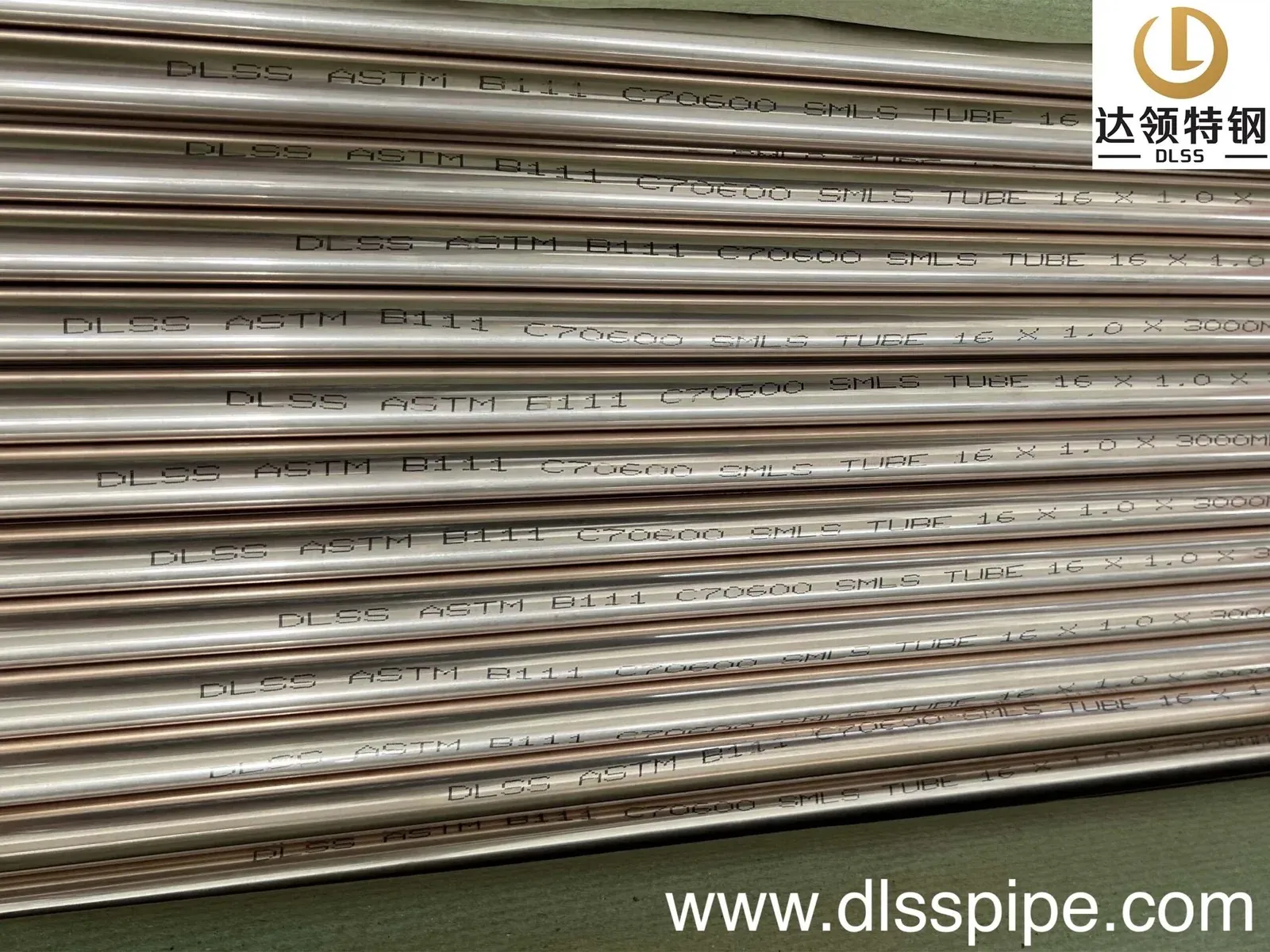
In highly corrosive environments—such as seawater cooling, chemical processing, and offshore oil and gas—traditional stainless steel may not offer sufficient durability. Selecting the right material for heat exchanger tubes in these conditions is crucial for ensuring long service life, process safety, and reduced maintenance costs.

This article explores two high-performance materials: Titanium and Nickel Alloy tubes, and when they are best suited for corrosion-resistant heat exchanger applications.


1. Titanium Heat Exchanger Tubes: Lightweight and Ocean-Ready

Titanium tubes are widely used in seawater-cooled heat exchangers due to their outstanding corrosion resistance, particularly against chloride ions and biofouling.

Key Benefits:

  • Excellent resistance to saltwater, acids, and oxidizing environments
  • Low density and high strength-to-weight ratio
  • Long service life with minimal maintenance

Applications:

  • Seawater-cooled condensers
  • Desalination plants
  • Marine heat exchangers
  • Offshore platforms

Titanium Grade 2 and Grade 5 are commonly used. DLSS can supply titanium tubes as per ASTM B338 or ASME SB-338 standards upon request.


2. Nickel Alloy Heat Exchanger Tubes: Engineered for Extreme Conditions

Nickel-based alloys, such as Inconel (e.g., UNS N06625), Monel (e.g., UNS N04400), and Hastelloy (e.g., C-276), offer superior resistance to:

  • High temperatures
  • Oxidizing and reducing agents
  • Sulfuric, hydrochloric, and nitric acids

These alloys are ideal for:

  • Chemical processing
  • Power plant condensers
  • Acid regeneration units
  • Heat recovery systems in petrochemical plants

At DLSS, we supply nickel alloy heat exchanger tubes with strict quality control, supported by mill test certificates and third-party inspections.


3. Why Corrosion Resistance Matters

When exposed to corrosive fluids or harsh environments, carbon steel or even standard stainless steel tubes may experience:

  • Pitting or crevice corrosion
  • Stress corrosion cracking
  • Early wall thinning and leakage

Investing in titanium or nickel alloy tubes significantly reduces lifecycle costs, especially in continuous process industries where downtime is expensive.


4. DLSS Solutions for Harsh Environments

As an experienced manufacturer of industrial tubing, DLSS offers a range of corrosion-resistant solutions tailored for heat exchanger applications:

  • Nickel alloys: Inconel 625, Monel 400, Hastelloy C276
  • Titanium Grades 1, 2, and 5
  • Duplex and Super Duplex (2205, 2507)
  • Seamless tubes with customized lengths and surface finishes
  • Compliance with ASTM, ASME, EN, and NORSOK standards

We also support special packaging, seaworthy protection, and third-party inspection services upon request.

Explore our corrosion-resistant tube solutions at www.dlsspipeline.com
Email us directly: info@dlsspipe.com

Wonderful! Share This Case:

Austenitic Stainless Steel

Duplex Stainless Steel

Nickel Alloys

▪ Incoloy Family

▪ Inconel Family

▪ Monel Family

▪ Hastelloy Family

▪ Other Special Alloys

Cobalt Alloys

Related Posts

Selecting Stainless Steel Tubes for Chemical Processing Equipment (2025 Guide)

Selecting Stainless Steel Tubes for

Why Chemical Processing Requires Advanced Tubing Materials Chemical industries operate under some of the most corrosive and demanding environments. Stainless steel tubes used in reactors, acid circulation lines, scrubbers, and condensers are constantly exposed to aggressive chemicals like sulfuric acid, hydrochloric acid, chlorides, and high-pressure steam. Choosing the wrong material could lead to rapid corrosion, […]

Read More
ASTM B163 Incoloy 825 (UNS N08825) Seamless Tube – 25.4 × 2.11 × 5555 mm, Bright Annealed Surface

ASTM A213/ASME SA213 TP321 (1.4541)

Product Overview: ASTM A213/ASME SA213 TP321 Seamless Tube (1.4541) The ASTM A213/ASME SA213 TP321 (1.4541) seamless tube is a high-performance, austenitic stainless steel tube designed for critical applications in heat exchangers and other high-temperature, high-stress systems. Known for its excellent corrosion resistance, especially against sulfuric and nitric acids, and its ability to withstand oxidation in continuous service […]

Read More
Why Japanese Heat Exchanger Manufacturers Prefer TP316L Tubes(日本の熱交換器メーカーがTP316Lチューブを選ぶ理由)

Why Japanese Heat Exchanger Manufacturers

1. Introduction TP316L heat exchanger tube Japan is the top choice for many 日本の熱交換器メーカー (Japanese heat exchanger manufacturers) that require exceptional corrosion resistance, precise dimensions, and long service life. Whether for 海水淡水化プラント (seawater desalination plants), chemical processing, or power generation, TP316L delivers consistent performance in Japan’s demanding industrial environments. 2. Material Properties of TP316L Stainless […]

Read More
Choosing Between Seamless and Welded Stainless Steel Tubes: Which One Fits Your Project?

Choosing Between Seamless and Welded

Meta Description:Understand the pros and cons of seamless vs welded stainless steel tubes. Learn when to choose each type based on pressure, corrosion, cost, and application requirements. Introduction When specifying stainless steel tubes for your project—whether it’s a heat exchanger, fluid transport system, or structural framework—one of the most important decisions is choosing between seamless […]

Read More
Pickling vs Bright Annealing: Which Surface Treatment Is Best for Stainless Steel Tubes?

How to Select Tubing for

Meta Description:Choosing tubing for high-pressure systems? Learn how to select the right material, wall thickness, and standards for safe and reliable performance in oil & gas, chemical, and hydraulic applications. Introduction In high-pressure systems, tubing failure isn’t just costly—it can be catastrophic. Whether you’re building an offshore platform, a hydraulic power unit, or a supercritical […]

Read More
Top 7 Types of Finned Tubes and Their Applications Across Industries

Top 7 Types of Finned

Meta Description:Explore 7 common finned tube designs, how they differ, and which applications they serve best. Learn how to select the right fin geometry and material for your heat exchanger project. Introduction Not all finned tubes are created equal. With varying geometries, base materials, and manufacturing techniques, selecting the proper finned tube type can make […]

Read More
Top 10 Applications of Stainless Steel Tubes in the Oil & Gas Industry

Top 10 Applications of Stainless

Meta Description:Explore the top 10 critical applications of stainless steel tubes in the oil & gas industry. Learn how DLSS tubes perform under high pressure, corrosion, and extreme conditions. Introduction The oil and gas industry operates under extreme conditions—high pressure, corrosive environments, and fluctuating temperatures. To ensure safety and durability, stainless steel tubes are essential […]

Read More
Plate vs. Shell and Tube Heat Exchangers: A Complete Comparison Guide

Plate vs. Shell and Tube

Selecting the right heat exchanger is critical for ensuring operational efficiency, durability, and cost-effectiveness. Among the most commonly used designs are the plate heat exchanger (PHE) and the shell and tube heat exchanger (STHE)—each offering distinct performance advantages in specific industrial environments. This guide compares the two technologies in terms of structure, thermal performance, maintenance, […]

Read More

Request A Quote

*We respect your confidentiality and all information are protected.