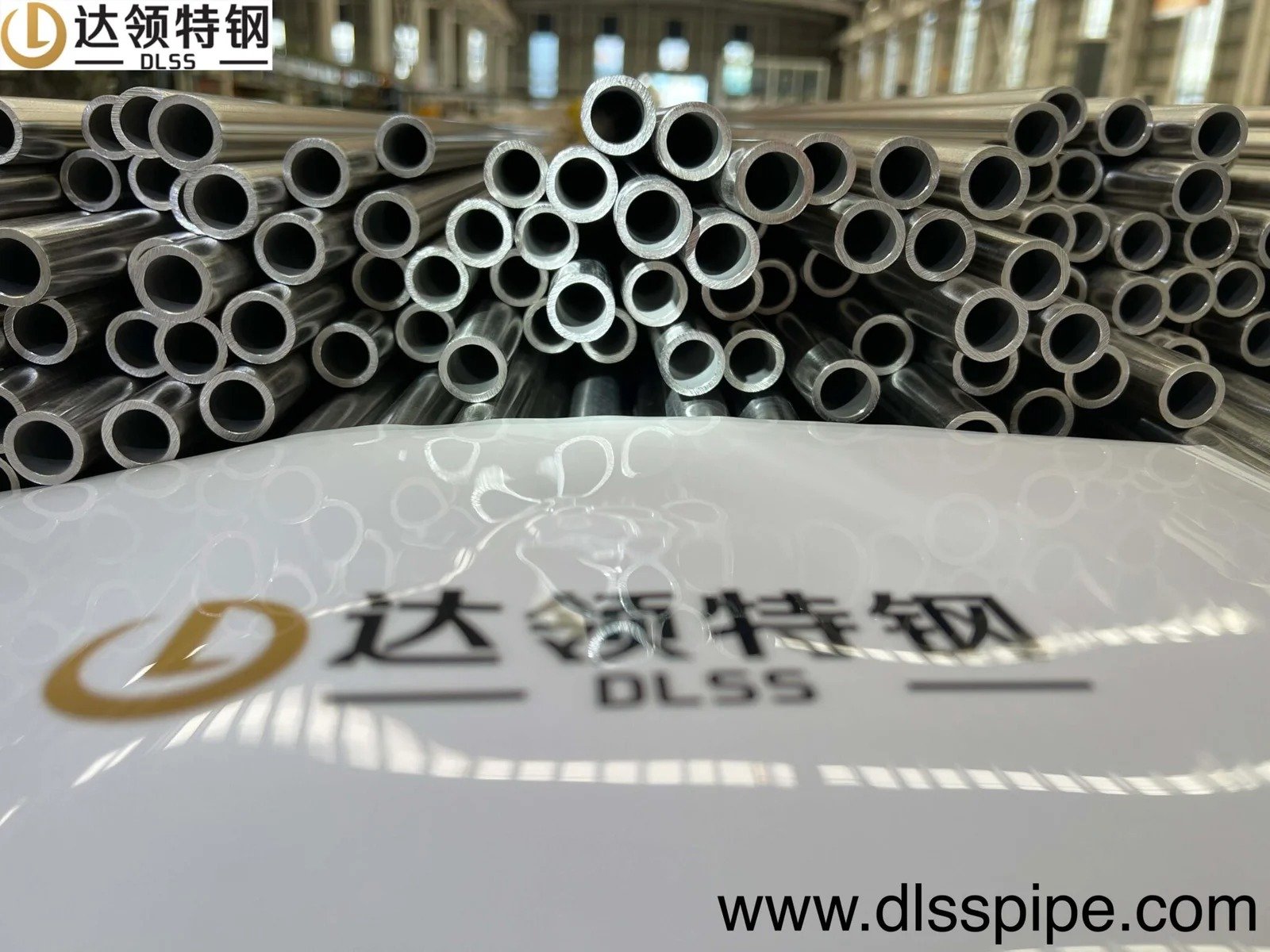
Super Duplex Seamless Tubes (SA789 S32205) for Long-Length Heat Exchangers

DLSS - Pipe&Tube - Super Duplex Seamless Tubes (SA789 S32205) for Long-Length Heat Exchangers

Introduction

Heat exchangers operating in corrosive and high-pressure environments require tube materials with superior mechanical properties and corrosion resistance. One typical customer requirement highlights the importance of super duplex seamless tubes (SA789 S32205) in long-length applications. With outside diameters of 25.4 mm, thin wall thickness, and lengths exceeding 18 meters, these tubes represent a challenging yet essential solution for modern heat exchanger design.


Customer Requirement Example

A customer recently outlined the following specification for seamless duplex tubes:

  • Material: ASME SA789 S32205 Duplex (Super Duplex grade)
  • Outside Diameter (OD): 25.4 mm
  • Minimum Wall Thickness: 0.9 mm
  • Tube Length: 18,290 mm
  • Quantity: 4,600 pieces

This configuration demonstrates a focus on extended tube lengths with thin walls, aiming to improve efficiency while minimizing welding joints inside tube bundles.
Why Alloy C-276 Pipes are Essential for Acid Processing Industries

Why Super Duplex S32205?

Super Duplex stainless steel S32205 is a preferred choice for high-performance heat exchanger tubes due to its unique balance of strength and corrosion resistance.

  • High Corrosion Resistance: PREN (Pitting Resistance Equivalent Number) above 35 ensures protection against pitting and crevice corrosion.
  • Strength Advantage: Nearly twice the yield strength of standard austenitic stainless steels, allowing thinner walls without compromising safety.
  • Stress Corrosion Cracking Resistance: Particularly effective in chloride-rich environments such as seawater cooling or geothermal brine applications.
  • Extended Lifespan: Long-term reliability reduces maintenance costs and downtime.

Technical Challenges in Long-Length Seamless Tubes

Producing tubes with 0.9 mm wall thickness and over 18 meters length is technically demanding:

  • Straightness Control: Ensuring the tube maintains straight alignment over long lengths to fit into precise heat exchanger tube sheets.
  • Thin-Wall Strength: Preventing collapse or ovality during cold drawing and heat treatment.
  • Surface Quality: Maintaining smooth inner and outer surfaces for optimal heat transfer and reduced fouling.
  • Packaging & Handling: Protecting long tubes during shipping requires reinforced wooden crates, internal capping, and often nitrogen purging.
Nickel 200 and Nickel 201 Seamless Tubes: Properties, Applications, and Selection Guide

DLSS Manufacturing Solutions

DLSS provides engineering-grade solutions to address these challenges:

  • Cold Drawing Precision: Advanced processes maintain tight tolerances for OD, wall thickness, and straightness.
  • Bright Annealing & Solution Heat Treatment: Restores corrosion resistance and refines microstructure.
  • Full QA Documentation:
    • EN 10204 3.1 certificates (optionally 3.2 with third-party inspection)
    • 100% Eddy Current & Hydrostatic Testing
    • PMI (Positive Material Identification) for every batch
    • Complete ITP (Inspection and Test Plan) dossier
  • Surface & Packaging: Acid pickling/passivation, optional bright finish, capped ends, nitrogen purging, and seaworthy export packaging.

Applications of Super Duplex Seamless Tubes

The versatility of super duplex seamless tubes makes them indispensable across multiple sectors:

  • Heat Exchangers in Petrochemical Plants
  • Seawater-Cooled Condensers
  • Geothermal Energy Systems
  • Offshore Oil & Gas Facilities
  • Power Plant Condensers and Coolers

By reducing welds and ensuring long, seamless lengths, operators achieve improved reliability, reduced leak risks, and extended operational cycles.

Conclusion – A Reliable Partner for Long-Length Tube Supply

This customer requirement demonstrates the growing demand for super duplex seamless tubes with long lengths and thin walls in heat exchanger applications. DLSS specializes in delivering precision-engineered duplex and super duplex tubes, backed by rigorous testing, traceability, and international project experience.

For inquiries, contact us at info@dlsspipe.com or visit www.dlsspipeline.com to learn how DLSS can support your next project with high-performance tubing solutions.

Wonderful! Share This Case:

Austenitic Stainless Steel

Duplex Stainless Steel

Nickel Alloys

▪ Incoloy Family

▪ Inconel Family

▪ Monel Family

▪ Hastelloy Family

▪ Other Special Alloys

Cobalt Alloys

Related Posts

Stainless Steel Instrumentation Tubing for Japan’s Oil & Gas Projects – 日本石油・ガス産業向けステンレス計装チューブ

Stainless Steel Instrumentation

Introduction The oil and gas industry in Japan demands high-precision stainless steel instrumentation tubing for safe and efficient operation of control systems. DLSS supplies JIS G3446-compliant tubes with excellent corrosion resistance, precision dimensional tolerances, and long service life in harsh offshore and onshore environments. 1. Why Stainless Instrumentation Tubes for...

Read More
wind-farm-heat-exchanger-finned-tube-market

Global Wind Farm

With wind power accounting for over 25% of electricity in key global markets, operators are facing a new challenge: maintaining, upgrading, and replacing aging cooling and heat transfer systems, especially in offshore environments. As a result, demand for stainless steel finned tubes—used in turbine cooling, nacelle HVAC, and heat exchangers—is...

Read More
How Long Do Stainless Steel Seamless Pipes Last? Lifespan, Factors, and Best Practices

How to Choose

Why Material Selection Matters for Heat Exchanger Tubes In heat exchanger applications, the wrong material can lead to premature corrosion, low thermal efficiency, or even costly shutdowns. Whether you’re designing for a refinery, a desalination plant, or a food-grade chiller, choosing the right stainless steel tube is a crucial step...

Read More
ASTM A213 vs A269: What’s the Difference in Heat Exchanger Tubing?

ASTM A213 vs

Introduction Two of the most frequently specified standards for stainless steel tubing are ASTM A213 and ASTM A269. Both cover austenitic stainless steel tubes like TP304L, TP316L, and TP321. However, their scope, tolerances, and test requirements differ significantly—especially for heat exchanger and pressure service applications. This article provides a clear,...

Read More
Common Heat Exchanger Tube Failures and How to Prevent Them

Common Heat Exchanger

Introduction Heat exchanger tube failures can lead to: Understanding the most frequent failure mechanisms is key to designing, selecting, and maintaining reliable heat exchanger systems. In this article, we explore the five most common tube failure types—and how to avoid them. 1. Pitting Corrosion Occurs when localized corrosion breaks through...

Read More
How to Select the Right Stainless Steel Tube for Corrosive Environments – A Practical Guide

How to Select

Introduction Corrosive environments are among the most demanding settings for stainless steel tubing. Choosing the wrong grade can lead to pitting, cracking, or total system failure—costing both time and money. This practical guide from DLSS helps engineers and procurement specialists select the most appropriate stainless steel tube for various corrosive...

Read More
ASTM A789 S32750 Super Duplex Steel Seamless Tube 19*2.4MW Bright Annealed Type

Global Heat Exchanger

Introduction In the international heat exchanger industry, buyers and engineers frequently encounter various regional and international standards. The most commonly used include: Understanding the similarities and differences between these standards is essential when sourcing or specifying stainless steel seamless tubes, particularly for high-pressure, thermal, or corrosive environments. This article provides...

Read More
Nickel Alloy 625 vs 825: Choosing the Right Pipe for Chemical and Offshore Projects

Nickel Alloy 625

1. Introduction When it comes to critical piping systems in chemical plants, refineries, and offshore projects, material selection plays a decisive role in long-term reliability. Two of the most widely specified options are Nickel Alloy 625 pipes and Incoloy 825 tubes. Although both are high-performance alloys with excellent corrosion resistance,...

Read More

Request A Quote

*We respect your confidentiality and all information are protected.