Guía para Seleccionar Tuberías de Acero Inoxidable para Refinerías en América del Sur

DLSS - Oil & Gas Industry - Guía para Seleccionar Tuberías de Acero Inoxidable para Refinerías en América del Sur

Meta descripción:
¿Necesita tuberías confiables para calentadores, intercambiadores o calderas en refinerías latinoamericanas? Descubra qué materiales ofrecen la mejor resistencia a la corrosión y al calor para aplicaciones críticas.


Introducción

En América del Sur, países como Argentina, Brasil, Chile y Perú están modernizando sus refinerías para cumplir con nuevas demandas energéticas y ambientales.
Estos proyectos requieren tuberías capaces de resistir altas temperaturas, presión, fluidos corrosivos y ciclos térmicos constantes.

Elegir el material adecuado para las tuberías no es solo una decisión técnica—afecta directamente la seguridad operativa, la eficiencia térmica y los costos a largo plazo.


Factores Clave al Seleccionar Tuberías

Los ingenieros deben considerar los siguientes aspectos:

  • Temperatura de operación (algunas líneas superan los 1000 °C)
  • Composición química del fluido (H₂S, compuestos sulfurosos, cloruros)
  • Riesgo de coquización (en procesos con hidrocarburos pesados)
  • Compatibilidad con soldadura y conformado
  • Resistencia a la fatiga térmica
  • Cumplimiento normativo: ASTM, ASME, ISO, NACE

Principales Materiales para Tuberías de Refinería

MaterialAplicación TípicaVentajas Principales
TP316LAgua de enfriamiento, condensadoresFácil de soldar, resistente a corrosión general
TP321 / TP347HTubos de horno y sobrecalentadoresEstables a altas temperaturas, resistentes a oxidación
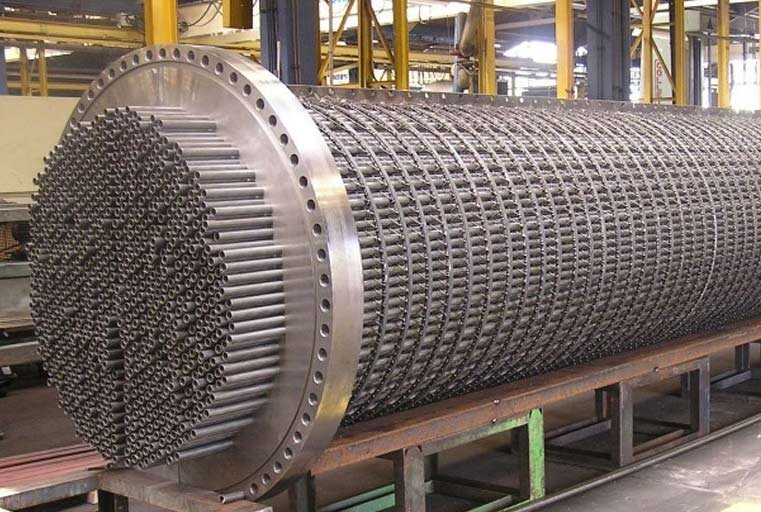
Alloy 800H/HTReformadores, unidades de etilenoExcelente resistencia a fluencia y carburación
Incoloy 825Intercambiadores con fluidos ácidosAlta resistencia a cloruros y medios ácidos, NACE
Alloy 625Servicios severos con H₂SExcelente resistencia a presión y corrosión

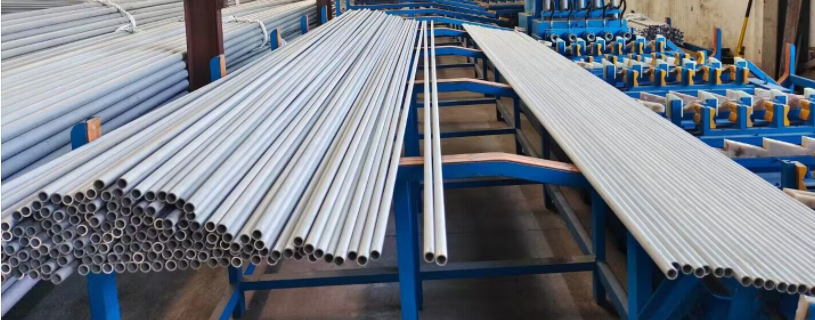
Los tubos de DLSS están disponibles con acabado decapado, recocido brillante (BA) o electropulido, según la necesidad del proyecto.


Normas Internacionales y Regionales

Suministramos tubos según:

  • ASTM A213, A312, B407, B423
  • Código ASME para Calderas y Vasijas de Presión (BPVC)
  • NACE MR0175 / ISO 15156 para ambientes con H₂S
  • EN 10216 / Normas DIN bajo pedido

También cumplimos requisitos específicos de empresas como YPF (Argentina), Petrobras (Brasil) y Repsol (Perú).


Caso Real: Proyecto en Argentina

DLSS suministró tubos TP347H certificados con EN 10204 3.2 para una unidad de reformado catalítico en Mendoza, Argentina.
Los tubos fueron:

  • Interior decapado y limpieza ID
  • 100 % inspección PMI y por corrientes inducidas (EC)
  • Entregados con recomendaciones de soldadura incluidas

Resultado: reducción de coquización, instalación rápida, y alta satisfacción del contratista local.


Servicios Adicionales de DLSS

Más allá del suministro, DLSS ofrece:

  • Cortes y longitudes personalizadas
  • Pruebas NDE: UT, EC, PT, RT
  • Protección interna con nitrógeno y tapones
  • Inspección de terceros (SGS, BV, TÜV)
  • Documentación en español o inglés, soporte técnico remoto

Conclusión

En los proyectos de refinería de América Latina, seleccionar una tubería adecuada es clave para garantizar seguridad, eficiencia y cumplimiento normativo.
DLSS ofrece soluciones en acero inoxidable y aleaciones especiales que se adaptan a las condiciones más exigentes de operación.


Contáctenos
Correo: info@dlsspipe.com
Sitio web: www.dlsspipeline.com

Wonderful! Share This Case:

Austenitic Stainless Steel

Duplex Stainless Steel

Nickel Alloys

▪ Incoloy Family

▪ Inconel Family

▪ Monel Family

▪ Hastelloy Family

▪ Other Special Alloys

Cobalt Alloys

Related Posts

ASTM B163 Incoloy 825 (UNS N08825) Seamless Tube – 25.4 × 2.11 × 5555 mm, Bright Annealed Surface

ASTM A213/ASME SA213 TP321 (1.4541)

Product Overview: ASTM A213/ASME SA213 TP321 Seamless Tube (1.4541) The ASTM A213/ASME SA213 TP321 (1.4541) seamless tube is a high-performance, austenitic stainless steel tube designed for critical applications in heat exchangers and other high-temperature, high-stress systems. Known for its excellent corrosion resistance, especially against sulfuric and nitric acids, and its ability to withstand oxidation in continuous service […]

Read More
TP316L Stainless Pipes for Japan’s Chemical Processing Plants – 日本化学プラント向けTP316Lステンレス管

TP316L Stainless Pipes for Japan’s

Introduction Japan’s chemical industry demands high-performance stainless steel pipes capable of withstanding aggressive media and high temperatures. TP316L stainless pipes by DLSS meet JIS G3459 – Stainless Steel Pipes for Corrosion Resistance, ensuring durability, weldability, and excellent resistance to chloride-induced corrosion common in Japanese chemical processing plants. 1. Why TP316L for Japan’s Chemical Industry(日本化学産業でTP316Lが選ばれる理由) 2. […]

Read More
Titanium Tubes vs Stainless Steel Tubes: Which One is Right for Your Heat Exchanger?

Titanium Tubes vs Stainless Steel

Meta Description:Compare titanium tubes and stainless steel tubes in terms of corrosion resistance, mechanical strength, cost, and applications. Find out which is the better material for your heat exchanger or industrial system. Introduction In corrosive or high-performance environments—such as desalination, chemical processing, or marine applications—material selection is crucial. Two common choices for heat exchanger tubing […]

Read More
Pickling vs Bright Annealing: Which Surface Treatment Is Best for Stainless Steel Tubes?

Pickling vs Bright Annealing: Which

Meta Description:Pickled or bright annealed? Learn the pros, cons, and applications of these two surface treatment methods used in stainless steel tube manufacturing. Introduction The performance of stainless steel tubes isn’t just about alloy grade or dimensional accuracy—surface finish plays a crucial role in corrosion resistance, cleanliness, and long-term durability. Two widely used surface treatments […]

Read More
Pickled vs. Bright Annealed Stainless Steel Tubes for Heat Exchangers: What Engineers Need to Know

Pickled vs. Bright Annealed Stainless

The performance and durability of a heat exchanger depend not only on material selection, but also on surface finish quality. Among stainless steel tubes, two of the most common finishing processes are pickling (AP) and bright annealing (BA). Understanding the difference between these two can help engineers and procurement teams select the right tube for […]

Read More
Stainless Steel Instrumentation Tubing for Japan’s Oil & Gas Projects – 日本石油・ガス産業向けステンレス計装チューブ

Stainless Steel Instrumentation Tubing for

Introduction The oil and gas industry in Japan demands high-precision stainless steel instrumentation tubing for safe and efficient operation of control systems. DLSS supplies JIS G3446-compliant tubes with excellent corrosion resistance, precision dimensional tolerances, and long service life in harsh offshore and onshore environments. 1. Why Stainless Instrumentation Tubes for Oil & Gas(石油・ガスにステンレス計装チューブが必要な理由) 2. Standards […]

Read More

Top 10 Common Defects in

Meta Description:Explore the most frequent defects found in stainless steel heat exchanger tubes, including pitting, thinning, and cracking. Learn how to detect and prevent these issues to extend tube service life. Introduction Stainless steel heat exchanger tubes play a critical role in transferring heat efficiently under corrosive and high-pressure conditions. However, defects in these tubes […]

Read More
Stainless Steel Tube Failure Modes – Cracks, Pitting, and How to Prevent Them

Stainless Steel Tube Failure Modes

Meta Description:Explore the most common failure modes of stainless steel tubes including cracking, pitting, and stress corrosion. Learn how to prevent these issues through material selection, surface treatment, and quality control. Introduction Even the highest-grade stainless steel tubes can fail under extreme or mismanaged conditions. Understanding the failure mechanisms helps design engineers, QA teams, and […]

Read More

Request A Quote

*We respect your confidentiality and all information are protected.