How to Interpret a Stainless Steel Mill Test Certificate (MTC)

DLSS - Pipe&Tube - How to Interpret a Stainless Steel Mill Test Certificate (MTC)

When importing stainless steel pipes and tubes, one of the most important documents is the Mill Test Certificate (MTC). This document provides traceability and guarantees that the materials meet international standards. However, many buyers are not fully familiar with how to read and interpret an MTC correctly. In this article, we provide a detailed guide to help you understand its key elements.


What Is a Mill Test Certificate (MTC)?

A Mill Test Certificate is a quality assurance document issued by the manufacturer. It certifies the chemical composition and mechanical properties of the material and confirms that the product has been tested in accordance with the required standards.

In international stainless steel trade, the MTC is essential for ensuring product compliance, quality control, and smooth customs clearance.


Key Standards for MTC

MTCs are usually issued in accordance with international standards, such as:

  • ASTM / ASME (e.g., ASTM A213, A312, A789, ASME SA213)
  • EN / DIN (e.g., EN 10216-5, DIN 17458)
  • JIS (e.g., JIS G3463)

Understanding which standard applies to your material is the first step in evaluating the reliability of the certificate.


Main Sections of an MTC

An authentic MTC typically includes the following sections:

  1. Heat Number & Batch Information
    • Unique identification number that allows traceability back to the raw material batch.
  2. Chemical Composition
    • Detailed percentage values of elements such as C, Si, Mn, P, S, Cr, Ni, Mo, N, etc.
    • Example: TP316L → 16–18% Cr, 10–14% Ni, 2–3% Mo.
  3. Mechanical Properties
    • Yield strength, tensile strength, elongation, hardness.
    • These values must conform to international standards (e.g., ASTM A213 for heat exchanger tubes).
  4. Testing Results
    • Non-Destructive Testing (NDT): UT, ET, RT, PMI.
    • Hydrostatic or pressure tests.
    • Heat treatment records (Bright Annealing, Normalizing, Quenching & Tempering).

Common Misinterpretations and Risks

  • Incomplete MTCs: Missing chemical or mechanical values may indicate substandard products.
  • Fake or altered MTCs: Some fraudulent suppliers copy templates without conducting real tests.
  • Mismatch between goods and MTC: Always check that the heat number on the MTC matches the marking on the pipe/tube.

See also: Quality Control at DLSS


How DLSS Ensures Authenticity

At DLSS (Zhejiang Daling Special Steel Co., Ltd.), we provide fully traceable MTCs with every order. To ensure authenticity:

  • All MTCs are generated directly from our production records.
  • We support third-party inspections by SGS, BV, TÜV, or client-appointed agencies.
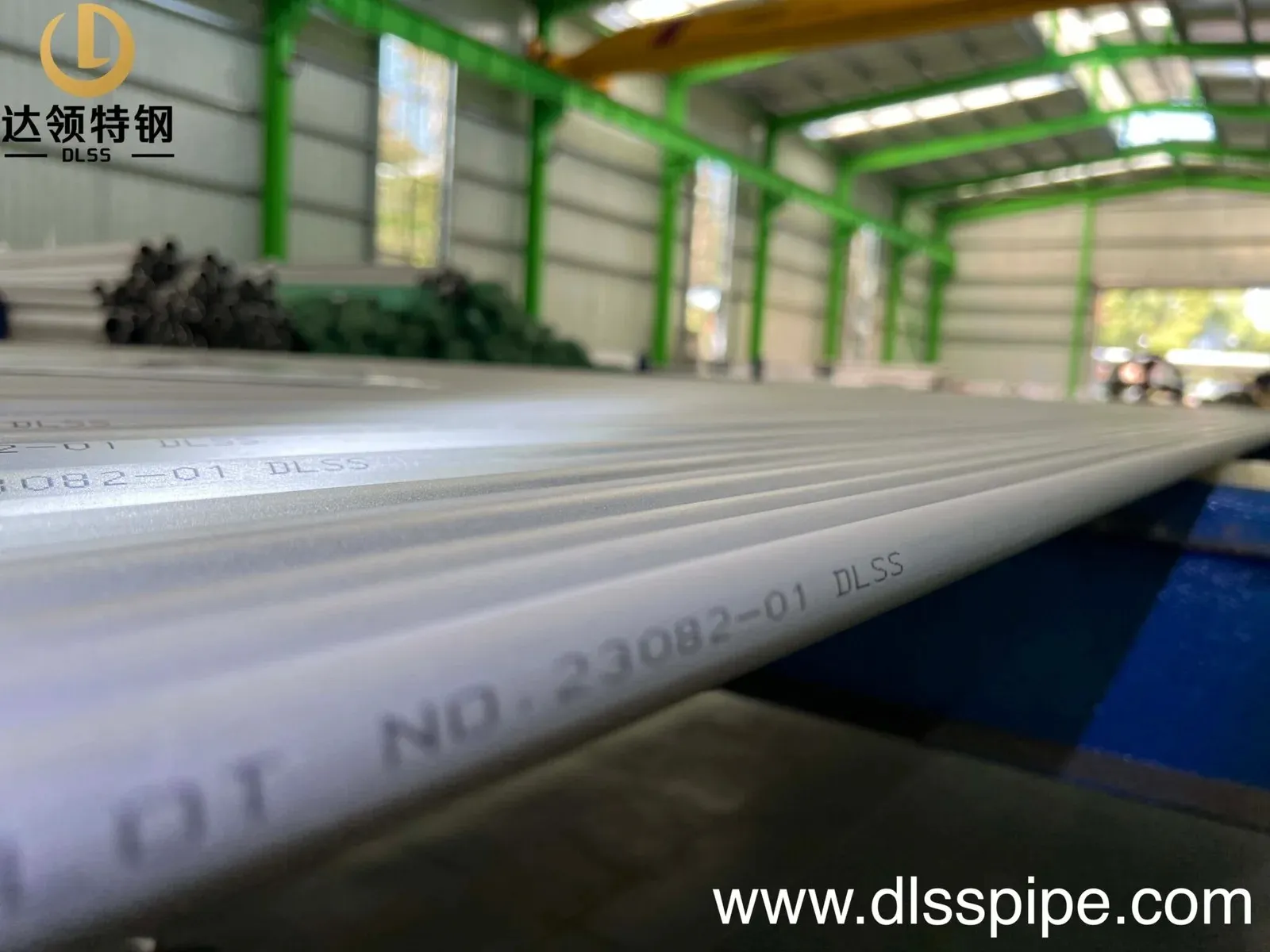
  • Heat numbers are stamped directly on the pipes and can be traced back to production batches.
  • Digital copies of MTCs are archived for verification at any time.

Conclusion

A Mill Test Certificate is not just a piece of paper—it is the foundation of trust in international stainless steel trade. Buyers should carefully review MTCs to ensure compliance with standards and avoid costly risks.

At DLSS, we guarantee authentic documentation, full transparency, and strict compliance with ASTM/ASME/EN/JIS standards for every shipment.

Learn more about our Stainless Steel Seamless Tubes or Heat Exchanger Tubes.
Contact us today to request a sample MTC and discover how DLSS can be your trusted stainless steel supplier.

Wonderful! Share This Case:

Austenitic Stainless Steel

Duplex Stainless Steel

Nickel Alloys

▪ Incoloy Family

▪ Inconel Family

▪ Monel Family

▪ Hastelloy Family

▪ Other Special Alloys

Cobalt Alloys

Related Posts

Stainless steel seamless bright tube

How DLSS Performs

Introduction In critical industries like heat exchangers, petrochemicals, boilers, and nuclear power, the demand for defect-free stainless steel tubing is non-negotiable. One of the most reliable non-destructive testing (NDT) methods to ensure tube integrity is Eddy Current Testing (ET). At DLSS, we perform 100% ET on all seamless stainless steel...

Read More
steel demand Global Market Outlook for Stainless Steel Seamless Pipes (2025–2030)

Global Market Outlook

Introduction The stainless steel seamless pipe industry is entering a new growth phase driven by infrastructure investments, energy transition, and decarbonization.From oil & gas to clean energy, seamless pipes play a vital role in delivering strength, corrosion resistance, and reliability across mission-critical systems. In this article, we provide an up-to-date...

Read More
Choosing Between 304L, 316L, and 317L Stainless Steel Tubes – What’s Right for Your Application?

Choosing Between 304L,

Introduction When selecting stainless steel tubes for industrial use, choosing the right grade can significantly affect corrosion resistance, mechanical performance, and cost efficiency. Among the most widely used austenitic stainless steels are 304L, 316L, and 317L. Though they may appear similar, their chemical makeup and performance differ greatly in environments...

Read More
Stainless Steel Tube Selection for LNG and Cryogenic Applications (2025 Guide)

Stainless Steel Tube

Why Cryogenic Environments Demand Specialized Tubing Cryogenic systems, such as LNG pipelines, vaporizers, and storage tanks, operate at extremely low temperatures — sometimes below –196°C. In such harsh conditions, stainless steel tubes must retain excellent mechanical strength, ductility, and impact toughness. Incorrect tubing materials in LNG systems can lead to...

Read More
Why Duplex Stainless Steel Tubes Are Ideal for South America's Offshore Oil & Gas Projects

Why Duplex Stainless

Introduction From Brazil’s pre-salt fields to Colombia’s coastal gas terminals, offshore exploration in South America is pushing engineering materials to the limit. The tubes used in these operations must endure salt spray, H₂S gas, high pressure, and cyclic loads. This is where duplex stainless steel tubes outperform traditional stainless steel...

Read More
Low Finned Tubes in Duplex Steel for High-Efficiency Heat Exchangers

Low Finned Tubes

Introduction Heat exchangers play a critical role in maximizing thermal performance across industries such as geothermal energy, petrochemical, and power generation. Among the different tube designs, low finned tubes stand out as a proven solution to increase the surface area and improve heat transfer efficiency without requiring more installation space....

Read More

How to Ensure

Introduction Sour gas environments—containing hydrogen sulfide (H₂S)—pose one of the greatest challenges for stainless steel tubes in the oil and gas industry. The presence of H₂S increases the risk of sulfide stress cracking (SSC) and hydrogen-induced cracking (HIC), which can lead to catastrophic failures if materials are not selected and...

Read More
The Role of Stainless Steel Tubes in Renewable Energy Systems – Solar, Wind, and Hydrogen

The Role of

Introduction As the global push for carbon neutrality intensifies, renewable energy systems are expanding at an unprecedented rate. From solar thermal plants to hydrogen pipelines, the infrastructure behind green energy demands materials that offer durability, corrosion resistance, and long life cycles under harsh environments. DLSS provides high-grade stainless steel tubes...

Read More

Request A Quote

*We respect your confidentiality and all information are protected.