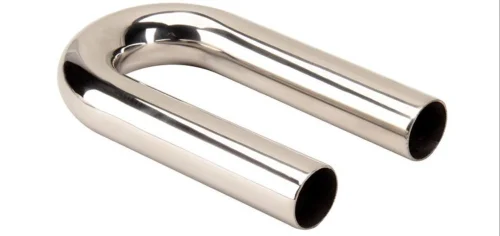
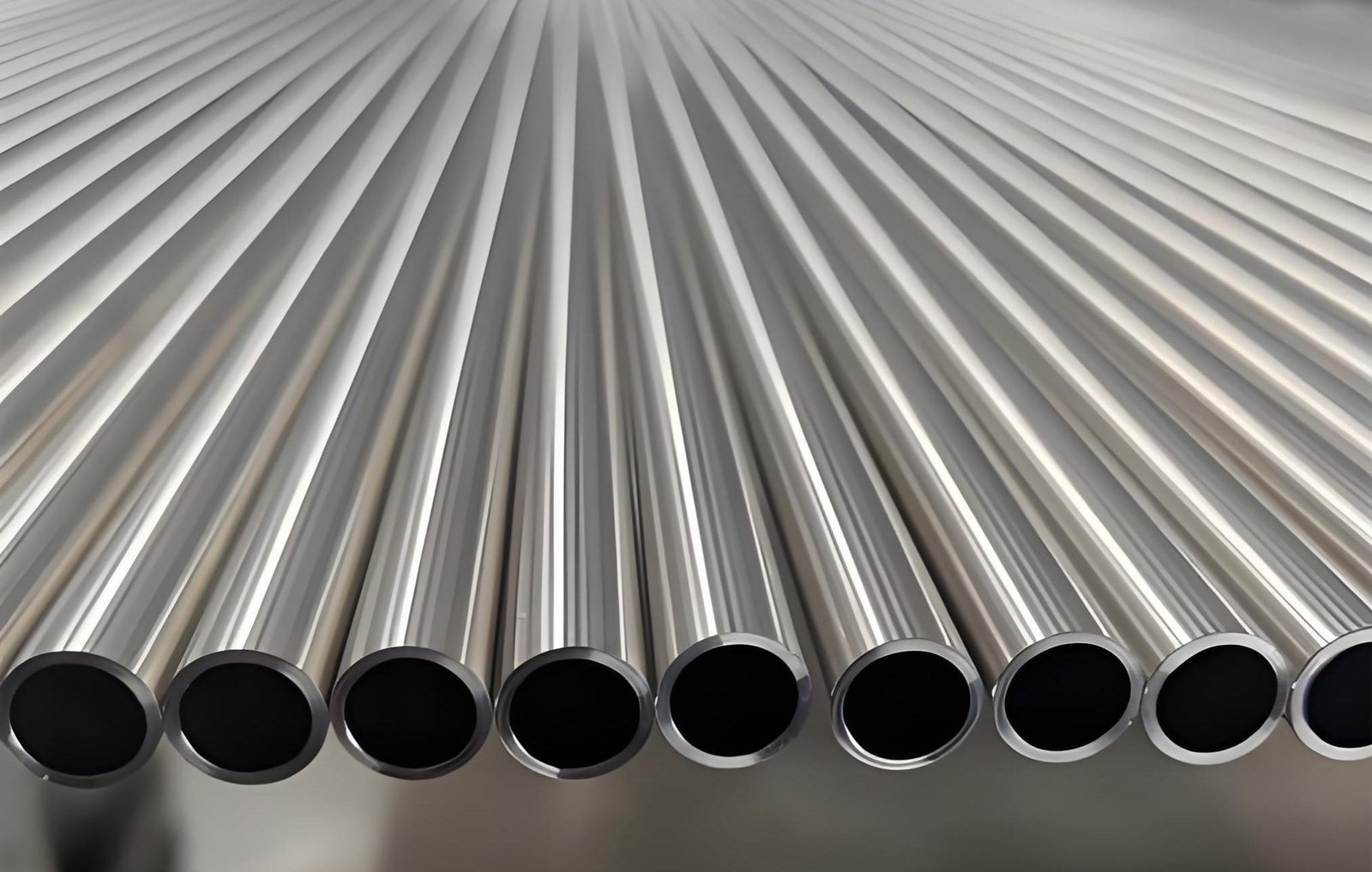
Nickel 200 and Nickel 201 are commercially pure nickel grades used in seamless tubes, pipes, heat transfer equipment, chemical processing systems, caustic handling, food processing, synthetic fiber production, and electrical components.
At first glance, Nickel 200 and Nickel 201 look very similar. Both offer high nickel content, good mechanical properties, high thermal and electrical conductivity, and strong resistance to many corrosive environments, especially caustic alkalis.
However, the difference between them is important. Nickel 201 is the low-carbon version of Nickel 200. This lower carbon content makes Nickel 201 more suitable for applications where the service temperature is above about 300°C / 572°F, depending on the project condition and specification.
For buyers, the question should not only be “Nickel 200 or Nickel 201?”
The better question is:
Which grade is safer for the temperature, corrosion medium, fabrication process, inspection requirement, and final documentation of this project?
This guide explains the key differences between Nickel 200 and Nickel 201 seamless tubes, when to choose each grade, what ASTM B161 covers, and what buyers should check before placing an RFQ.
Quick Answer
Choose Nickel 200 seamless tubes when the service temperature is relatively low, the project needs commercially pure nickel, and the main concern is corrosion resistance in caustic alkali, food processing, synthetic fiber, or general chemical handling environments.
Choose Nickel 201 seamless tubes when the application involves elevated temperature, thermal exposure, or when the project specification requires low-carbon nickel. Nickel 201 is often preferred above about 300°C / 572°F because its lower carbon content helps reduce the risk of carbon-related issues at higher temperatures.
If the project temperature, medium, or end-user requirement is unclear, buyers should confirm the service condition before selecting the grade.
What Are Nickel 200 and Nickel 201?
Nickel 200, also known as UNS N02200, is commercially pure wrought nickel. It contains high nickel content and is valued for its corrosion resistance, mechanical properties, thermal conductivity, electrical conductivity, and product purity in many industrial applications.
Nickel 201, also known as UNS N02201, is the low-carbon version of Nickel 200. The lower carbon content makes it more suitable for higher-temperature service compared with Nickel 200.
Both grades are commonly supplied as seamless tubes and pipes under ASTM B161 / ASME SB161, depending on project requirements.
Although these two grades are similar, they should not be treated as fully interchangeable without reviewing the application temperature, carbon requirement, fabrication process, and final inspection documents.
Main Difference: Carbon Content
The most important difference between Nickel 200 and Nickel 201 is carbon content.
| Grade | UNS | Key Feature | Typical Selection Logic |
|---|---|---|---|
| Nickel 200 | UNS N02200 | Commercially pure nickel with higher carbon than Nickel 201 | Suitable for lower-temperature service and many caustic / chemical applications |
| Nickel 201 | UNS N02201 | Low-carbon commercially pure nickel | Preferred for elevated-temperature service and low-carbon requirements |
This carbon difference may look small on paper, but it can affect material selection in real projects.
For lower-temperature applications, Nickel 200 is often enough.
For elevated-temperature applications, Nickel 201 is usually the safer choice.
Nickel 200 vs Nickel 201: Comparison Table
| Factor | Nickel 200 | Nickel 201 |
| UNS number | N02200 | N02201 |
| Nickel type | Commercially pure nickel | Low-carbon commercially pure nickel |
| Carbon content | Higher than Nickel 201 | Lower carbon |
| High-temperature suitability | Usually used for lower-temperature service | Preferred for elevated-temperature service |
| Corrosion resistance | Excellent in many caustic and reducing environments | Similar corrosion resistance, with better suitability at higher temperatures |
| Formability | Good | Good, often slightly better due to lower carbon |
| Thermal conductivity | High | High |
| Electrical conductivity | High | High |
| Magnetic behavior | Nickel is magnetic / magnetostrictive | Similar nickel behavior |
| Typical standard | ASTM B161 / ASME SB161 | ASTM B161 / ASME SB161 |
| Main buyer question | Is the temperature low enough for Nickel 200? | Does the project require low carbon or higher-temperature service? |
When to Choose Nickel 200 Seamless Tubes
Nickel 200 seamless tubes are commonly selected when the project requires commercially pure nickel and the operating temperature is not in the elevated range where low carbon becomes critical.
Typical applications include:
- Caustic alkali handling
- Food processing equipment
- Synthetic fiber production
- Chemical processing equipment
- Electrical and electronic components
- Heat transfer equipment under suitable service conditions
- Storage and transfer systems requiring product purity
- General corrosion-resistant nickel tubing
Nickel 200 is especially valued in environments where stainless steel may not provide enough resistance to caustic alkali service.
However, buyers should avoid using Nickel 200 automatically for all nickel tube applications. If the service temperature is high, or if the end user requires low-carbon nickel, Nickel 201 should be reviewed.
When to Choose Nickel 201 Seamless Tubes
Nickel 201 seamless tubes should be considered when the project involves elevated temperature or when the specification requires low-carbon nickel.
Typical applications include:
- High-temperature caustic service
- Chemical processing equipment with thermal exposure
- Heat transfer systems where low carbon is required
- Components exposed to higher operating temperature
- Projects where the end-user specification lists UNS N02201
- Applications where carbon-related risks must be reduced
Nickel 201 is not simply a “better” version of Nickel 200 for every case. It is the better choice when the service condition makes low carbon important.
If the application temperature is above about 300°C / 572°F, buyers should review Nickel 201 carefully and confirm the final grade with the project specification.
ASTM B161 Requirements Buyers Should Know
ASTM B161 covers nickel seamless pipe and tube for Nickel 200 and Nickel 201. In many industrial projects, buyers may see the requirement written as ASTM B161 or ASME SB161.
When reviewing ASTM B161 seamless nickel tubes, buyers should pay attention to:
- Grade: Nickel 200 / UNS N02200 or Nickel 201 / UNS N02201
- Product form: seamless pipe or seamless tube
- Condition: cold-worked, annealed, or other agreed condition
- Chemical composition
- Mechanical properties
- Hydrostatic test or nondestructive electric test, depending on order requirement
- Dimensional tolerance
- Surface condition
- Marking and traceability
- MTC requirement
A common mistake is only writing “Nickel tube” in the RFQ. This is not enough. The RFQ should clearly state the grade, UNS number, standard, size, condition, testing requirement, and document requirement.
Applications of Nickel 200 and Nickel 201 Seamless Tubes
Nickel 200 and Nickel 201 seamless tubes are often used where commercially pure nickel is preferred over stainless steel or other nickel alloys.
Common application areas include:
1. Caustic Alkali Systems
Commercially pure nickel is widely used in caustic alkali service because of its strong resistance in many alkaline environments.
Typical equipment may include tubes, pipes, evaporators, transfer lines, and process equipment.
2. Chemical Processing
Nickel 200 and Nickel 201 may be used in chemical processing systems where the medium, temperature, and corrosion condition are suitable for commercially pure nickel.
Buyers should always confirm the exact chemical medium, concentration, temperature, and pressure before selecting the grade.
3. Food and Synthetic Fiber Production
Nickel 200 is often used where product purity and corrosion resistance are important.
For systems with higher temperature exposure, Nickel 201 may need to be considered.
4. Heat Transfer Equipment
Nickel 200 and Nickel 201 seamless tubes can be used in selected heat transfer applications. The final choice depends on the operating temperature, medium, pressure, tube size, and inspection requirement.
For high-temperature service, Nickel 201 is often preferred.
5. Electrical and Electronic Components
Commercially pure nickel has high electrical and thermal conductivity, making it useful in some electrical and electronic applications.
For tube orders, buyers should confirm dimensional tolerance, surface finish, cleanliness, and packing requirements.
What to Include in the RFQ
A clear RFQ helps the supplier recommend the correct grade and avoid mistakes before production.
Buyers should provide:
- Grade: Nickel 200 or Nickel 201
- UNS number: N02200 or N02201
- Standard: ASTM B161 / ASME SB161 or project specification
- OD, wall thickness, and length
- Quantity
- Condition: annealed, cold-worked, or other requirement
- Application and service medium
- Operating temperature and pressure
- Surface finish requirement
- Hydrostatic test or nondestructive electric test
- PMI requirement, if needed
- MTC requirement, such as EN 10204 3.1 or 3.2
- Third-party inspection requirement
- Packing and delivery requirement
If the buyer is not sure whether Nickel 200 or Nickel 201 is more suitable, the RFQ can state:
“Please recommend Nickel 200 or Nickel 201 seamless tubes based on the attached service temperature, medium, standard, inspection requirement, and project specification. Please also advise if low-carbon Nickel 201 is required for this application.”
What to Check on the MTC
Before shipment, buyers should check the MTC carefully. For Nickel 200 and Nickel 201 seamless tubes, the MTC should match the PO and project specification.
Key items to check include:
- Material grade
- UNS number
- Heat number
- Chemical composition
- Carbon content
- Mechanical properties
- Product standard
- Heat treatment or condition
- Tube size and tolerance
- Test records
- NDT or hydrostatic test result
- PMI result, if required
- Third-party inspection stamp, if required
For Nickel 201, carbon content is especially important. Buyers should make sure the MTC clearly supports UNS N02201 requirements.
If the MTC only states “Nickel tube” without UNS number, carbon content, heat number, or standard, the documentation may not be enough for final project acceptance.
Common Mistakes Buyers Should Avoid
Mistake 1: Treating Nickel 200 and Nickel 201 as Exactly the Same
Nickel 200 and Nickel 201 are similar, but the carbon difference matters. For elevated-temperature service, Nickel 201 should be reviewed carefully.
Mistake 2: Ignoring Operating Temperature
Temperature is one of the most important selection factors. If the service temperature is above about 300°C / 572°F, buyers should not select Nickel 200 without checking the project specification.
Mistake 3: Writing Only “Nickel Tube” in the RFQ
This can lead to confusion. The RFQ should specify Nickel 200 or Nickel 201, UNS number, ASTM B161 / ASME SB161, size, condition, testing, and MTC requirements.
Mistake 4: Assuming Nickel 200/201 Is Suitable for Every Corrosive Medium
Commercially pure nickel performs very well in many alkaline and reducing environments, but it is not the best material for every chemical medium. The actual medium, concentration, temperature, pressure, and impurities must be reviewed.
Mistake 5: Not Checking Carbon Content on the MTC
For Nickel 201, low carbon is the key reason for selection. Buyers should check the carbon value on the MTC before shipment.
How DLSS Supports Nickel 200 and Nickel 201 Seamless Tubes
DLSS supplies Nickel 200 and Nickel 201 seamless tubes for chemical processing, caustic service, food processing, heat transfer equipment, electrical applications, and industrial projects.
Our support includes:
- Nickel 200 seamless tubes
- Nickel 201 seamless tubes
- ASTM B161 / ASME SB161 support
- UNS N02200 / UNS N02201 material confirmation
- Size and tolerance review
- MTC review
- PMI support when required
- Hydrostatic or nondestructive test coordination
- Third-party inspection by SGS, BV, TÜV, LR, ABS, or other agencies when required
- Export packing and document preparation
Before production, DLSS can help buyers review the service condition, temperature, corrosion medium, standard, inspection scope, and documentation requirement to reduce the risk of wrong material selection.
FAQ
What is the main difference between Nickel 200 and Nickel 201?
The main difference is carbon content. Nickel 201 has lower carbon than Nickel 200, making it more suitable for elevated-temperature service.
Which is better, Nickel 200 or Nickel 201?
Neither grade is always better. Nickel 200 is suitable for many lower-temperature applications, while Nickel 201 is preferred when low carbon or elevated-temperature service is required.
Is Nickel 200 suitable for high-temperature service?
Nickel 200 is generally not the first choice for elevated-temperature service. If the application temperature is above about 300°C / 572°F, Nickel 201 should be reviewed.
What standard is used for Nickel 200 and Nickel 201 seamless tubes?
ASTM B161 / ASME SB161 is commonly used for Nickel 200 and Nickel 201 seamless pipe and tube.
Are Nickel 200 and Nickel 201 non-magnetic?
No. Commercially pure nickel has magnetic and magnetostrictive properties. Buyers should not specify “non-magnetic” unless the requirement has been technically confirmed.
What should I send to DLSS for a recommendation?
Please send the grade, UNS number, standard, OD, wall thickness, length, quantity, service medium, temperature, pressure, testing requirement, MTC requirement, and delivery schedule. If you have drawings or project specifications, please share them for review.
Conclusion
Nickel 200 and Nickel 201 seamless tubes are both commercially pure nickel products, but they should not be selected only by name or price.
Nickel 200 is suitable for many lower-temperature caustic, food processing, chemical, and electrical applications. Nickel 201, with lower carbon content, is usually preferred for elevated-temperature service or when the project requires UNS N02201.
The safest selection comes from reviewing the service temperature, medium, applicable standard, tube size, inspection requirement, and final MTC documentation together.
DLSS can support Nickel 200 and Nickel 201 seamless tubes with ASTM B161 / ASME SB161 documentation, material traceability, inspection support, third-party inspection, and export packing. If you are not sure which grade is suitable for your project, our team can help review your specification before production.