Finned Tube Cleaning and Maintenance Best Practices – Keep Your Heat Exchanger at Peak Performance

DLSS - Finned Tube Knowledge Hub - Finned Tube Cleaning and Maintenance Best Practices – Keep Your Heat Exchanger at Peak Performance

Finned tube cleaning and maintenance are critical to ensuring optimal heat transfer performance and extending the service life of heat exchangers. Without proper care, fouling, corrosion, and fin damage can reduce efficiency and increase operating costs.

For background on preventing fouling, read our article How to Prevent Corrosion and Fouling in Finned Tubes. If you are still selecting finned tube types, see our Spiral vs Extruded Finned Tube Comparison.


1. Why Cleaning is Essential

Over time, finned tubes accumulate dirt, dust, scale, and biological growth, which act as insulation layers, reducing heat transfer efficiency. In severe cases, fouling can cause overheating, corrosion, and even tube failure.


2. Common Finned Tube Cleaning Methods

  • Mechanical Cleaning – Using brushes or scrapers to remove deposits; suitable for accessible areas.
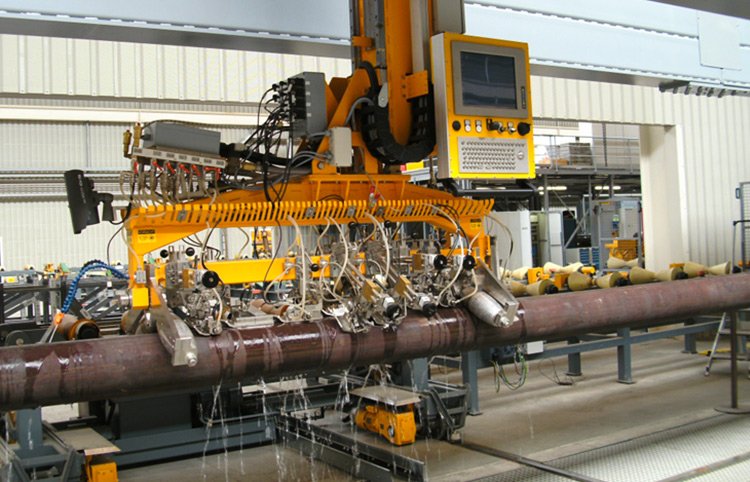
  • High-Pressure Water Jetting – Effective for stubborn fouling but must be used with care to avoid fin damage.
  • Chemical Cleaning – Using safe chemical solutions to dissolve scale and deposits; ideal for closed-loop systems.
  • Air Blowing – For light dust and debris in air-cooled heat exchangers.

3. Maintenance Best Practices

  • Routine Inspection – Visually check fins and tubes every 3–6 months.
  • Protective Coatings – Apply anti-corrosion coatings for harsh environments.
  • Proper Water Treatment – Prevent scale formation by controlling water chemistry.
  • Avoid Over-Cleaning – Excessive mechanical cleaning can damage fins.
  • Monitor Pressure Drop – A sudden increase may indicate fouling.

4. Cleaning Frequency Guidelines

  • Industrial Boilers – Every 6–12 months
  • Marine & Offshore Applications – Every 3–6 months
  • Air-Cooled Heat Exchangers – Quarterly in dusty environments

5. Related Reading

For more detailed industry cleaning standards, visit ASHRAE’s Heat Exchanger Maintenance Guidelines.


DLSS offers high-quality finned tube manufacturing along with cleaning and maintenance consulting services to help clients reduce downtime and maximize performance.

Contact us at info@dlsspipe.com or visit www.dlsspipeline.com for expert advice and custom heat exchanger solutions.

Wonderful! Share This Case:

Austenitic Stainless Steel

Duplex Stainless Steel

Nickel Alloys

▪ Incoloy Family

▪ Inconel Family

▪ Monel Family

▪ Hastelloy Family

▪ Other Special Alloys

Cobalt Alloys

Related Posts

ASTM B111 C44300 (O61) Admiralty Brass Seamless Tube – 19.05 × 1.65 × 6100mm

ASTM B111 C44300 (O61) Admiralty

Product Summary Material Overview – C44300 Admiralty Brass C44300, commonly referred to as Admiralty Brass, is a copper-zinc alloy with a small amount of tin. It is specifically developed for excellent corrosion resistance in seawater and brine environments, making it ideal for refinery and power station heat exchanger tubes. Element Typical Composition (%) Copper (Cu) 70.0 – 73.0 Zinc […]

Read More
Selecting Stainless Steel Tubes for Seawater, Desalination, and Marine Applications (2025 Guide)

Selecting Stainless Steel Tubes for

Why Seawater and Desalination Systems Require Specialized Tubing Seawater contains high concentrations of chlorides, which are extremely aggressive toward most conventional stainless steels. In marine environments or desalination plants, tubes are exposed to continuous flow of saline water, biofouling, crevice conditions, and temperature fluctuations. To ensure long service life and avoid premature failure due to […]

Read More
ASTM A312 vs ASTM A789: Which Stainless Steel Tube Standard Is Right for Oil & Gas Applications?

ASTM A312 vs ASTM A789:

Meta Description:Understand the key differences between ASTM A312 and ASTM A789 for stainless steel seamless tubes used in the oil & gas industry. Compare materials, applications, and testing requirements. Introduction In the oil and gas sector, selecting the right stainless steel tube standard is essential for long-term system performance. Among the most referenced specifications are: […]

Read More
ASTM vs JIS Standards: Choosing the Right Stainless Tube for Japan(ASTM規格とJIS規格の比較:日本市場向けステンレスチューブの選び方)

ASTM vs JIS Standards: Choosing

1. Introduction In the Japanese stainless steel tube market, buyers often compare ASTM (American Society for Testing and Materials) and JIS (Japanese Industrial Standards) specifications. Both systems have rigorous requirements, but understanding their differences is key to choosing the right stainless steel seamless tube Japan for specific applications such as 熱交換器 (heat exchangers) and 産業配管 […]

Read More
Plate vs. Shell and Tube Heat Exchangers: A Complete Comparison Guide

Plate vs. Shell and Tube

Selecting the right heat exchanger is critical for ensuring operational efficiency, durability, and cost-effectiveness. Among the most commonly used designs are the plate heat exchanger (PHE) and the shell and tube heat exchanger (STHE)—each offering distinct performance advantages in specific industrial environments. This guide compares the two technologies in terms of structure, thermal performance, maintenance, […]

Read More
Understanding ASTM A213 – Seamless Tubes for Heat Exchangers and Boilers

Understanding ASTM A213 – Seamless

Meta Description:Learn everything about ASTM A213: scope, material grades, dimensional tolerances, mechanical properties, and test methods. Ideal for engineers, buyers, and project managers working with heat exchanger and boiler tubing. Introduction ASTM A213 is one of the most critical international standards for seamless ferritic and austenitic alloy steel tubes, especially those used in boilers, superheaters, […]

Read More
Top 5 Desalination and Chemical Projects Using Titanium and Nickel Alloy Tubes

Top 5 Desalination and Chemical

1. Introduction Titanium tubes and nickel alloy pipes are increasingly used in large-scale desalination and chemical processing projects worldwide. Their resistance to chloride-rich seawater and aggressive acids makes them indispensable in critical applications. Below are five landmark projects where titanium and nickel alloy piping solutions have proven their value. 2. Shuaibah 3 IWP – Saudi […]

Read More
Stainless Steel Seamless Pipes for Mining and Metallurgy Projects in South America

Stainless Steel Seamless Pipes for

Meta Description:Discover how stainless steel seamless tubes support high-performance mining and metallurgy operations across Chile, Peru, and Brazil. Learn about corrosion resistance, mechanical strength, and industry standards. Introduction South America is home to some of the world’s most significant mining and metallurgical hubs, particularly in Chile, Peru, and Brazil. With growing global demand for copper, […]

Read More

Request A Quote

*We respect your confidentiality and all information are protected.