Global Market Outlook for Stainless Steel Seamless Pipes (2025–2030)

DLSS - Pipe&Tube - Global Market Outlook for Stainless Steel Seamless Pipes (2025–2030)

Introduction

The stainless steel seamless pipe industry is entering a new growth phase driven by infrastructure investments, energy transition, and decarbonization.
From oil & gas to clean energy, seamless pipes play a vital role in delivering strength, corrosion resistance, and reliability across mission-critical systems.

In this article, we provide an up-to-date view of global market trends, highlight regional insights, and discuss the top industries driving demand through 2030.
steel demand Global Market Outlook for Stainless Steel Seamless Pipes (2025–2030)

Global Market Size and Growth Forecast

According to GlobeNewswire, the global stainless steel seamless pipes market was valued at USD 3.9 billion in 2025 and is expected to reach USD 5.15 billion by 2030, growing at a CAGR of 5.6%.

Key growth drivers:

  • Increasing demand in refinery upgrades, petrochemical expansions, and gas transmission projects
  • Adoption of stainless steel in hydrogen and carbon capture infrastructure
  • Expansion of offshore wind and geothermal systems
  • Focus on high-efficiency, low-maintenance industrial equipment

Leading Regions and Markets

Asia-Pacific

  • Dominated by China and India, which together account for over 50% of global consumption
  • Driven by mega projects in power generation, chemical processing, and urban infrastructure

Middle East

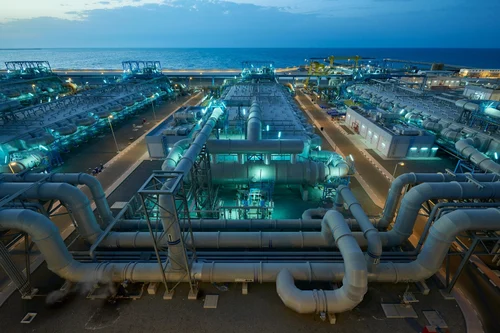
  • Significant demand from desalination plants, oil & gas EPC projects, and LNG export terminals
  • Clients often require NACE MR0175-certified tubes

Europe

  • Strong focus on renewables, especially green hydrogen, district heating, and waste-to-energy plants
  • Preference for tubes with EN 10204 3.2 certification, tested by TÜV, BV, or SGS
steel demand Global Market Outlook for Stainless Steel Seamless Pipes (2025–2030)

South America

  • Growing investments in biofuels, refining, and mining in Brazil, Argentina, and Chile
  • Demand for high-grade TP316L, TP347H, and Duplex 2205

Industry Segments Driving Demand

SectorKey Pipe Characteristics
Oil & GasSour gas resistance, NACE compliance, thick wall
PetrochemicalsTP316L/317L, high purity & pressure rated
Power GenerationSuperheater/boiler tubes, TP347H, Alloy 625
Renewable EnergyDuplex for seawater, Incoloy for high-temp HX
Pharma & FoodBA/EP tubes, ASTM A270-S2, ID polished

Technology and Quality Trends

  • Growing preference for pickled or electropolished seamless tubes
  • Increased use of automated testing (PMI, EC, UT)
  • Integration of digital MTC records and traceability systems
  • Demand for custom lengths and U-bend tubes for heat exchangers
steel demand Global Market Outlook for Stainless Steel Seamless Pipes (2025–2030)

Frequently Asked Questions (FAQ)

Q1: What is driving the stainless seamless pipe market in 2025?
Primarily growth in oil & gas, energy transition, and industrial modernization.

Q2: Which grades are in highest demand?
TP316L, TP347H, Duplex 2205, and special alloys like Incoloy 825 and Alloy 625.

Q3: Are 3.2 certified pipes becoming standard?
Yes, especially in Europe, South America, and government EPC projects.

Q4: How is DLSS supporting this growth?
DLSS supplies project-specific, standard-compliant seamless tubes across 40+ countries with flexible production and third-party inspections.
steel demand Global Market Outlook for Stainless Steel Seamless Pipes (2025–2030)

Conclusion

The stainless steel seamless pipe market is set to expand steadily over the next five years, fueled by energy investment, industrial upgrades, and global decarbonization goals.

By choosing a certified and experienced supplier like DLSS, project managers can secure reliable, traceable, and performance-driven pipe solutions ready for tomorrow’s demands.


Contact DLSS
Email: info@dlsspipe.com
Website: www.dlsspipeline.com

Wonderful! Share This Case:

Austenitic Stainless Steel

Duplex Stainless Steel

Nickel Alloys

▪ Incoloy Family

▪ Inconel Family

▪ Monel Family

▪ Hastelloy Family

▪ Other Special Alloys

Cobalt Alloys

Related Posts

Selecting Stainless Steel Tubes for Food, Beverage & Sanitary Applications (2025 Guide)

Selecting Stainless Steel

Why Sanitary Tubing Matters in Food and Beverage Systems In the food and beverage industry, stainless steel tubing is not just about mechanical performance—it’s about hygiene, cleanliness, and compliance. Tubes are used to transport milk, beer, juice, water, or cleaning agents in systems that demand zero contamination, excellent cleanability, and...

Read More
Common Heat Exchanger Tube Failures and How to Prevent Them

Common Heat Exchanger

Introduction Heat exchanger tube failures can lead to: Understanding the most frequent failure mechanisms is key to designing, selecting, and maintaining reliable heat exchanger systems. In this article, we explore the five most common tube failure types—and how to avoid them. 1. Pitting Corrosion Occurs when localized corrosion breaks through...

Read More
TP316L Stainless Pipes for Japan’s Chemical Processing Plants – 日本化学プラント向けTP316Lステンレス管

TP316L Stainless Pipes

Introduction Japan’s chemical industry demands high-performance stainless steel pipes capable of withstanding aggressive media and high temperatures. TP316L stainless pipes by DLSS meet JIS G3459 – Stainless Steel Pipes for Corrosion Resistance, ensuring durability, weldability, and excellent resistance to chloride-induced corrosion common in Japanese chemical processing plants. 1. Why TP316L...

Read More
What Is Bright Annealed Tube (BA)? Benefits, Applications, and Surface Control

Stainless Steel Tube

Surface finish is an important part of stainless steel tube selection. For stainless steel tubes, duplex tubes, nickel alloy tubes and heat exchanger tubes, the surface condition can affect corrosion resistance, cleanliness, inspection results, welding quality and final application performance. Common stainless steel tube surface finishes include pickled surface, bright...

Read More
Choosing Between Seamless and Welded Stainless Steel Tubes: Which One Fits Your Project?

Seamless vs Welded

When buying stainless steel tubes, one common question is: Should I choose seamless tubes or welded tubes? The answer depends on your project. Seamless tubes and welded tubes are both useful. But they are made in different ways. They also have different strengths, costs, lead times, and best-use areas. This...

Read More
desalination-projects-stainless-steel-heat-exchanger-tubes

How Global Desalination

With water scarcity on the rise, seawater desalination has become a critical infrastructure priority—especially in the Middle East, North Africa, Asia-Pacific, and parts of Latin America. These plants rely heavily on heat exchanger systems for energy-efficient freshwater production. And at the core of those systems? Stainless steel tubes that can...

Read More
Understanding Pickling and Passivation in Stainless Steel Tube Production

Understanding Pickling and

Introduction Even the highest-grade stainless steel can suffer from surface contamination during tube forming, welding, or heat treatment. To restore the full corrosion resistance of stainless steel tubes, manufacturers must apply pickling and passivation processes—two chemical surface treatments essential to durability and cleanliness. At DLSS, we apply both treatments as...

Read More
Nickel Alloy Steel Seamless Pipes and Tubes: Industrial Advantages and Applications

Electropolished Stainless Steel

DLSS supplies 304L and 316L electropolished stainless steel tubes for clean and high-purity piping systems. Our EP tubes are used in pharmaceutical, biotechnology, semiconductor, food, and laboratory projects. Inner surface roughness of Ra ≤ 0.20 μm is available for selected sizes. We can also provide Ra test reports, borescope inspection,...

Read More

Request A Quote

*We respect your confidentiality and all information are protected.